TL;DR
The 1980s AI trend is transforming ordinary brand content into highly shareable, nostalgia-driven experiences. By using AI tools to reimagine products, campaigns, and brand stories with retro aesthetics, D2C brands can increase engagement, improve social reach, spark user-generated content, and build stronger emotional connections with consumers. The key is blending nostalgia with modern branding in a way that feels authentic, relevant, and memorable.
Why Everyone Is Obsessed With the 1980s AI Trend
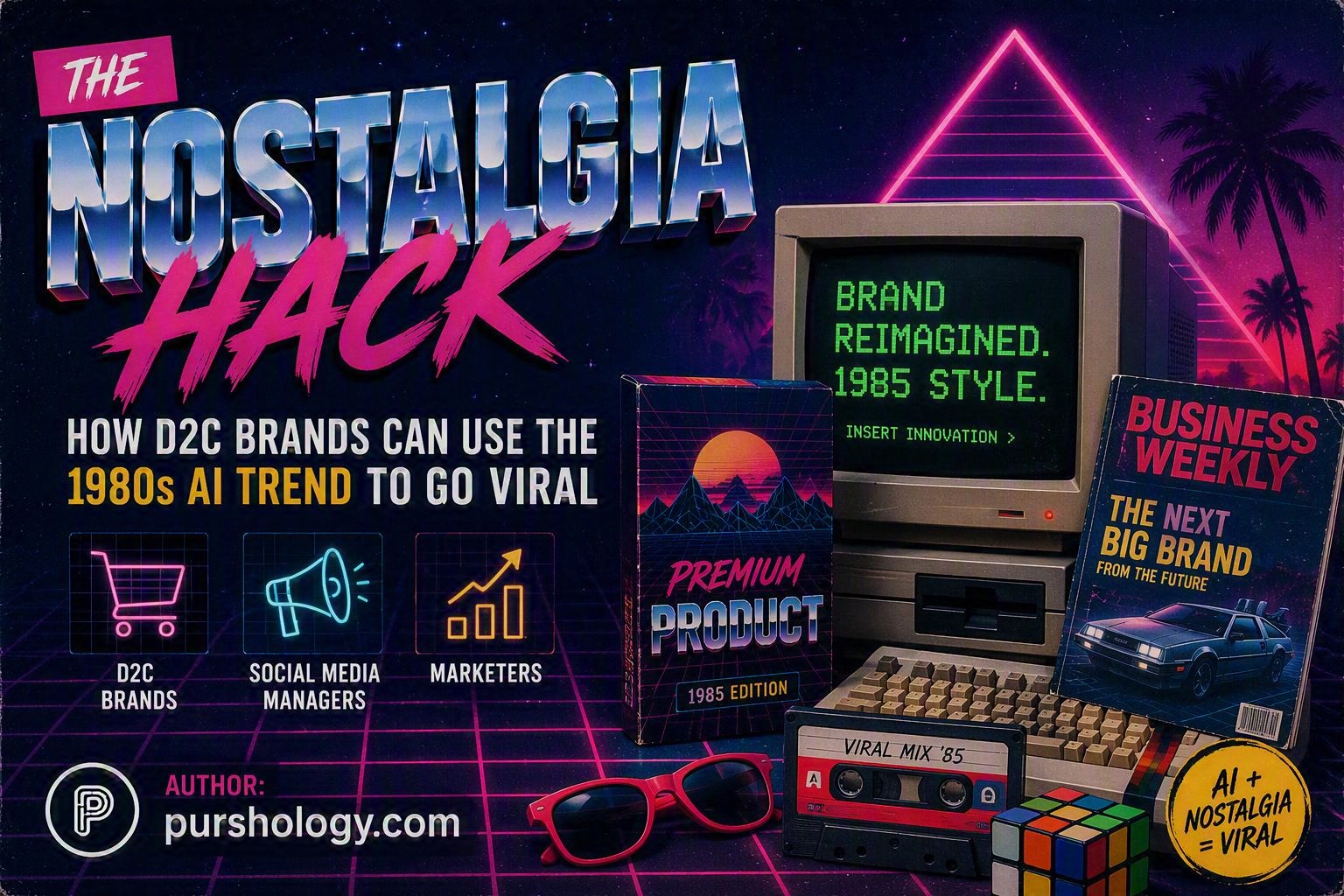
From neon color palettes and VHS-style effects to retro arcade typography and vintage magazine covers, the internet is experiencing a full-blown 1980s revival. Thanks to AI-powered image generation tools, brands can now create stunning retro-inspired visuals in minutes instead of spending weeks on design and production.
But this trend is more than just aesthetics.
Nostalgia is one of the most powerful emotional triggers in marketing. When consumers encounter familiar visual styles from the past, they experience positive emotions that make content more engaging, memorable, and shareable.
For direct-to-consumer (D2C) brands competing for attention in crowded social feeds, that emotional connection can be the difference between being ignored and going viral.
Why Nostalgia Marketing Works So Well
Consumers don’t just buy products. They buy feelings, memories, and experiences.
Nostalgia marketing works because it:
- Creates instant emotional engagement
- Encourages sharing and conversation
- Makes brands feel more relatable
- Helps content stand out in crowded feeds
- Increases recall and brand recognition
The 1980s AI trend combines nostalgia with curiosity. People enjoy seeing modern products and brands transformed into something that looks like it belongs on a vintage movie poster, cassette cover, or arcade game advertisement.
That combination is social media gold.
How D2C Brands Can Leverage the 1980s AI Trend
1. Turn Your Products Into Retro Collectibles
Imagine your bestselling product redesigned as:
- A vintage toy package
- An 80s video game cover
- A retro magazine advertisement
- A VHS movie release poster
These AI-generated visuals can transform ordinary product photos into highly engaging social content.
For example, a skincare brand could present its moisturizer as “The Must-Have Beauty Secret of 1987,” while a coffee company could create a retro arcade-inspired campaign around its latest roast.
The goal is to make followers stop scrolling and pay attention.
2. Create “What If Our Brand Existed in 1985?” Campaigns
One of the most effective content formats is imagining your brand through the lens of a different era.
Create a content series showing:
- Your website redesigned with 1980s visuals
- Product packaging reimagined as vintage designs
- Brand ambassadors styled in retro fashion
- Magazine advertisements from an alternate 1985 timeline
This type of storytelling is entertaining, highly shareable, and gives audiences a fresh way to experience your brand.
3. Launch User-Generated Content Challenges
Social media algorithms love participation.
Encourage customers to generate and share their own retro-inspired content by creating challenges such as:
- Show us your “1980s version” of our product
- Create an AI-generated vintage ad
- Design a retro movie poster featuring our brand
- Share your favorite nostalgic-inspired creation
Offer prizes, discounts, or featured placements for the best submissions.
This strategy amplifies reach while creating authentic content from your community.
4. Repurpose Existing Assets Instead of Creating New Ones
One of the biggest advantages of AI is efficiency.
Instead of organizing expensive photoshoots, brands can repurpose:
- Product photography
- Lifestyle images
- Brand mascots
- Existing ad creatives
By applying 1980s-inspired prompts and visual treatments, teams can generate fresh campaign assets quickly and cost-effectively.
This allows marketers to participate in trends without significantly increasing creative budgets.
5. Create Viral Before-and-After Content
Transformation content performs exceptionally well across platforms like Instagram, TikTok, LinkedIn, and X.
Try posting:
Slide 1: Current product image
Slide 2: AI-generated 1980s version
The contrast immediately captures attention and encourages engagement.
People love comparing modern designs with nostalgic reinterpretations.
Best Platforms for the 1980s AI Trend
Perfect for:
- Carousel posts
- Reels
- Retro product showcases
- Before-and-after transformations
TikTok
Ideal for:
- AI creation reveals
- Behind-the-scenes content
- Trend participation
- Viral storytelling
Excellent for:
- Marketing case studies
- Brand transformation examples
- AI marketing insights
- Thought leadership content
Great for:
- Retro design inspiration
- Product discovery
- Evergreen traffic generation
Common Mistakes D2C Brands Should Avoid
While the trend is powerful, brands should avoid:
Following the Trend Without a Strategy
Viral content is useful only when it supports a business goal such as awareness, engagement, or sales.
Ignoring Brand Identity
Retro aesthetics should enhance your brand, not replace it.
Overusing AI Visuals
If every post looks the same, the novelty disappears quickly.
Chasing Virality Alone
Focus on building audience connection rather than simply accumulating views.
The Future of Nostalgia-Driven AI Marketing
The 1980s trend is part of a broader shift in how brands use AI for storytelling. As AI tools become more accessible, marketers will increasingly blend historical aesthetics with modern products to create distinctive digital experiences.
For D2C brands, this creates a unique opportunity: leveraging emotional storytelling at scale without the production costs traditionally associated with creative campaigns.
The brands that win will be those that use AI not just to generate images, but to create memorable experiences that resonate with audiences.
Final Thoughts
The 1980s AI trend is more than a passing social media fad. It is a practical example of how nostalgia, creativity, and AI can work together to increase engagement, boost brand visibility, and generate meaningful conversations online.
For e-commerce founders, social media managers, and marketers, now is the perfect time to experiment with retro-inspired campaigns before the trend becomes oversaturated. The brands that move early have the best chance of capturing attention and turning nostalgia into growth.
Ready to Make Your Brand Go Viral?
Start by transforming one of your top-performing products into a 1980s-inspired AI visual and share it with your audience this week. Test the response, track engagement, and build a repeatable content strategy around what works.
The next viral post for your D2C brand might just look like it came straight out of 1985.