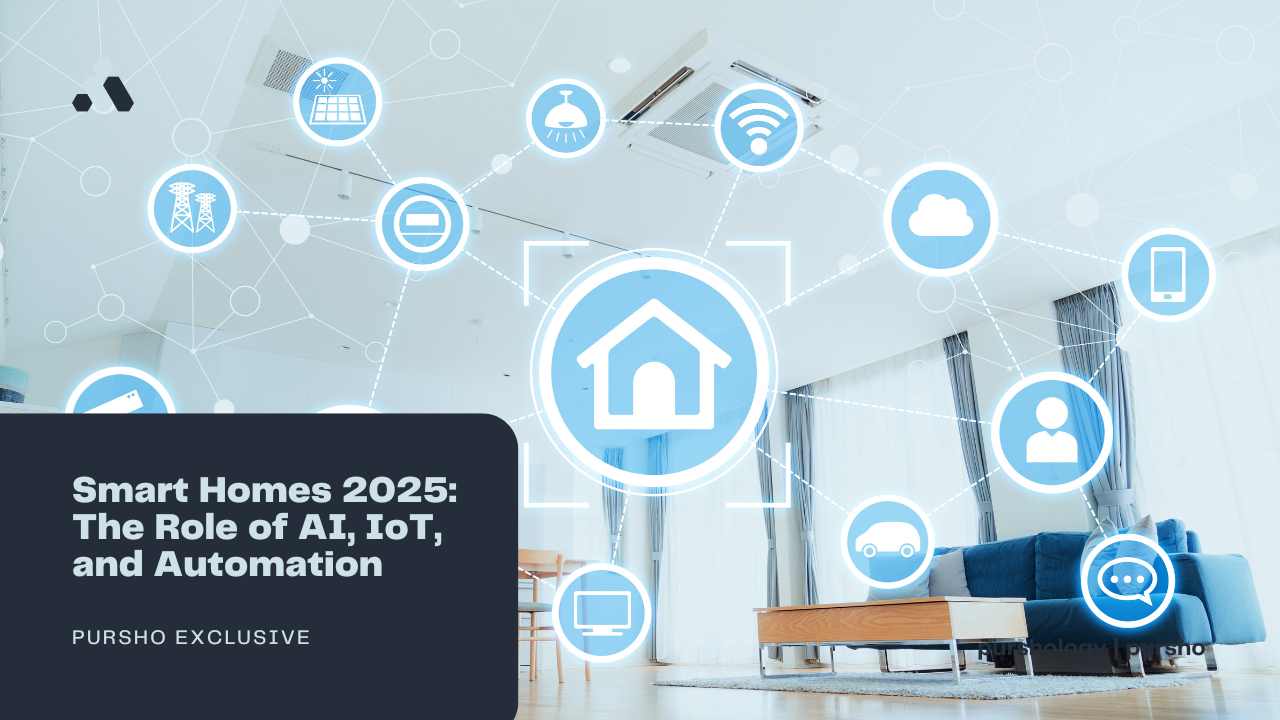
The concept of the “Smart Home” has shifted in a few years from futuristic novelty to practical reality. By 2025, advances in Artificial Intelligence (AI), the Internet of Things (IoT), and Automation are changing how people interact with their living spaces. No longer limited to voice-controlled lights or app-based thermostats, modern smart homes are becoming interconnected ecosystems that learn, adapt, and even anticipate the needs of the inhabitants. Just as innovations in home remodeling New York have redefined how physical spaces are upgraded, smart technologies are redefining how those spaces function in daily life..
This article shows how AI, IOT and automation are shaping smart homes in 2025, their benefits, challenges and next.
Foundation: IOT Connectivity
At the core of every smart home is the Internet of Things. IOT device- sensors, equipment, wearbals and security systems- collect data and share it in the network. In 2025, IOT integration has become comfortable. The devices no longer serve as isolated smart gadgets; Instead, they are part of an integrated digital environment.
For example:
- Smart Kitchen: Refrigerator tracks the inventory, suggest dishes based on available materials, and automatically add items to shopping list or grocery delivery services.
- Health Monitoring: Wearables integrate with home systems to accommodate light, air quality, or even recommend rest time based on biometric data.
- Energy Efficiency: Smart meters and equipment communicate with each other to balance energy use, reduce both bills and carbon footprints.
This interrelation is possible for rollouts of 5G and edge computing, rapidly, enables more reliable communication between equipment.
The Brain: Artificial Intelligence
If IOT is the nervous system of a smart house, AI is its brain. By 2025, AI is far more sophisticated, capable of learning user habits and making future decides. Instead of waiting for orders, AI estimates the needs and acts continuously.
Main AI-driven capabilities:
- Individualization
- The AI analyzes the routine, such as when the residents wake up, leave for work, or return home.
- Systems adjust the light, temperature and entertainment preferences.
- Energy adaptation
- The algorithm studies historical consumption pattern and weather forecasts.
- Heating, ventilation, and air conditioning (HVAC) systems using fine-tune energy to balance comfort with stability.
- Safety
- AI-operated cameras recognize familiar faces, consciousness at home owners only when there are unusual activity.
- The machine learning helps detect microscopic risks, such as water leaks or electoral discrepancies, before they proceed.
- Voice and gesture recognition
- Natural language processing (NLP) has improved, allowing AI assistants to understand reference, tone and intentions more accurately.
- Gesture-based control enable touch-free interaction, accelerated tendency by epidemic-era’s hygiene concerns.
Enabler: Automation
Automation added IOT and AI to practical, real -world applications simultaneously. In 2025, automation is less about one-clot command (“closure of the lights”) and more about landscape-based life.
Examples include:
- Morning routine: Curtains open, coffee brruzes, the news play, and car pre-heating-all are triggered by an alarm clock.
- Work-by setup: Lights, desk ergonomics and noise-making systems automatically adjust during the working hours.
- Travel Mode: When the owners of the house leave for a holiday, the automation system locks the door, lower thermostats, and imitates the occupancy to prevent intruders.
These “Ephees-Tab-Tab-Dat” workflows are rapidly A-Nhens, which means that they not only follow rigid rules, but dynamically optimize data input and learned preferences.
Benefits of smart homes in 2025
AI, IOT, and the convergence of automation brings funeral benefits:
- Convenience – Daily tasks become frictionless, saving time and effort.
- Cost Savings – Holy Energy Management reduces the utility bill.
- Health and Welfare – Homes promote nutrition through better sleep, air quality and responsible systems.
- Security and security – The future monitoring provides peace of mind.
- Stability – Smart energy grids and customized equipment reduce environmental impact.
Challenges and concerns
Despite the promise, smart homes also face hurdles in 2025:
- Privacy: The vast amount of individual data collected increases concerns over monitoring and misuse.
- Interoperability: While progress is made, some equipment still struggles to integrate on platforms.
- Cyber security: Connected devices remain unsafe for hacking, requiring continuous innovation in digital defense.
- Cost Obstacles: Although prices have fallen, a fully integrated system may stay out of access to some homes.
- Extreme -free: To rely too much on automation can cause new risk if the systems fail or behave unexpectedly.
Looking ahead: the future beyond 2025
As AI and IOT mature, the future smart home can be something more comfortable and autonomous:
- Reference-covered environments: houses that not only adjust individuals, but also adjust social mobility-like guests to come and identify on creating the right environment.
- Decentralized Energy: Smart homes that trade additional solar or battery power, with direct neighbors, make microgrids.
- AI-powered maintenance: Future diagnosis for plumbing, electrical systems and equipment can prevent expensive breakdown.
- Integration with smart cities: from traffic management to emergency response systems, homes will intensify with public infrastructure.
conclusion
By 2025, smart homes are no longer a luxury reserved for early adopters. With AI in the form of brain, IOT in the form of nervous system, and automation in the form of hands, modern living spaces have become adaptive, efficient and responsible environment. They not only make life more convenient, but also contribute to stability, security and well -being.
Nevertheless, challenges around privacy, security and strength should be addressed to adopt widely. As the technology moves forward, the ultimate vision is a house that feels less like a collection of gadgets and is more like a living partner – who understands, preserves, and supports it.