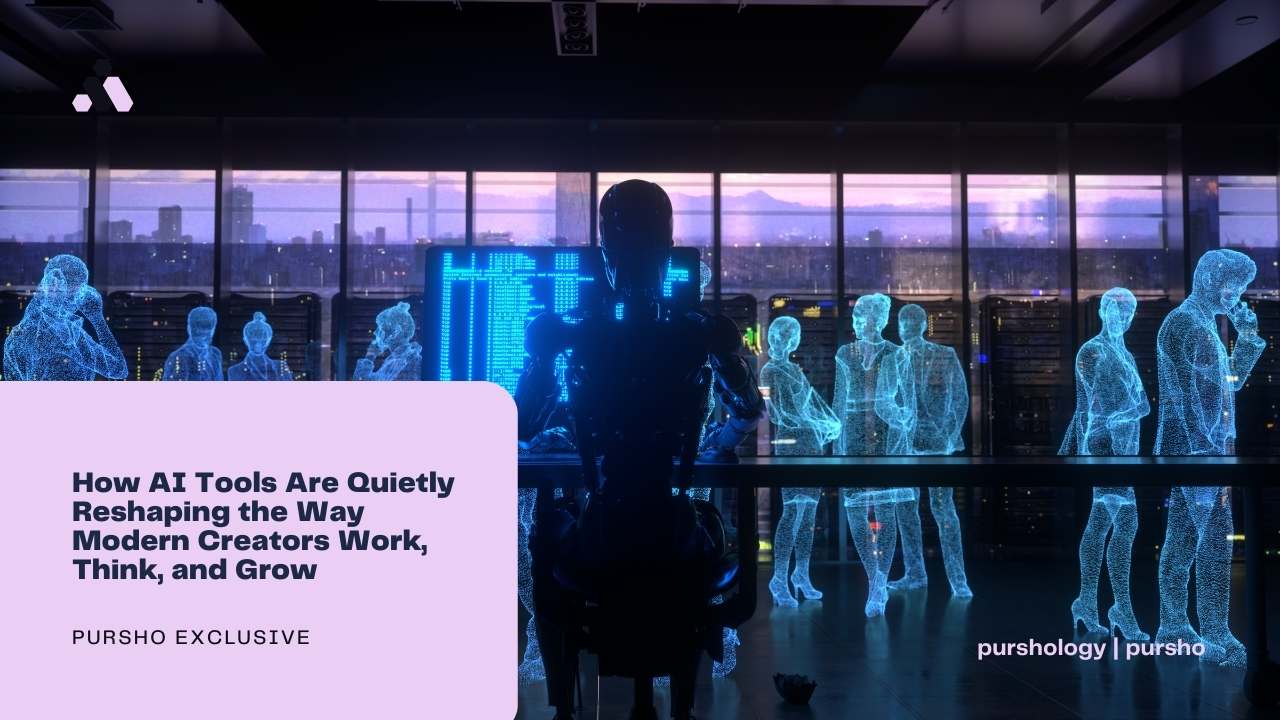
A Deep Dive into the Evolving Digital Creator Economy and the Intelligent Tools Powering It
There’s a quiet revolution happening across content studios, marketing agencies, freelance desks, and personal blogs. It doesn’t announce itself with press releases or billion-dollar IPOs — at least not every day. It shows up in the way a solo entrepreneur finishes in three hours what used to take three days. It hides in the way a small creative team ships content that rivals what large corporations used to produce with departments full of people.
Artificial intelligence — particularly the wave of tools designed for creators, marketers, and digital professionals — has fundamentally altered what it means to ‘do the work.’ This is not a conversation about robots replacing humans. That narrative is exhausted and largely inaccurate. This is a conversation about augmentation, about what happens when thoughtful tools meet motivated people, and about the remarkable outputs that become possible as a result.
This article explores how AI-powered platforms are changing workflows across the creative economy — from content ideation and visual production to scheduling, outreach, and audience building. Along the way, we’ll look at real examples of how professionals are using these tools, the philosophical shifts they’re forcing, and what it all means for anyone trying to build something meaningful online.
The Myth of the Overnight Expert
For years, the advice given to aspiring content creators followed a familiar script: pick a niche, learn your craft, show up consistently, and be patient. All of that advice still holds. But what has changed dramatically is the time it takes to get from ‘aspiring’ to ‘producing quality work.’ The gap between beginner and competent practitioner — once measured in years — is shrinking, and AI tools are one of the primary reasons why.
Consider what used to be required to produce a polished video: a camera, lighting, a script, editing software, design skills for thumbnails, copywriting for titles and descriptions, and hours of refinement. Each step demanded a specific skill set. Today, many of those steps have software solutions that handle the heavy lifting, leaving creators to focus on what they actually do best — having ideas, telling stories, and connecting with audiences.
This doesn’t mean quality has become automatic. If anything, the bar has risen because tools have made baseline competence accessible to nearly everyone. The differentiator now is creativity, judgment, and voice — the distinctly human elements that no software can replicate. What AI tools do is remove the friction that used to prevent those elements from shining through.
Visual Content and the Rise of Studio-Quality Output Without the Studio
One of the most striking shifts in the creator economy over the past two years has been in visual content production. High-quality imagery, video, and branded design assets were once the exclusive domain of those with access to professional studios, expensive software subscriptions, and skilled design teams. That exclusivity is eroding fast.
Platforms built around AI-powered visual creation — such as Vibe AI Studio (
Platforms built around AI-powered visual creation — such as Vibe AI Studio — are enabling creators, small business owners, and marketing teams to produce content that would have required a full creative department just a few years ago. Instead of navigating complex design tools or outsourcing to expensive agencies, creators can now articulate a vision and have AI assist in bringing it to life visually. The time saved isn’t just a convenience — it translates directly into competitive advantage. A brand that can produce fresh, relevant visual content every day operates in an entirely different league than one that struggles to push out a few posts a week.
This democratization of visual production is particularly meaningful for independent creators who previously had to choose between quality and quantity. They could invest time to produce something beautiful and publish rarely, or publish frequently with lower production value. AI tools are collapsing that tradeoff. It’s now possible to publish often and look good doing it — which, for audiences accustomed to polished content across every platform, makes a substantial difference in perception and engagement.
But there’s a deeper implication here. When the technical barrier to visual content falls, the competition shifts entirely to conceptual creativity. The question is no longer ‘Can you produce a well-designed image?’ but ‘Do you have something visually interesting to say?’ That’s a harder question to answer, and it’s one that demands real creative thinking rather than technical skill.
The Intelligence Layer: When Platforms Start Thinking With You
Beyond content creation tools, a new category of AI platform has emerged — one focused not just on helping you produce things, but on helping you think better about strategy, audience, and growth. These platforms sit at the intersection of data analysis, machine learning, and business intelligence, making them feel less like software and more like a knowledgeable collaborator.
Companies like Fusion Mind Labs are building toward this vision — developing AI-powered solutions that don’t just automate tasks but actually provide intelligent support for decision-making. For creators and businesses, this represents a meaningful evolution. You’re no longer just using a tool to get something done; you’re engaging with a system that can surface patterns, recommend strategies, and help you understand your work in a broader context.
This kind of intelligence layer is particularly valuable for people who are good at what they create but less confident in the business side of building an audience or a brand. Many talented writers, designers, and video producers have struggled to translate quality work into sustainable growth because they lacked clarity on distribution, positioning, or audience targeting. AI platforms that think through these challenges alongside creators are filling a genuine gap — one that used to require either expensive consultants or years of hard-won experience.
That said, it’s worth being thoughtful about how this kind of AI assistance is used. The risk is that creators become too dependent on algorithmic recommendations and lose their own instincts and authentic voice. The best use of intelligent platforms is as a complement to human judgment — a way to test assumptions, surface blind spots, and validate directions that you’re already leaning toward, rather than as an oracle that tells you exactly what to do.
The Scheduling Problem: Why Showing Up Consistently Is Harder Than It Looks
Ask any experienced content creator what separates those who build lasting audiences from those who plateau or burn out, and consistency will almost always come up. It sounds straightforward — just show up regularly. But in practice, maintaining a consistent publishing cadence across multiple platforms while also creating quality content and managing everything else that comes with running a creative business is genuinely difficult.
The scheduling and planning layer of content work is often underestimated. It’s not glamorous, but it’s load-bearing. A brilliant piece of content published at the wrong time, to the wrong platform mix, without a coherent editorial calendar behind it, will almost always underperform. And the cognitive overhead of managing all of that — across Instagram, LinkedIn, YouTube, newsletters, and whatever platform happens to be trending this quarter — is significant.
This is where purpose-built scheduling tools have become essential infrastructure for serious creators. Platforms like Schedulify X aim to reduce the friction involved in planning and publishing content across channels, giving creators and marketing teams visibility into their pipeline and control over their timing. When this piece of the puzzle works well, creators get back mental bandwidth that they can redirect toward creation itself — the part of the job that actually requires their unique human contribution.
The best editorial calendars are not rigid. They’re frameworks that allow for spontaneity and responsiveness — which is important in a media environment where trends move fast and cultural moments demand timely participation. The goal is never to automate creativity but to systematize the logistics that support it, freeing up creators to be both more consistent and more responsive.
There’s also a psychological dimension to this. Many creators experience something like ‘scheduling anxiety’ — a low-grade stress that comes from not knowing whether they’re keeping up, whether their timing is right, or whether they’re missing opportunities. Good scheduling infrastructure doesn’t just solve a logistical problem; it reduces that anxiety and makes the creative practice feel more sustainable over the long term.
Writing at Scale: The Perpetual Tension Between Volume and Voice
No area of the creator economy has been more directly disrupted by AI than writing. The ability to generate text at scale — blog posts, email campaigns, social captions, product descriptions, scripts, ad copy — has transformed from a specialized skill requiring significant time investment into something that AI tools can assist with rapidly. This has created enormous opportunities and, simultaneously, a flood of undifferentiated content that audiences are increasingly skilled at tuning out.
The most thoughtful practitioners are navigating this tension carefully. They’re using AI writing assistance not to replace their voice but to accelerate the parts of writing that are mechanical — first drafts, research summaries, structural outlines, SEO optimization — while investing their own energy in the parts that require genuine craft: the specific examples, the unexpected angles, the moments of vulnerability or humor that make a piece of content feel human.
Tools like Writecream have built platforms specifically to support this kind of AI-assisted writing workflow — helping marketers, founders, and content teams move from blank page to polished draft more efficiently. The key for any creator using these tools is to treat AI-generated content as raw material rather than finished product. The most effective AI-assisted writing still carries the author’s fingerprints; the tool accelerates the journey, but the destination is still defined by the human.
This is also where the quality-versus-quantity debate gets genuinely interesting. There’s a school of thought that argues AI writing tools will inevitably degrade content quality because they make volume too easy, incentivizing publishers to flood the internet with mediocre content. There’s another school that argues the opposite — that by reducing the time cost of writing, AI tools actually give thoughtful writers more capacity to revise, refine, and improve, ultimately raising quality rather than lowering it.
The truth is probably that both outcomes are happening simultaneously, depending on how the tools are used. For creators who treat AI writing assistance as a shortcut to skip quality control, the result is indeed mediocre content that damages their reputation over time. For creators who treat it as leverage to do better work faster, the results can be genuinely impressive. As with most powerful tools, the outcome depends entirely on the judgment of the person wielding it.
The Human Elements That AI Cannot Replicate
In every conversation about AI tools and creativity, the question of what remains distinctly human eventually surfaces. It’s a question worth taking seriously, not because the answer is comforting (though it often is) but because understanding the answer helps creators make better decisions about where to invest their own energy versus where to lean on tools.
Lived experience is perhaps the most obvious irreplaceable element. The insight that comes from having navigated a specific challenge, made a particular mistake, or discovered an unexpected solution — that’s content that AI cannot generate from scratch because it doesn’t have experiences. It can simulate the structure and language of experiential storytelling, but audiences are increasingly good at detecting the absence of real experience underneath polished prose.
Cultural intuition is another. The ability to sense what a particular community cares about, what will resonate versus what will land flat, what’s being overplayed versus what’s being underexplored — these are forms of intelligence that come from deep immersion in a culture, and they’re not easily replicated by systems trained on past data. Trending topics and keyword data can tell you what people have searched for; they can’t reliably tell you what they actually want to hear next.
Relationships are perhaps the most durable human advantage in the creator economy. The trust that builds between a creator and their audience over years of consistent, authentic engagement is not something that can be fabricated by any tool. Audiences follow people, not content pipelines. They return for the person behind the work, the sense of connection they feel, the belief that someone on the other side of the screen actually understands them. That is built through presence, vulnerability, and time — none of which AI can shortcut.
Rethinking the Creator’s Role in an AI-Augmented World
The most successful creators in the coming decade will likely think of themselves less as producers of content and more as curators of experience and architects of community. The content itself — the videos, articles, images, and posts — will increasingly be the byproduct of that larger project rather than the project itself. AI tools will handle more and more of the production; the human’s role will be to define the vision, maintain the relationships, and ensure that what gets produced is in service of something that genuinely matters to real people.
This requires a shift in mindset that not everyone will make comfortably. Many creators are deeply attached to the craft of making things — the writing, the editing, the design work. And that attachment is legitimate and valuable; caring about craft is part of what produces quality. The challenge is to maintain that care while also being willing to use tools that compress the time required to execute, and to redirect the saved time toward higher-order creative and strategic thinking.
There’s also a practical dimension to consider. The creator economy has always rewarded people who work smarter, not just harder. The arrival of capable AI tools is essentially a new test of that principle. Creators who adopt these tools thoughtfully and integrate them into disciplined workflows will have a meaningful productivity advantage. Those who resist entirely, out of principle or habit, risk being outcompeted — not because AI is inherently superior, but because their output will be more constrained.
Ethics, Authenticity, and the Responsibility That Comes With Powerful Tools
No honest discussion of AI tools in the creator economy can ignore the ethical questions they raise. These questions are real, they’re not going away, and how creators navigate them will say a great deal about what kind of digital media environment we collectively build.
Transparency is probably the most pressing issue. When AI generates significant portions of content — whether that’s text, imagery, or video — audiences arguably have a right to know. The norms around disclosure are still developing, but the creators who build durable trust will likely be those who are forthcoming about their process rather than those who obscure it. Audiences are becoming more sophisticated, and the short-term advantage of pretending to have done something entirely yourself is almost always outweighed by the long-term cost to trust if the truth emerges.
Originality is another concern. AI tools trained on existing content can produce outputs that inadvertently echo or aggregate the work of human creators who were never compensated for their contribution to the training data. This is a complex issue that involves intellectual property law, creator rights, and the economic structure of the AI industry — and it’s not one that individual creators can resolve on their own. But being aware of it, and choosing tools from companies that take these concerns seriously, is a starting point.
Finally, there’s the question of what AI-generated content does to the overall information environment. When it becomes trivially easy to produce content at scale, the temptation to flood channels with mediocre, SEO-optimized material increases. The creators who resist that temptation — who use AI’s leverage to produce less but better, or who are disciplined about quality even as volume becomes easier to achieve — will be part of the solution to this problem rather than contributors to it.
What the Next Phase of the Creator Economy Might Look Like
Looking ahead, several trajectories seem likely to shape how AI tools and the creator economy evolve together over the next few years.
Personalization will intensify. AI tools will increasingly enable creators to tailor content to specific audience segments at a granularity that was previously impractical. This isn’t just about inserting a reader’s name into an email; it’s about generating genuinely different versions of content that speak to different audience needs, contexts, and preferences. Creators who master this will be able to maintain scale while feeling intimately personal — a combination that traditionally required enormous resources.
The toolkit will consolidate. Right now, most creators who are using AI tools are navigating a fragmented landscape of specialized applications — one tool for writing, another for images, another for scheduling, another for analytics. Over time, these are likely to integrate into more cohesive platforms that handle multiple aspects of the content workflow within a single environment. This will reduce switching costs and make it easier for creators to maintain a consistent vision across all the different things they produce.
The human premium will grow. Paradoxically, as AI makes content production easier, the value of content that is demonstrably human — raw, specific, grounded in real experience, carried by a distinctive voice — may actually increase. When AI-generated content becomes the baseline, the differentiator shifts to what only humans can provide. This is good news for creators who are willing to be genuinely themselves, and challenging news for those who have been hiding behind polish and production value.
New business models will emerge. The economics of the creator economy are already evolving rapidly, and AI tools will accelerate that evolution. Membership models, direct support, premium content tiers, and community-based monetization will continue to grow as alternatives to advertising-dependent revenue. AI tools that reduce the cost of production make it more viable for creators to serve smaller, more committed audiences rather than chasing mass reach — a shift that many thoughtful creators have been hoping for.
Conclusion: Tools Change, the Fundamentals Don’t
Every generation of creators has navigated the arrival of new tools that change what’s possible, what’s expected, and what it takes to stand out. The printing press changed writing. Photography changed visual art. The internet changed distribution. Social media changed audience relationships. AI is the latest in a long line of transformative technologies, and like its predecessors, it will reward those who approach it thoughtfully and penalize those who ignore it or misuse it.
The fundamentals of building an audience haven’t changed: produce work that genuinely serves real people, do it consistently, be authentic, and keep getting better. What has changed is the toolkit available to pursue those fundamentals. The creators who will thrive in this environment are those who use that toolkit with intention — who let AI handle the mechanical so they can double down on the human, who use efficiency gains to invest in quality rather than squander them on volume, and who remember that the goal was never to produce content but to build something meaningful with an audience that cares.
That’s still entirely possible. In some ways, it’s more possible now than it’s ever been. The tools are here. The question is what you’ll build with them.