
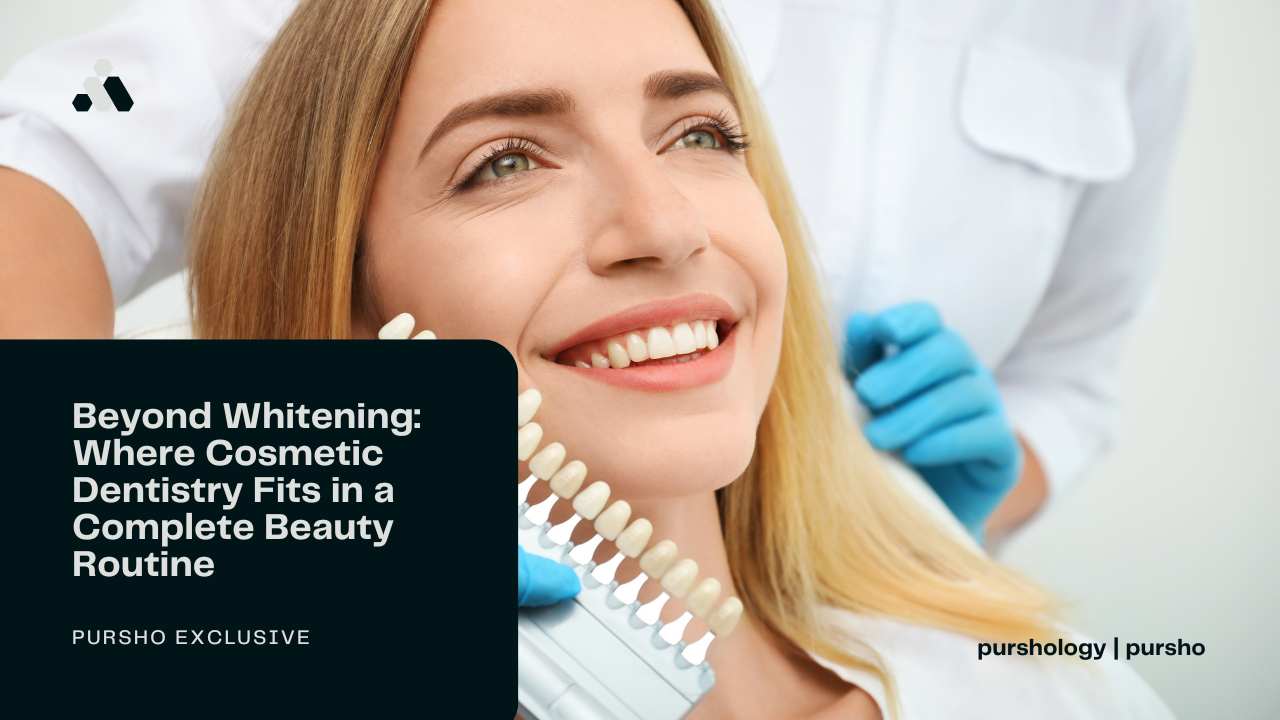
Skincare gets the budget. Hair gets the appointments. Teeth, for a lot of people, get a whitening strip every few months and not much else. That is a gap worth closing, because the smile is one of the first things anyone notices, and it is one of the few features that a good routine can genuinely improve at any age. Cosmetic dentistry has quietly become part of how people think about looking put-together, and it goes well past whitening.
Whitening is the entry point, not the finish line
Whitening works on surface and mild internal staining, and for many people that is enough. But it does nothing for shape, spacing, chips, or worn edges, and it cannot fix a tooth that is darker because of an old filling or past trauma. People often whiten, feel slightly disappointed, and assume nothing else can be done. In reality, whitening is just the first tool in a much larger kit.

The procedures that change the shape of a smile
Bonding uses tooth-colored material to rebuild a chipped edge or close a small gap, often in a single visit. Veneers are thin custom shells that cover the front of teeth to correct color, shape, and alignment together, which is why they are the go-to for a uniform, polished look. Crowns rebuild teeth that are cracked or heavily restored. For anyone missing a tooth, implants restore the root and the visible crown, so the result looks and functions like the original rather than a gap filled by a removable piece.
What ties these together is shade and proportion. A good cosmetic result is not the whitest possible set of teeth. It is teeth that match each other, fit the proportions of your face, and look natural when you talk and laugh. Achieving that takes planning and an eye for detail, which is why the clinician matters as much as the procedure.
Treating the smile like the rest of your routine
The same logic you apply to skin applies here. You assess the current state, you set a realistic goal, and you build a plan in the right order. A consultation with a 3D scan gives you an accurate picture of what is happening below the surface, including bite issues that can wear teeth down over time and undo cosmetic work if they are ignored. Treating the cause, not just the appearance, is what makes results last.
Comfort has improved too. Sedation options make longer cosmetic appointments easier for people who dread the chair, and digital design lets you preview a proposed result before committing. None of this is about chasing a trend. It is about maintaining a feature you use every single day.
What to look for in a provider
Choose a practice that handles cosmetic and reconstructive cases routinely and can show real patient outcomes rather than catalog photos. Ask how they match shades, how they plan around your bite, and whether one clinician follows the case from scan to final result. Continuity is what keeps the work consistent.
For readers in northeastern Oklahoma, working with a cosmetic and implant dentist in Tulsa who plans the full case in-house means the design, the restorations, and the follow-through stay under one roof. That coordination is what separates a smile that looks done from one that looks natural.
If your routine already covers skin and hair, the smile is the obvious next piece. Understanding the options beyond whitening lets you treat it with the same intention you bring to everything else, and the payoff shows every time you talk to someone.