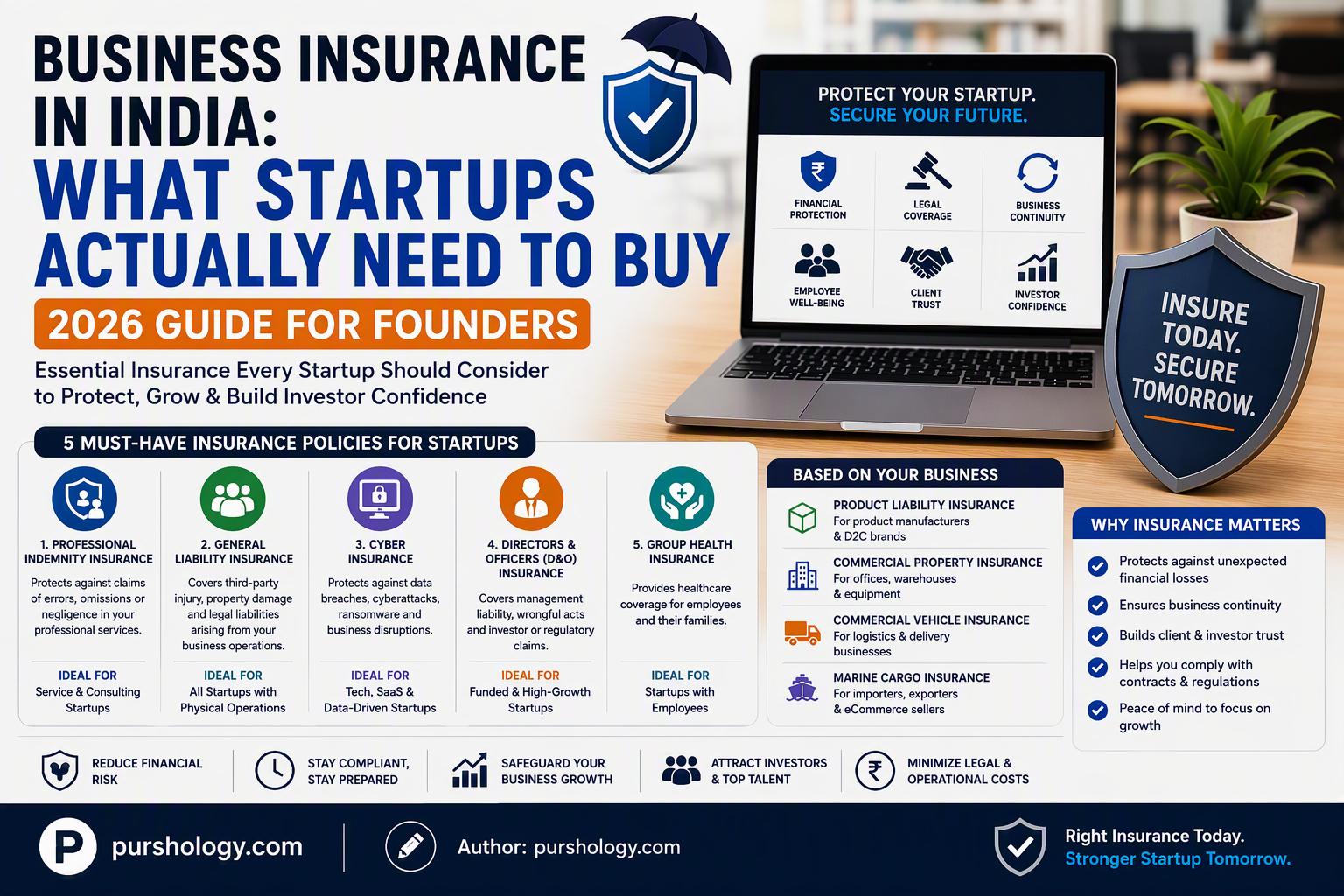
Don’t Waste Money on the Wrong Coverage: Essential Business Insurance Every Indian Startup Should Consider
Starting a business is risky enough. Yet many Indian startups spend months building products, hiring employees, and acquiring customers without putting basic insurance protection in place.
A single lawsuit, cyberattack, employee injury, property loss, or professional error can create financial stress that many early-stage companies simply aren’t prepared to handle.

The good news? Most startups don’t need every insurance product on the market. They just need the right coverage for their business model, stage, and risk profile.
This guide breaks down the business insurance policies that startups in India should actually consider buying in 2026, along with the coverage that can often wait until later.
TL;DR
Essential Insurance for Most Startups
✅ Professional Indemnity Insurance
✅ General Liability Insurance
✅ Cyber Insurance
✅ Directors & Officers (D&O) Insurance
✅ Group Health Insurance for Employees
Insurance Based on Business Type
- Product companies: Product Liability Insurance
- Logistics firms: Commercial Vehicle Insurance
- Manufacturers: Property & Equipment Insurance
- Exporters: Marine Cargo Insurance
- FinTech companies: Enhanced Cyber & D&O Coverage
Can Often Wait
- Extensive property insurance for fully remote startups
- Specialized industry coverages not relevant to your operations
- High-limit policies during very early stages
Why Startup Insurance Matters More Than Ever
Modern startups face risks beyond physical assets.
Today’s businesses must account for:
- Data breaches
- Regulatory penalties
- Client lawsuits
- Contract disputes
- Employee claims
- Intellectual property issues
- Cyber extortion
- Operational disruptions
A single incident can cost significantly more than the annual premium required to insure against it.
Insurance acts as a financial safety net, allowing founders to focus on scaling the business rather than worrying about catastrophic events.
1. Professional Indemnity Insurance
Most Important for Service-Based Startups
Professional Indemnity Insurance protects businesses against claims arising from professional mistakes, negligence, omissions, or failures in service delivery.
Covers
- Client lawsuits
- Professional negligence claims
- Errors and omissions
- Legal defense costs
- Financial losses caused to clients
Essential For
- Marketing agencies
- IT service companies
- Consultants
- SaaS providers
- Design agencies
- Accounting firms
Example
If a software implementation error causes a client financial losses and the client seeks damages, Professional Indemnity Insurance can help cover legal and settlement expenses.
2. General Liability Insurance
Protection Against Third-Party Claims
General Liability Insurance protects startups when third parties suffer bodily injury, property damage, or other covered losses connected to business activities.
Covers
- Third-party injuries
- Property damage claims
- Legal expenses
- Settlement costs
Essential For
- Businesses with offices
- Retail businesses
- Events and exhibitions
- Client-facing companies
Example
A visitor slips in your office and files a claim for medical expenses and damages.
3. Cyber Insurance
Critical for Technology Startups
With increasing cyber threats and data privacy concerns, Cyber Insurance has rapidly become one of the most important forms of protection for modern startups.
Covers
- Data breaches
- Ransomware attacks
- Business interruption
- Customer notification costs
- Cyber extortion
- Digital forensics
- Legal support
Essential For
- SaaS companies
- FinTech startups
- E-commerce businesses
- Healthcare technology startups
- Agencies managing client data
Example
A ransomware attack locks access to customer data and disrupts business operations for several days.
4. Directors & Officers (D&O) Insurance
Essential Once Investors Enter the Picture
D&O Insurance protects founders, executives, and board members against claims related to management decisions.
Many investors now strongly encourage or require D&O coverage.
Covers
- Management liability
- Regulatory investigations
- Shareholder claims
- Employment-related allegations
- Legal defense costs
Essential For
- Venture-funded startups
- Growth-stage companies
- Companies with advisory boards
- Startups preparing for fundraising
Example
An investor alleges misrepresentation or poor governance decisions that resulted in financial losses.
5. Group Health Insurance
The Employee Benefit Startups Should Prioritize
Health insurance is often one of the most valued employee benefits.
Providing coverage helps startups remain competitive in hiring while improving employee retention.
Benefits
- Employee healthcare coverage
- Cashless hospitalization
- Family coverage options
- Better recruitment outcomes
- Increased employee satisfaction
Essential For
- Startups with employees
- Growing companies
- Talent-driven businesses
Insurance Based on Your Business Model
Product Liability Insurance
Best For
- D2C brands
- Manufacturers
- Consumer products companies
- Electronics businesses
Protects against claims arising from defective products causing injury or damage.
Commercial Property Insurance
Best For
- Offices
- Warehouses
- Manufacturing facilities
Protects physical assets from:
- Fire
- Theft
- Natural disasters
- Vandalism
Marine Cargo Insurance
Best For
- Exporters
- Importers
- E-commerce sellers
- Manufacturers
Protects goods during domestic and international transit.
Commercial Vehicle Insurance
Best For
- Logistics startups
- Fleet operators
- Delivery businesses
Protects company-owned vehicles against accidents, theft, and damage.
Startup Insurance Priorities by Stage
Pre-Revenue Startup
Recommended:
- Founder health insurance
- Cyber insurance (for tech businesses)
- Professional indemnity insurance
Early Revenue Stage
Recommended:
- Professional indemnity insurance
- General liability insurance
- Group health insurance
- Cyber insurance
Growth Stage Startup
Recommended:
- D&O insurance
- Cyber insurance
- Professional indemnity insurance
- General liability insurance
- Employee health coverage
- Property coverage
Venture-Funded Startup
Recommended:
- Full insurance portfolio
- D&O insurance
- Enhanced cyber coverage
- Employment practices liability
- Higher policy limits
Common Insurance Mistakes Startups Make
Buying Coverage Too Late
Many founders wait until a customer contract, funding round, or incident forces them to seek coverage.
Underestimating Cyber Risks
Even small startups are attractive targets for cybercriminals.
Choosing Policies Only Based on Price
Cheaper policies often provide lower coverage limits and more exclusions.
Ignoring Contract Requirements
Enterprise clients frequently require proof of specific insurance coverage before signing agreements.
Not Reviewing Coverage Annually
Insurance requirements evolve as the business grows.
How Much Insurance Should a Startup Buy?
Coverage depends on industry, client requirements, and revenue.
As a general rule:
- Small service startups often begin with Professional Indemnity and General Liability coverage.
- Technology startups should prioritize Cyber and D&O insurance.
- Product businesses should add Product Liability coverage.
- Companies with teams should implement Group Health Insurance as early as feasible.
The goal isn’t to buy the largest policy possible. The goal is to protect against risks that could materially impact the company’s finances.
Final Verdict
Most Indian startups do not need every insurance product available. However, they do need protection against the risks most likely to threaten their business.
For the majority of startups in 2026, the most important policies are:
- Professional Indemnity Insurance
- General Liability Insurance
- Cyber Insurance
- Directors & Officers (D&O) Insurance
- Group Health Insurance
As your startup grows, you can expand coverage to include property, product liability, marine cargo, and specialized industry policies.
The smartest insurance strategy is not about buying more coverage. It’s about buying the right coverage before you need it.
Ready to Protect Your Startup?
Before purchasing insurance, assess your business model, client obligations, regulatory requirements, employee count, and operational risks. The right insurance portfolio can safeguard your company from unexpected setbacks and help build confidence among customers, employees, and investors.
Review your startup’s insurance readiness today and create a protection strategy that supports sustainable growth in 2026 and beyond.