TL;DR:
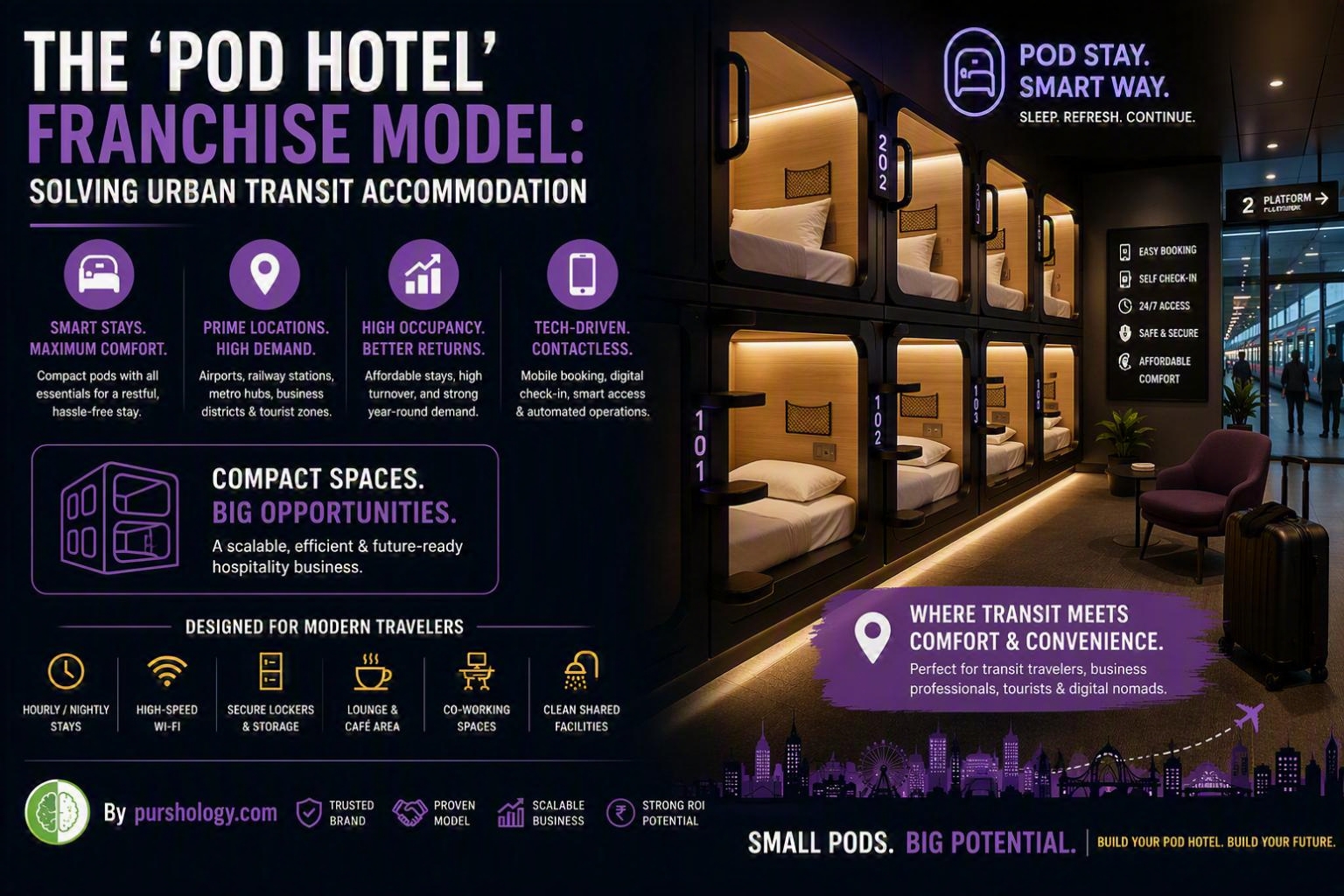
Pod hotels are redefining budget accommodation in densely populated cities by offering compact, affordable, technology-enabled stays for transit travelers, business professionals, tourists, and digital nomads. With rising urbanization, increasing domestic travel, and growing demand for short-stay options, pod hotel franchises are emerging as a scalable, high-margin hospitality business opportunity.
The hospitality industry is undergoing a major transformation. As cities become more crowded and travelers become more cost-conscious, traditional hotels are no longer the only option for overnight stays.

Enter the pod hotel—a compact, efficient, and technology-driven accommodation model designed for modern urban travelers.
Originally popularized in countries such as Japan, pod hotels are now finding relevance across major global cities. For entrepreneurs and investors, the franchise-based pod hotel model represents an innovative solution to rising demand for affordable accommodation in transit hubs, business districts, and high-density urban centers.
What Is a Pod Hotel?
A pod hotel replaces large hotel rooms with compact sleeping pods or micro-rooms that provide travelers with the essentials they need for short stays.
Most pods include:
- Comfortable bedding
- Personal lighting
- Charging ports
- Wi-Fi access
- Climate control
- Privacy screens or doors
- Storage compartments
Shared facilities often include:
- Bathrooms
- Lounges
- Workspaces
- Cafés
- Locker areas
The result is an affordable accommodation experience that prioritizes convenience over unnecessary space.
Why Urban Travelers Love Pod Hotels
Modern travelers increasingly value practicality.
For many guests, accommodation serves a simple purpose: a clean, secure place to rest before continuing their journey.
1. Lower Cost
Pod hotels can often offer significantly lower prices than traditional hotels by maximizing space efficiency.
This attracts:
- Solo travelers
- Students
- Backpackers
- Business travelers
- Transit passengers
2. Prime Locations
Because pods require less space, operators can establish properties in premium urban locations where traditional hotels may be financially challenging.
Popular locations include:
- Airports
- Railway stations
- Metro hubs
- Business districts
- Tourist zones
3. Flexible Booking Options
Many pod hotels offer:
- Hourly stays
- Overnight stays
- Day-use rooms
- Short transit bookings
This flexibility appeals to modern travelers with varying schedules.
Why the Franchise Model Is Gaining Attention
Pod hotels are particularly well-suited for franchising.
The concept relies on standardized designs, efficient operations, and technology-driven management systems.
Brand Recognition
Travelers often prefer recognizable accommodation brands when booking short stays.
A franchise allows operators to benefit from established branding and customer trust.
Replicable Operations
Pod hotels feature highly standardized layouts and processes, making expansion easier than many traditional hospitality formats.
Technology Integration
Most franchise systems include:
- Mobile bookings
- Contactless check-in
- Digital access controls
- Automated payments
- Property management software
These systems reduce operational complexity.
The Business Case for Pod Hotels
Several factors make pod hotels an attractive hospitality investment.
High Space Utilization
Traditional hotels dedicate large amounts of space to individual rooms.
Pod hotels maximize occupancy capacity by utilizing compact pod configurations.
Lower Operating Costs
Compared to conventional hotels, pod properties often require:
- Fewer employees
- Smaller footprints
- Lower housekeeping costs
- Reduced utility expenses
Higher Occupancy Potential
Affordable pricing combined with strategic locations can drive strong utilization rates throughout the year.
Recurring Demand
Urban centers generate continuous demand from:
- Business travelers
- Commuters
- Airline passengers
- Event attendees
- Tourists
This creates a dependable customer base.
Why India’s Metro Cities Are Ideal for Pod Hotels
The pod hotel model is particularly relevant for India’s rapidly growing urban markets.
Expanding Domestic Travel
Business and leisure travel continue to increase across major cities.
Major Transit Hubs
Cities such as:
- Mumbai
- Delhi
- Bengaluru
- Hyderabad
- Chennai
- Pune
host millions of transit passengers annually.
Rising Hotel Costs
Growing accommodation prices create opportunities for affordable alternatives.
Young Mobile Workforce
Professionals increasingly travel between cities for work, creating demand for short-duration stays.
Technology Is Reshaping the Guest Experience
Modern pod hotels often operate as smart hospitality businesses.
Features include:
- Mobile app reservations
- QR-code access
- Self-check-in kiosks
- Digital room controls
- Automated billing
- AI-powered customer support
Technology helps improve efficiency while reducing staffing requirements.
Additional Revenue Opportunities
Successful operators rarely rely solely on room bookings.
Additional revenue streams may include:
Food & Beverage
- Coffee stations
- Snack bars
- Vending machines
- Grab-and-go meals
Co-Working Spaces
Remote workers increasingly seek short-term workspace solutions.
Premium Add-Ons
- Extra luggage storage
- Express laundry
- Airport transfers
- Meeting rooms
These services can significantly improve profitability.
Challenges Entrepreneurs Should Consider
Like any hospitality venture, pod hotels require careful planning.
Location Selection
Poor location choices can dramatically reduce occupancy rates.
Customer Education
Some travelers may initially be unfamiliar with the pod hotel concept.
Maintenance Standards
Cleanliness, safety, and comfort remain critical to customer satisfaction.
Competition
As the market expands, operators will need strong branding and exceptional service quality to stand out.
The Future of Urban Accommodation
Urban real estate is becoming increasingly expensive, while travelers continue demanding affordable and flexible accommodation.
Pod hotels sit at the intersection of these trends.
They offer:
- Efficient use of space
- Lower operating costs
- Strong scalability
- Technology-driven operations
- Affordable pricing
As cities grow and transit traffic increases, pod hotels are positioned to become a mainstream segment within the hospitality industry.
For entrepreneurs seeking a modern franchise opportunity, the pod hotel model offers a compelling combination of recurring demand, operational efficiency, and long-term growth potential.
Ready to Invest in the Future of Hospitality?
Pod hotels are transforming the way people stay, travel, and experience cities. By combining affordability, convenience, and technology, they address a growing need in modern urban environments.
If you’re exploring hospitality business opportunities, now is the time to evaluate pod hotel franchises, transit-focused accommodation concepts, and technology-enabled lodging models. The future of urban travel may be smaller in size—but significantly bigger in opportunity.