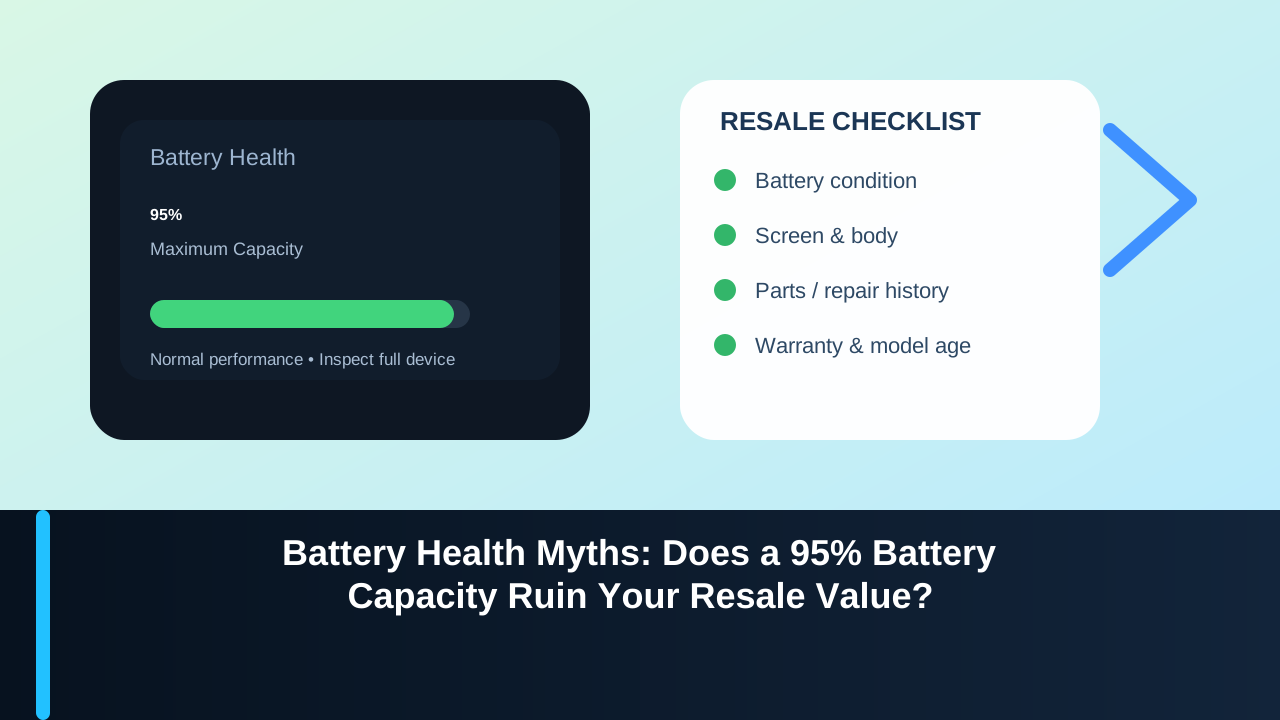
One number gets a lot of attention when people buy or sell used iPhones: Maximum Capacity. A listing that says 95% can look almost new, while a listing at 84% can trigger concern. But the idea that a particular percentage automatically destroys resale value is too simplistic.
Apple explains that rechargeable batteries naturally lose capacity over time and that actual battery performance varies with usage and charging patterns. For iPhone 14 models and earlier, Apple says batteries are designed to retain 80% of original capacity at 500 complete charge cycles under ideal conditions; iPhone 15 models are designed for 80% at 1,000 cycles under ideal conditions.

What does 95% battery health mean?
A 95% Maximum Capacity reading means the battery is currently estimated to hold about 95% of the capacity it had when new. It does not mean the phone has lost 95% of its battery life, and it does not by itself say whether the phone is worth buying.
Why battery percentage is only one part of resale value
| Factor | Why buyers care |
|---|---|
| Battery health | Indicates remaining capacity and potential service needs |
| Physical condition | Screen, frame, back glass and camera condition affect buyer confidence |
| Display and cameras | Functional faults can cost more than a modest battery reduction |
| Storage | Higher-capacity models can have a different buyer pool |
| Model and age | Software support and current market demand change over time |
| Parts history | Repair history and component authenticity can matter in a used-device inspection |
| Box and accessories | Original accessories can improve the overall listing presentation |
Is 95% actually a red flag?
Not by itself. A 95% reading generally indicates that the battery has experienced some wear, which is normal for rechargeable batteries. The more useful questions are whether the phone performs normally, whether iOS reports any service warning, whether the battery drains unusually fast and whether the asking price reflects the device’s overall condition.
What Apple says about service thresholds
Apple’s repair guidance says it can replace an iPhone battery at no extra charge when the capacity has dropped below 80% and the relevant coverage conditions are met. This is a service threshold, not a universal resale-price threshold.
That distinction matters. A device at 79% is not automatically worthless, just as a device at 95% is not automatically premium-priced. Repair cost, warranty status and the rest of the phone’s condition still matter.
How to inspect battery health before buying a used iPhone
- Open Settings → Battery → Battery Health & Charging on supported models.
- Check Maximum Capacity.
- Look for any battery service recommendation or warning.
- Ask how long the seller has used the phone and whether the battery was replaced.
- Test real-world drain during your inspection instead of relying only on the percentage.
- Check whether the phone has other hardware issues that are more expensive to fix.
95% vs 90% vs 85%: how to think about the difference
Do not create an artificial rule such as “95% is good, 94% is bad.” Battery capacity changes gradually. A buyer should evaluate the percentage together with model age, usage pattern, physical condition, repair history and asking price.
For sellers, the important lesson is similar: show a screenshot of Battery Health & Charging, but also provide the model, storage, condition, repair history and warranty information. Buyers need context.
Battery-health myths worth ignoring
Myth 1: A 95% battery means the phone is almost defective
Apple’s battery guidance describes rechargeable batteries as consumable components whose capacity changes with age and use. A 95% figure is not a defect diagnosis.
Myth 2: Every phone below 90% needs immediate battery replacement
Not necessarily. Apple’s own service guidance uses additional information and a lower capacity threshold for battery service. The actual device experience matters.
Myth 3: Battery percentage alone tells you resale price
Resale price is a market outcome. A buyer may value condition, model, storage, warranty and repair history as much as battery capacity.
How sellers can present battery information honestly
- Include the exact Maximum Capacity percentage.
- Disclose battery replacement if one occurred.
- Show the Battery Health screen rather than only writing “excellent battery.”
- List any service warning visible in iOS.
- Describe the overall physical condition accurately.
Bottom line
A 95% battery capacity reading does not, by itself, ruin an iPhone’s resale value. Treat battery health as one data point within a larger inspection that covers the model, age, condition, parts history, warranty and realistic market pricing.