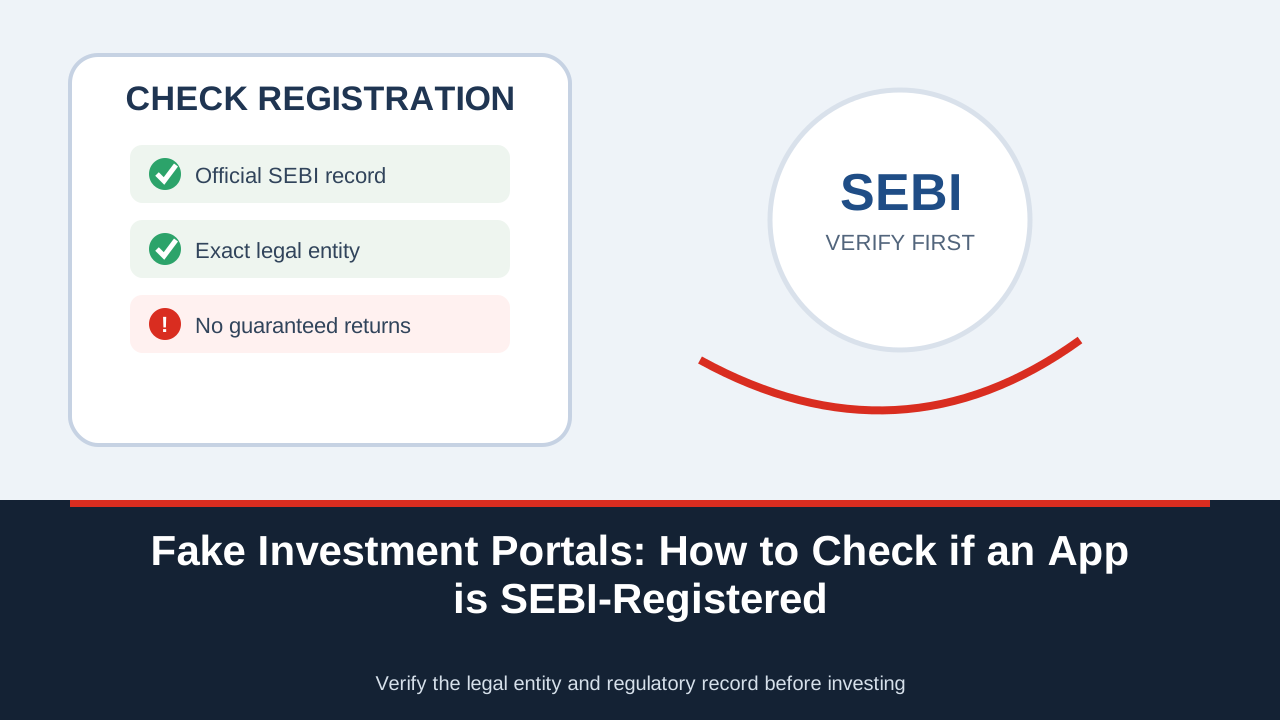
A polished investment app can look legitimate long before you know who operates it. A familiar logo, professional dashboard, claimed “SEBI registration,” screenshots of profits or a WhatsApp adviser are not proof that an investment service is authorised.
In India, the safer approach is to verify the entity through SEBI’s own registration information before transferring money or relying on investment advice. SEBI’s investor-support portal explicitly tells investors to check the registration status of a market intermediary before investing and provides information about registered intermediaries.

What “SEBI-registered” actually means
Registration is not a universal badge that makes every investment product or every promise from a business safe. Different activities have different regulatory requirements. An investment adviser, broker, research analyst and other intermediary can have different registration categories and obligations.
Therefore, do not stop at a sentence such as “SEBI registered.” Ask: registered as what, under which legal entity, and does the registration match the service being offered?
How to check a claimed SEBI registration
- Identify the legal entity. Record the company’s or adviser’s exact legal name, not just the app or brand name.
- Find the registration number. A genuine regulated intermediary should be able to provide the relevant registration details for its regulated activity.
- Use SEBI’s official intermediary search. Search the exact entity on SEBI’s website rather than clicking a verification link supplied by the promoter.
- Compare the details. Check the legal name, registration number and category against the information shown by SEBI.
- Check the service. If the entity is registered for one activity but is offering another regulated service, treat that mismatch as a warning sign.
- Check regulatory warnings. SEBI’s investor resources also publish alerts and information about unauthorised schemes.
Why you should type the regulator’s website yourself
Scammers can create fake “registration verification” pages that imitate government websites. A safer habit is to navigate to SEBI’s official domain independently and search from there. SEBI’s investor-support page provides a dedicated “Check Registration Status of Market Intermediary” route.
5 red flags that should make you stop
1. Guaranteed returns
Claims that an investment is guaranteed to generate a fixed or unusually high return should trigger skepticism. Legitimate registration does not turn a market investment into a guaranteed-profit product.
2. Pressure to transfer money immediately
“Today only,” “VIP allocation,” or “send funds before the market opens” tactics are designed to reduce the time you have to verify information.
3. Personal bank or UPI details
Be cautious when an alleged investment representative asks you to send money to a personal account, unrelated company, wallet or UPI ID rather than through the expected regulated workflow.
4. Screenshots instead of verifiable records
A screenshot of a certificate, registration number or successful withdrawal can be fabricated. Verify the underlying information independently.
5. Registration details that do not match
If the name in the app differs from the name in SEBI’s database, or the number belongs to another entity, do not assume it is a harmless branding difference. Stop and verify.
What a SEBI registration check cannot tell you
A registration check can help establish whether a particular intermediary appears in SEBI’s records. It does not guarantee that every advertisement, employee, website or social-media account claiming to represent that entity is genuine. It also does not guarantee investment performance.
Think of registration as one verification layer, not a substitute for checking the product, contract, fees, bank-account details and communications channel.
What to do if an app looks suspicious
- Do not add more money to the account.
- Save screenshots, URLs, phone numbers, payment records and chat messages.
- Contact the regulated intermediary through contact details independently obtained from its official website or SEBI record.
- If you have already lost money, contact your bank/payment provider promptly and report the incident through the appropriate cybercrime channel.
- Use SEBI’s investor-support resources for regulatory questions or complaints. SEBI’s investor helpline is 1800-266-7575 or 1800-22-7575.
Quick verification checklist
| Check | Safe question to ask |
|---|---|
| Legal identity | Who is the actual regulated entity? |
| Registration | Does the exact entity appear in SEBI’s records? |
| Category | Does its registration match the service being offered? |
| Money flow | Where exactly am I being asked to send funds? |
| Returns | Are profits being presented as guaranteed? |
| Communication | Can I independently confirm this person works for the entity? |
Bottom line
Before trusting an investment app, verify the legal entity and regulatory status independently on SEBI’s official website. A genuine-looking interface is easy to copy; an independently verified regulatory record is much harder to fake. If the registration, entity name, service or payment route does not line up, walk away until it is resolved.