
Effective cost management keeps businesses profitable and competitive. Smarter resource planning such as allocating time, money, and people wisely cuts expenses while maintaining productivity and quality. This blog shares practical strategies to reduce costs through resource planning, with clear, actionable insights to help your business succeed.
Why Resource Planning Drives Cost Management
Resource planning ensures the right resources like people, tools, or budgets are used efficiently at the right time. Poor planning leads to overspending, wasted assets, or delays, hurting your bottom line. Smart resource planning, however, controls costs, boosts efficiency, and maximizes what you have.

For example, a construction company overbuying materials ties up cash in unused inventory. A tech firm underestimating project hours risks costly delays. Strategic resource planning aligns resources with needs, reducing waste and keeping budgets on track.
(Learn more: What Is Resource Planning?)
7 Practical Strategies to Cut Costs with Resource Planning
Here are seven actionable strategies to optimize resource planning and improve cost management:
1. Conduct a Resource Audit
Understand your current resources to identify waste and opportunities for savings.
- What to do: List all resources, like equipment, materials, or staff skills. Analyze usage to spot inefficiencies, such as idle machines or overworked employees.
- Example: A retail chain might find stores overstaffed during slow hours. Adjusting schedules to match peak times cuts labor costs.
- Tip: Use resource management software for real-time tracking to simplify the process and reveal cost-saving gaps.
2. Leverage Data-Driven Forecasting
Predict future needs accurately to avoid over- or under-allocating resources.
- What to do: Use historical data and market trends to forecast demand. Analyze past patterns to plan budgets and resources effectively.
- Example: A restaurant chain might use sales data to predict busy seasons, adjusting inventory to avoid overstocking. A software team could estimate coding hours to prevent last-minute hires.
- Tip: Invest in predictive analytics tools to improve forecasting accuracy and reduce overspending.
3. Prioritize High-ROI Projects
Focus resources on projects with the biggest return on investment (ROI).
- What to do: Evaluate projects based on revenue potential, strategic value, or customer impact. Use a scoring system to allocate resources objectively.
- Example: A marketing agency might prioritize campaigns driving the most leads, cutting back on low-performing ones. A logistics firm could invest in fuel-efficient trucks for busy routes.
- Benefit: This ensures resources deliver maximum value, supporting cost management and growth.
4. Cross-Train Employees for Flexibility
Make your workforce versatile to reduce labor costs and improve efficiency.
- What to do: Train employees to handle multiple roles, reducing the need for extra hires or overtime. Identify overlapping tasks and create a training plan.
- Example: A small business might train staff for both customer service and basic accounting. Factory workers could learn multiple machines to avoid delays.
- Bonus: Cross-training boosts employee engagement, reducing turnover and recruitment costs.
5. Embrace Technology for Better Planning
Use technology to gain visibility into resources and uncover savings.
- What to do: Adopt tools like project management tools, Gantt Chart software, ERP systems, or time-tracking apps to monitor resource usage in real time.
- Example: A construction firm might track equipment to avoid over-renting. A marketing agency could use time-tracking to ensure accurate billing and prevent overwork.
- Tip: Cloud-based platforms automate tasks like scheduling or inventory tracking, freeing time for strategic cost-saving decisions.
6. Negotiate with Suppliers
Lower external costs by securing better deals with suppliers.
- What to do: Review supplier contracts for competitive pricing. Explore bulk buying, long-term agreements, or new suppliers for better value.
- Example: A bakery might negotiate a flour discount with a six-month contract. Strong supplier relationships can unlock early payment discounts or flexible delivery.
- Benefit: Aligning supplier agreements with resource planning reduces material costs without compromising quality.
7. Review and Adjust Plans Regularly
Keep resource plans aligned with current needs through ongoing reviews.
- What to do: Schedule monthly or quarterly reviews. Track metrics like budget variance, resource utilization, or project completion times to spot issues.
- Example: A tech startup might check cloud computing costs monthly to avoid paying for unused server space. Adjust resources based on actual usage.
- Tip: Build flexibility into plans to adapt to unexpected changes, ensuring cost management stays effective.
Pitfalls to Avoid in Resource Planning
Steer clear of these common mistakes to make your strategies work:
- Overlooking Hidden Costs: Track both direct (e.g., materials) and indirect costs (e.g., downtime or training).
- Relying on Manual Processes: Manual tracking is slow and error-prone. Use technology for accuracy.
- Excluding Your Team: Involve employees to identify inefficiencies and solutions.
- Sticking to Fixed Plans: Stay flexible to adapt to shifting needs or challenges.
How TaskFord Enhances Resource Planning
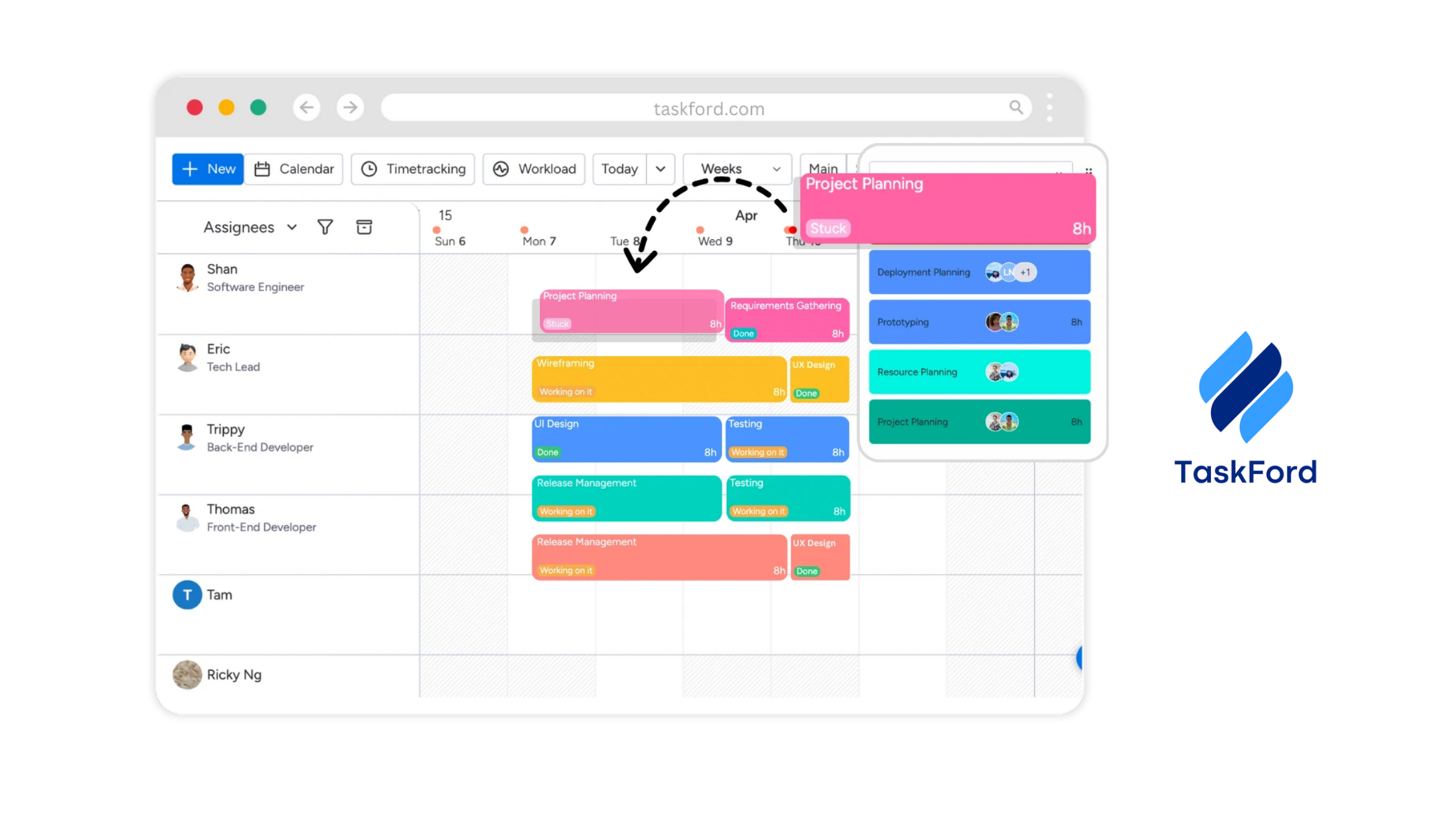 TaskFord, a comprehensive project management and resource planning platform, offers robust features for teams of all sizes, helping businesses optimize resources and cut costs with practical tools.
- Resource Allocation: Assign tasks via drag-and-drop based on team skills and availability to ensure efficient distribution; use it to prevent overtime costs, like a marketing team reassigning tasks to meet deadlines without delays.
- Workload Insights: Analyze team capacity and task loads to identify and prevent overloads; use it to balance schedules, like a marketing team redistributing work to avoid burnout and extra labor expenses.
- Time Tracking: Log hours against tasks with automated reminders for accurate billing and resource tracking; use it to monitor developer hours in an IT team, preventing overwork and ensuring cost-efficient project delivery.
- Gantt Charts: Visualize task schedules and timelines to plan due dates and monitor progress; use it to sequence project tasks, like a software team prioritizing critical milestones to avoid costly delays. TaskFord also supports a more advanced version like WBS Gantt Chart.
- Cost Management: Track planned versus actual expenses with detailed reports to stay within project budgets; use it to set spending limits and detect overruns early, like a retailer aligning inventory with sales to avoid overstock costs.
Long-Term Benefits of Smarter Resource Planning
These strategies deliver more than short-term savings. They build a culture of efficiency, where every dollar and hour is used wisely. Over time, this leads to:
- Improved Profitability: Reinvest savings into innovation, like new products or markets.
- Happier Employees: Cross-training and involvement boost morale and reduce turnover.
- Stronger Resilience: Efficient resource use helps your business handle economic shifts or disruptions.
Conclusion
Smarter resource planning empowers businesses to cut costs while boosting efficiency and quality. By leveraging tools like TaskFord and adopting a strategic approach, you can optimize resources, reduce waste, and drive profitability. Start implementing these cost management practices today to unlock sustainable growth and stay ahead in a competitive landscape.