Running a sports bar sounds exciting on paper. Match nights, packed crowds, energy in the air, and drinks flying across the counter. But behind all that buzz is a business that runs on very thin margins. Most bars worldwide operate on a net profit margin of just 10 to 15 percent, and a large chunk of that disappears through poor inventory control, untracked staff hours, and billing errors that nobody notices until it is too late. That is exactly where sports bar restaurant management software is making a real difference. Smart bar owners today are not just relying on great ambiance and a big screen. They are using technology to track every bottle, every order, and every shift, so the money they earn actually stays in their pocket.
What Does Restaurant Management Software Actually Do for a Sports Bar?
A lot of people hear “restaurant management software” and think it is just a billing tool. It is much more than that. A good sports bar restaurant management software platform covers Running a sports bar sounds exciting on paper. Match nights, packed crowds, energy in the air, and drinks flying across the counter. But behind all that buzz is a business that runs on very thin margins. Most bars worldwide operate on a net profit margin of just 10 to 15 %, and a large chunk of that disappears through poor inventory control, untracked staff hours, and billing errors that nobody notices until it is too late. That is exactly where sports bar restaurant management software is making a real difference. Smart bar owners today are not just relying on great ambiance and a big screen. They are using technology to track every bottle, every order, and every shift, so the money they earn actually stays in their pocket.

Why Sports Bars Face Unique Cost Challenges Compared to Regular Restaurants
A sports bar is not just a restaurant with TVs on the wall. It is a high volume, event driven business where demand spikes unpredictably. One Wednesday night could be dead quiet. The next, it is a Champions League final and you have 200 people ordering at the same time. This kind of demand volatility creates a specific set of problems that regular restaurants do not face at the same scale.
The biggest issue is inventory. When a match is on, bottles move fast, and without a proper system, staff often lose count of what went out, what was wasted, and what went unaccounted for. Research from Sculpture Hospitality shows that bars can lose up to 20 to 25 % of their potential revenue through poor inventory practices, including overpouring, theft, and spoilage. That is not a small number. For a sports bar doing monthly revenue of five lakh rupees, that is one lakh gone every single month.
Then there is the staffing problem. Match nights need more hands. Off days need fewer. Getting everything from the front of the house to the back. It handles order management, table assignments, billing, kitchen coordination, staff scheduling, inventory tracking, and real time sales reporting, all in one place.
Think of it as the brain of your entire operation. When a customer places an order, it goes directly to the kitchen display. The system deducts ingredients from inventory automatically. At the end of the night, you get a report showing what sold, what did not, which staff processed the most orders, and where discrepancies exist. This is not something you can replicate with a notebook or even a basic spreadsheet.
Globally, the restaurant management software market was valued at around USD 6.5 billion in 2026 and is growing at a compound annual growth rate of over 14 %, according to Maximize Market Research. The Asia Pacific region, which includes India, is one of the fastest growing segments. That tells you something important: bar and restaurant owners across the world are no longer treating software as optional. It has become a core part of running a profitable business.
How Bar Inventory Management Software Stops the Bleeding
Inventory is where most sports bars silently lose money. It happens in small ways every day. A bartender overpours a beer by 30 milliliters on every glass. Multiply that across 200 glasses on a match night and you have practically given away several full bottles for free. A keg gets tapped poorly and a quarter of it goes to foam. Stock sitting untracked at the back expires before anyone notices. These are not dramatic disasters. They are slow leaks that drain profitability over months.
Bar inventory management software fixes this by automating the tracking process. Every product entering the bar is logged. Every drink sold is linked back to the inventory. The system calculates variance, which is the difference between what was sold and what was actually consumed, and flags anything that looks off. Leading platforms like WISK, BinWise, and Restroworks are built specifically for this kind of granular tracking. When variance reports show that a particular spirit is consistently off by 10 % every week, the manager knows exactly where to look.
The impact of getting inventory right is significant. A bar doing annual purchases of five lakh rupees and running at a 9 %variance is losing roughly 45,000 rupees a year on that variance alone. That is money that better inventory control puts directly back into the business. For sports bars in India where margins are already squeezed by licensing costs, rent, and event rights, this kind of saving is the difference between a good month and a bad one.
The Role of a Restaurant POS System for Sports Bar Operations
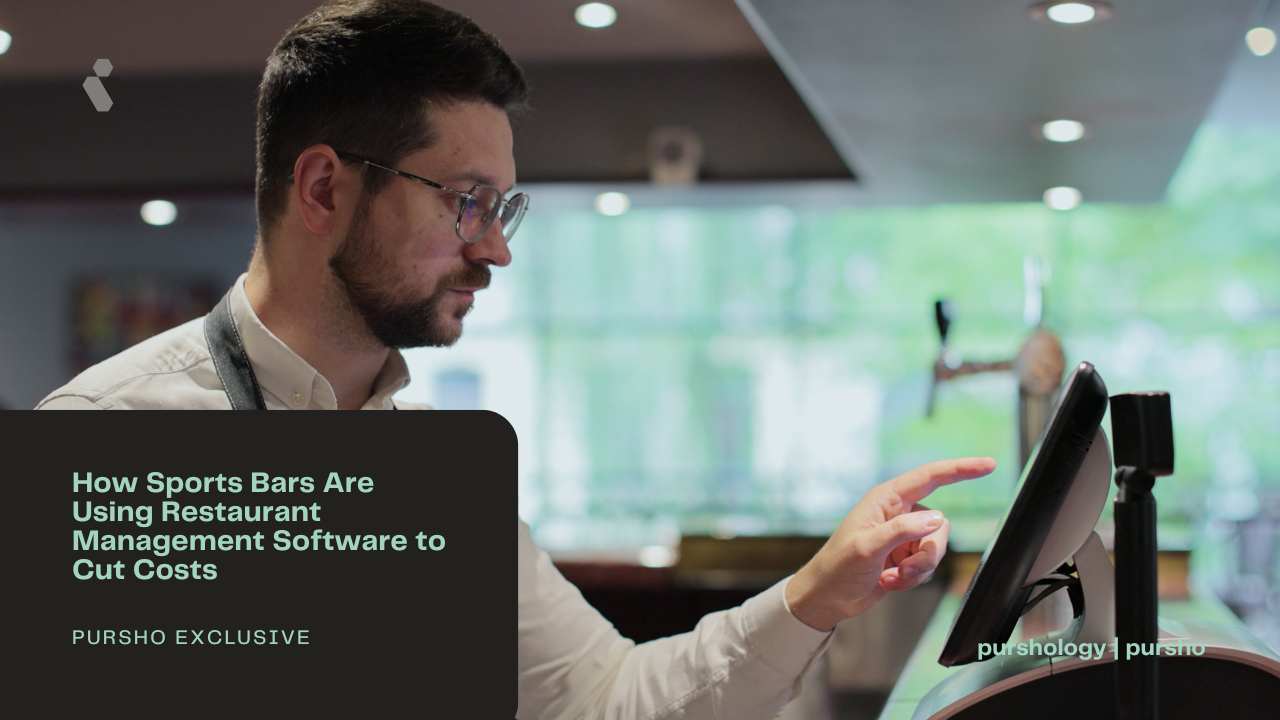
If inventory is the back end, the POS system is the front. A restaurant POS system for sports bar handles every transaction that happens at the counter, the table, or through a QR order. It sounds simple but the way a POS system is set up can have a huge impact on how fast orders move, how accurately bills are generated, and how well data is captured for later analysis.
During a big match, speed is everything. If a customer has to wait three minutes to get their order placed and another five minutes to pay, they get frustrated and your table turnover drops. A modern POS system with touchscreen interfaces, split billing, and contactless payment support can cut transaction time dramatically. Toast and Square for Restaurants are two globally recognized platforms that have built their products around exactly this kind of high volume scenario.
Beyond speed, a good POS system also eliminates billing errors. Manual billing in a packed sports bar is a recipe for mistakes. Wrong items, missing drinks, and accidental discounts all add up. The restaurant billing system India segment is seeing strong adoption precisely because businesses have realized that even small billing errors, when they happen dozens of times a night, create measurable revenue loss. Automated billing through a connected POS removes this variable completely.
A Real World Example: How a Sports Bar in Noida Turned Things Around
Consider a mid size sports bar in Noida that was doing well on match nights but struggling to understand where the money was going. Revenue looked decent on the surface, but profits at the end of the month were lower than expected. The owner was spending long hours at the end of each week manually reconciling sales, counting stock, and matching bills. Despite the effort, numbers never quite added up.
After switching to a restaurant management platform that included POS, inventory tracking, and staff scheduling in a single system, the visibility changed overnight. The software revealed that a significant portion of stock variance was happening during the late night rush when supervision was lowest. Billing discrepancies that were being absorbed as “miscellaneous” losses were actually consistent patterns tied to specific staff shifts. Within three months of using the system, the bar had reduced inventory variance by nearly 18 % and cut billing errors significantly. The time the owner previously spent on manual reconciliation was now used to plan promotions and improve the customer experience.
This is not an unusual outcome. Across India, businesses using integrated restaurant management software for bars and pubs are reporting similar results. The software does not run the bar for you, but it gives you accurate data so you can make decisions that actually improve the bottom line.
How Bar Staff Scheduling Software Reduces Labor Costs Without Hurting Service
Labor is typically the second biggest cost in any bar after alcohol. And for sports bars, scheduling is more complicated than for most businesses because demand is tied to events, not just days of the week. A Tuesday with a Test match is busier than a Saturday without one. Getting staffing levels right requires either experience built over years or data, and most growing bars do not have the luxury of waiting years to figure it out.
Bar staff scheduling software solves this by pulling in sales data and helping managers build schedules that match expected demand. When the software can see that last month’s IPL matches brought in three times the usual traffic on certain evenings, it suggests staffing levels to match. This prevents two common and equally damaging problems: understaffing during peak hours that hurts service quality, and overstaffing during slow periods that inflates labor cost without any return.
According to the National Restaurant Association’s 2024 Technology Landscape Report, 73 % of restaurant operators reported higher operational productivity after investing in technology. The labor component is a big part of that. Platforms like HotSchedules and 7Shifts are widely used internationally for exactly this purpose. In the Indian context, this kind of scheduling intelligence is even more valuable because match calendars change, festivals create unexpected surges, and weekend patterns in cities like Noida, Delhi, and Bengaluru shift significantly depending on local events.
Custom Software Development: When Off the Shelf Is Not Enough
Not every sports bar fits neatly into a standard software template. Some have multiple floors with different service styles. Some combine a bar with a restaurant, a gaming zone, or a private event space. For these setups, a one size fits all platform can create more friction than it solves because the workflows it was built around do not match the actual operation.
This is where custom software development services become relevant. A custom built system can be designed around how a specific bar actually operates, including the KOT flow, the table management logic, the inventory categories, and the reporting format the owner actually wants to see. It can also integrate with hardware already in use, loyalty programs, or third party delivery platforms without workarounds.
Companies offering custom development in the hospitality tech space build these systems to grow with the business. As the bar adds locations or evolves its service model, the software evolves with it. AppSquad, a Noida based web and software studio, works with businesses across the food and beverage segment to build tailored digital solutions, including management platforms designed around the specific operational needs of the venue rather than a generic industry template. For bars that have outgrown basic tools, this kind of investment pays for itself quickly when the inefficiencies it eliminates are accounted for.
Key Features to Look for in Sports Bar Restaurant Management Software
Not all platforms are built the same. Before choosing a system, it helps to know what actually matters for a sports bar environment specifically.
Here is a quick comparison of core features and their impact:
| Feature | What It Does | Why It Matters for Sports Bars |
| Real Time Inventory Tracking | Monitors stock levels as items are sold | Catches overpouring and shrinkage instantly |
| Event Based Sales Reporting | Breaks down performance by match day vs off day | Helps with stocking and staffing decisions |
| Multi Mode Billing | Handles table, counter, and QR orders | Speeds up service during high volume periods |
| Staff Scheduling Module | Builds rosters based on demand forecasts | Reduces labor waste and prevents understaffing |
| Variance Reporting | Flags differences between usage and sales | Identifies theft, waste, and errors early |
| Cloud Based Access | Owner can monitor remotely | Useful for multi location or absentee management |
When evaluating platforms, the key question is not which one has the most features. It is which one fits the actual workflow of the bar without requiring staff to change how they operate in ways that slow things down.
Conclusion
Running a profitable sports bar in 2026 is as much about data as it is about atmosphere. The venues that are consistently making money are not necessarily the ones with the fanciest interiors or the biggest screens. They are the ones where the owner knows their inventory variance, their labor cost per shift, and their revenue per match night, because their sports bar restaurant management software gives them that clarity every single day.
The shift toward technology in the bar and restaurant industry is no longer optional. It is the standard that profitable businesses are operating at. Whether it is a restaurant POS system that speeds up billing, bar inventory management software that eliminates silent losses, or scheduling tools that get staffing right on match nights, each of these pieces contributes to a business that keeps more of what it earns. For bar owners still relying on manual processes, the question is not whether to adopt these tools. It is how much longer they can afford not to.