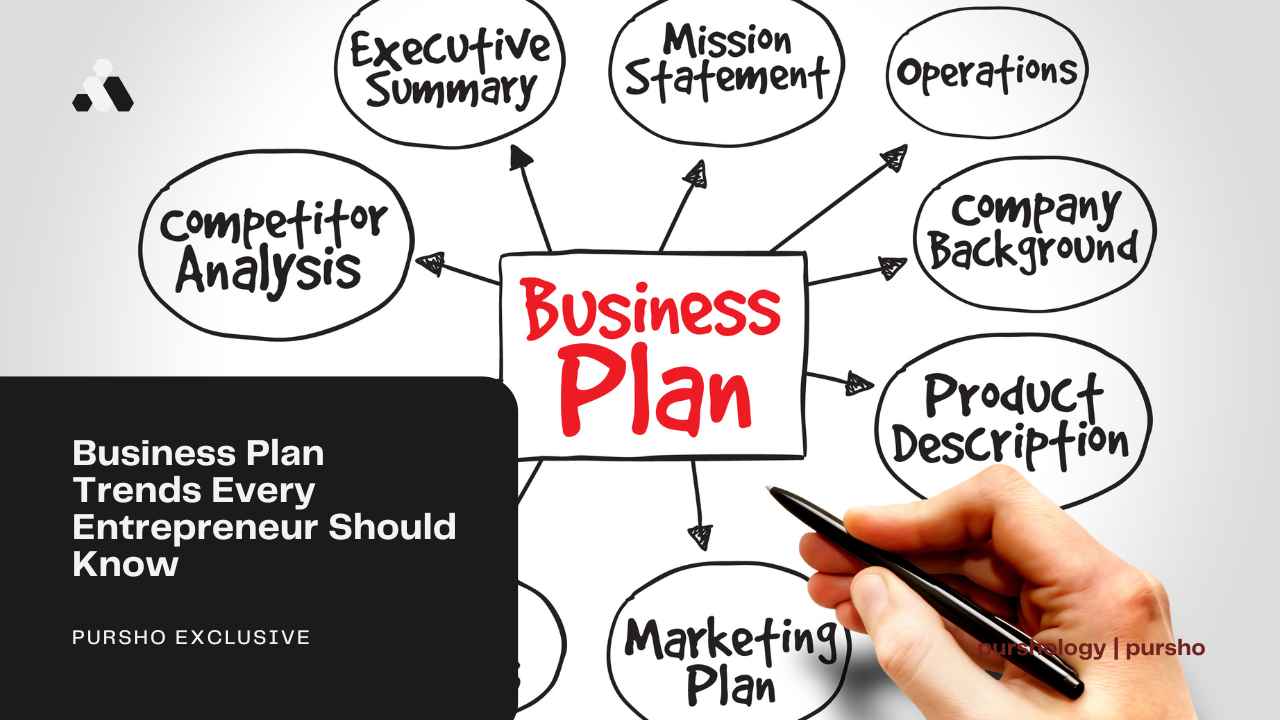
Today’s business landscape is different than just five years ago. There have been changes in the tools available. The expectations from investors have changed. Additionally, the way that business plans are written is changing. A strategy that succeeded in 2015 may not be effective today, as customers, banks and partners desire something more up-to-date. They don’t need promises, they need proof. Their numbers need to be strong, and the ideas have already been tried in some way. It’s forcing entrepreneurs to re-work the foundation of their plans. Below, you’ll find the trends that are affecting business plans today, and the reasons why each is important if you hope to get your plan read and acted upon.
Business Plans Today Look Different – For a reason.
For a reason, Business Plans Today Look Different.

Old-style business plans were long. Others were 50 pages or more, with paragraphs that ran on for as long as no one could bear to read them. This type of format is no longer valid. As an investor, a banker or a partner, people are busy when looking at plans. They’re looking for the highlights. This has led entrepreneurs to shorter, sharper, and more to-the-point writing.
It also requires writers to be more creative in figuring out what matters. A short plan will not allow you to ramble and include anything that is not answering questions – What problem are you solving? Who will be responsible for funding it? How are you going to earn a living?
Instead of long documents, lean plans are replacing them.
Many startups have adopted the lean business plan as the norm. It is not always a narrative, but it’s usually one page that has a problem, a solution, key metrics and a revenue stream section. This format is effective as it can be updated speedily with the change of business.
A lean plan is not a substitute for more research. It’s a short-cut to that research. Founders should know their numbers, and their market. They present it in a format that’s more readily scan-able and more readily revise-able.
Several points of interest here:
- One page plans are used in early-stage pitches.
- It is still assumed there are longer plans for loans or formal investment rounds.
- Both versions should be identical, only different lengths.
Data is playing a more and more important role in decision-making.
When it comes to a business plan, gut feeling used to go a long way. Not anymore. Investors and lenders want substantiation of claims based on data. When you have to say that there’s a demand for your product, you should provide numbers, not just opinions.
Here’s where market research and opinion polls and even a small trial run can help! A plan based on facts – not assumptions – is more credible. It compels the entrepreneur to test their idea with reality, and not waste money on an idea that isn’t.
Sustainability receives a seat at the table.
Sustainability gets a seat at the table.
Sustainability used to be a line item or nice mention a few years ago. Many businesses, particularly those aiming for younger clients, now have it as a fundamental part of their business plan. Consumers want to know where a company gets materials, how it treats its employees and what happens to its waste.
This isn’t only about ethics. It’s also practical. Environmental risk is a topic of growing concern for investors and willing to spend more on brands they trust on this aspect. Not including sustainability in a plan can come across as a lack of choice, not a neutral option.
Flexible Plans are Better than Fixed Plans!
Markets shift fast. When your plan is confined to a single direction – it can become outdated in months. This is why more entrepreneurs are making flexibility a key part of their plans and have built in checkpoints to review assumptions and change course as necessary.
This may be to establish quarterly reviews of the plan rather than making it a one-time booklet. It might also be about developing several pricing or growth models rather than going with a single one. The aim is to create a plan that will flex when needed but won’t break.
The only thing investors want to see is market validation.
This represents one of the largest changes to the way plans are assessed. It is no longer enough for an idea to be “good” and “good” on paper for investors to accept it. They want to know that there’s demand for what you’re selling. Validation of your ideas ensuring success in business and entrepreneurship is no longer an afterthought added to an appendix, but rather a focus point in initial discussions with backers.
This may be a result of some early sales, letters of intent, a waitlist, or even a small-scale test launch. It’s as easy as this: let someone else outside your own head know that this is important to you. A plan that has even a small amount of evidence of demand will stick out as better than a plan based solely on projections.
Remote & Hybrid Models Change the Numbers
The way you plan staffing, office space, and even location is different in this new hybrid/remote work world. Creatively designing a plan five years ago would have taken for granted having an office. It is no longer automatic any more.
This changes budgets. It can reduce overhead costs. But it also brings new challenges regarding team culture, communication channels and people management at different time zones. Nowadays, plans often have a paragraph dealing with how the team will work as well as where.
The use of technology is becoming a requirement, not an option.
Nearly all businesses, including non-tech businesses, have to describe how they are going to leverage technology. This could be anything from automation tools to customer relationship software, AI-powered customer support or even basic scheduling apps. It makes a plan incomplete if it is not considered.
This section doesn’t need to be long. But it should demonstrate that the entrepreneur has considered efficiency and has not overlooked tools which would save time or money. Investors will not be happy when a plan does this.
The plan is framed by personal branding.
Personal Branding influences the plan.
The section on personal branding by the founder is increasingly part of business plans, particularly for small businesses and solo entrepreneurs. Where people shop is where they build trust, and trust often begins online or on social media, or in the content the leader shares.
This isn’t just vanity. A founder that already has an audience or reputation can save on marketing expenses and accelerate early sales. Putting this in a plan provides a more complete picture of the business than just the product.
Simple Financial Models Win Trust
Too complex financial projections can be detrimental to a plan. Either numbers appear too polished, or too optimistic, and people become suspicious. It’s easy to establish more trust with simple, honest financial models that have clear assumptions, rather than detailed spreadsheets that include best-case scenarios.
A good financial section should reflect:
- Realistic revenue estimates based on research and actual facts.
- Be specific about costs and expenses, rather than estimates.
- Conservative case and a hopeful case.
Honesty is more important than impressions. Enough numbers have been around to be noticed by those reviewing plans.
Closing Thoughts
Business plans are constantly evolving, as business is constantly evolving. Even if it worked in the past, it doesn’t necessarily work in the present, and the ones who listen to these change their plans; people read them, and they take them seriously. It’s no longer about extras like shorter formats, real data, sustainability, flexibility, and proof of demand. They are one of the reasons that a plan is credible today.
This does not imply that a business plan must be complex. The trend is to make the documents simpler and even more straightforward, and focus on what matters most. Make sure you have the foundations correct, support your arguments and be prepared to adapt as circumstances evolve. That’s the difference between a plan that’s sitting in a drawer and a plan that actually helps a business grow.