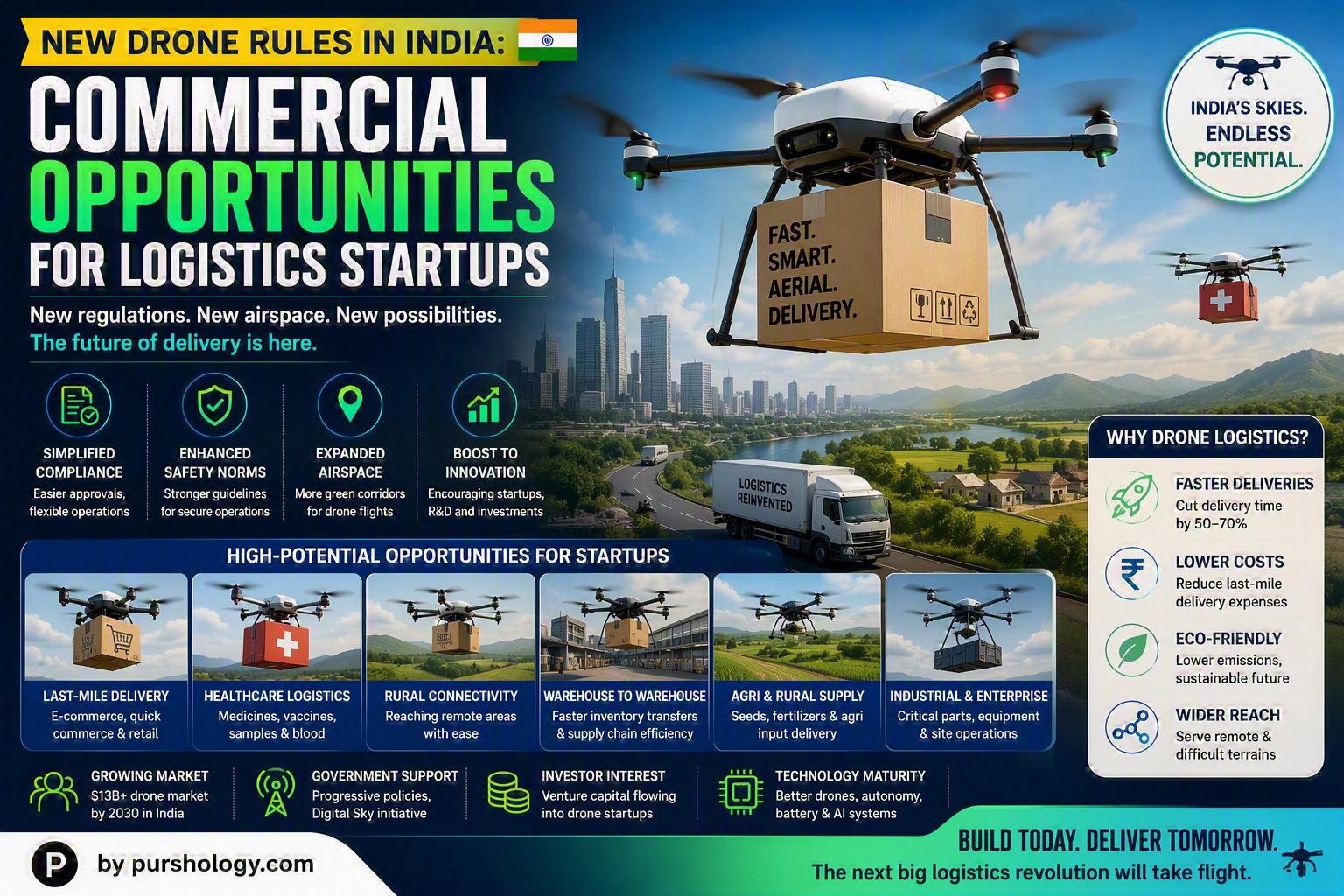
TL;DR:
India’s evolving drone regulations are creating new opportunities for logistics startups to transform last-mile delivery, medical supply chains, warehouse operations, rural connectivity, and industrial inspections. As the government continues to support drone adoption through progressive policies and innovation programs, logistics companies have a unique opportunity to build faster, more cost-effective, and scalable delivery networks. The startups that move early could become major players in India’s next logistics revolution.
India’s logistics sector is undergoing a rapid transformation.

From e-commerce growth and instant delivery expectations to supply chain modernization, businesses are constantly searching for faster and more efficient ways to move goods. At the same time, India’s drone ecosystem has matured significantly, supported by regulatory reforms, technological advancements, and government-backed innovation initiatives.
The result is a powerful convergence of logistics and aerial mobility.
For startups, the new era of drone-friendly regulations represents more than just technological innovation. It opens the door to entirely new business models capable of reshaping how products move across cities, towns, and remote regions.
Let’s explore the commercial opportunities emerging for logistics startups in India’s drone economy.
Why Drones Are Becoming a Logistics Game-Changer
Traditional logistics networks face several challenges:
- Traffic congestion
- High last-mile delivery costs
- Difficult rural accessibility
- Long delivery times
- Infrastructure limitations
Drones address many of these obstacles by enabling direct point-to-point transport.
Key advantages include:
- Faster delivery timelines
- Reduced transportation costs
- Lower dependency on road infrastructure
- Greater geographic coverage
- Improved operational efficiency
For logistics startups, these benefits can unlock significant competitive advantages.
Marketing Takeaway
The companies that optimize speed and efficiency often gain the greatest market share.
Last-Mile Delivery is the Biggest Opportunity
The final leg of a delivery journey remains the most expensive and complex component of logistics.
Drone delivery can dramatically improve last-mile operations by reducing travel time and bypassing traffic bottlenecks.
Potential use cases include:
- E-commerce deliveries
- Restaurant deliveries
- Pharmacy fulfillment
- Express shipments
- Document transportation
As consumers increasingly expect same-day and even same-hour delivery, drones can help startups meet these growing demands.
Business Opportunity
Build drone-powered delivery networks for e-commerce marketplaces and quick-commerce operators.
Rural Logistics and Remote Connectivity
Large parts of India still face logistical challenges due to terrain, infrastructure gaps, and geographic remoteness.
Drones can connect underserved areas by delivering:
- Essential medicines
- Educational materials
- Agricultural supplies
- Government documents
- Consumer products
For logistics startups, rural drone networks may emerge as one of the most valuable long-term opportunities.
Marketing Takeaway
The greatest growth often exists where traditional infrastructure struggles to scale.
Healthcare Delivery Networks
The healthcare sector is among the earliest adopters of drone logistics.
Drones can transport:
- Medicines
- Vaccines
- Diagnostic samples
- Blood units
- Emergency medical supplies
Rapid transportation can prove critical in emergencies and remote healthcare situations.
Logistics startups focusing on healthcare supply chains can create specialized drone-based solutions that improve both speed and accessibility.
Business Opportunity
Develop dedicated medical logistics platforms for hospitals, clinics, and healthcare providers.
Warehouse-to-Warehouse Transportation
Drone logistics extends beyond customer deliveries.
Businesses can use drones to transport inventory between:
- Warehouses
- Fulfillment centers
- Distribution hubs
- Manufacturing facilities
These movements can improve inventory management and reduce operational downtime.
As supply chains become increasingly digital, drone-enabled inventory transfers can provide substantial efficiency gains.
Marketing Takeaway
Not every drone opportunity involves consumer delivery. B2B logistics may be equally lucrative.
Agriculture Supply Chains
India’s massive agricultural economy presents another compelling opportunity.
Drones can support logistics around:
- Seeds
- Fertilizers
- Agricultural inputs
- Crop monitoring
- Farm-to-market transportation
Startups serving agribusinesses can leverage drone technology to improve efficiency and reduce transportation costs across rural markets.
Business Opportunity
Create specialized logistics solutions tailored to agricultural supply chains.
Hyperlocal Commerce and Quick Delivery
Quick-commerce platforms have conditioned consumers to expect ultra-fast fulfillment.
Drones can support:
- Grocery delivery
- Convenience products
- Emergency items
- Consumer electronics
- Specialty items
By reducing delivery times dramatically, startups can enable new commerce models that were previously difficult to achieve economically.
Marketing Takeaway
Speed increasingly influences purchasing decisions.
Logistics for Industrial Operations
Industrial companies often require transportation of urgent components and equipment.
Drone logistics can support:
- Manufacturing facilities
- Mining operations
- Energy projects
- Construction sites
- Infrastructure maintenance
These use cases typically involve high-value shipments where speed has significant economic value.
Business Opportunity
Enterprise-focused drone logistics services often offer higher margins than mass consumer delivery.
Data and Fleet Management Services
Not every startup needs to operate drone deliveries directly.
The ecosystem also requires supporting infrastructure such as:
- Fleet management software
- Route optimization platforms
- Air traffic coordination systems
- Compliance management tools
- Delivery analytics solutions
As drone adoption grows, these enabling technologies may become substantial businesses on their own.
Marketing Takeaway
Infrastructure providers often benefit from industry growth without managing operational complexity.
Challenges Startups Must Address
While opportunities are significant, successful execution requires overcoming several hurdles:
- Regulatory compliance
- Airspace management
- Safety requirements
- Battery limitations
- Public acceptance
- Operational scalability
Companies that solve these challenges effectively will establish strong competitive moats.
What Investors Are Looking For
Investors evaluating drone logistics startups increasingly focus on:
✅ Regulatory readiness
✅ Clear commercial use cases
✅ Scalable operating models
✅ Strong technology capabilities
✅ Unit economics viability
✅ Enterprise partnerships
✅ Safety and compliance frameworks
The era of speculative drone concepts is fading. Practical solutions are gaining traction.
The Future of Drone Logistics in India
Over the next decade, drone networks could become a standard part of India’s logistics infrastructure.
Potential developments include:
- Autonomous delivery corridors
- Drone logistics hubs
- Smart city integration
- Healthcare delivery networks
- Rural commerce ecosystems
- Industrial drone transportation services
As adoption increases and technology improves, logistics startups will gain access to new revenue streams and market opportunities.
Final Thoughts
India’s evolving drone ecosystem represents one of the most exciting opportunities in modern logistics. Regulatory progress, growing technological maturity, and increasing commercial acceptance are creating favorable conditions for drone-powered innovation.
For logistics startups, the opportunity extends far beyond package delivery. Healthcare, agriculture, industrial operations, enterprise logistics, and rural connectivity all present massive untapped markets. The businesses that build practical, scalable, and compliant solutions today could become the category leaders of tomorrow.
Ready to Build the Next Generation of Logistics?
Whether you’re launching a drone startup, expanding a logistics business, or exploring emerging mobility solutions, now is the time to evaluate how aerial delivery can create competitive advantages. The future of logistics may not just move on roads. It may fly above them.