TL;DR
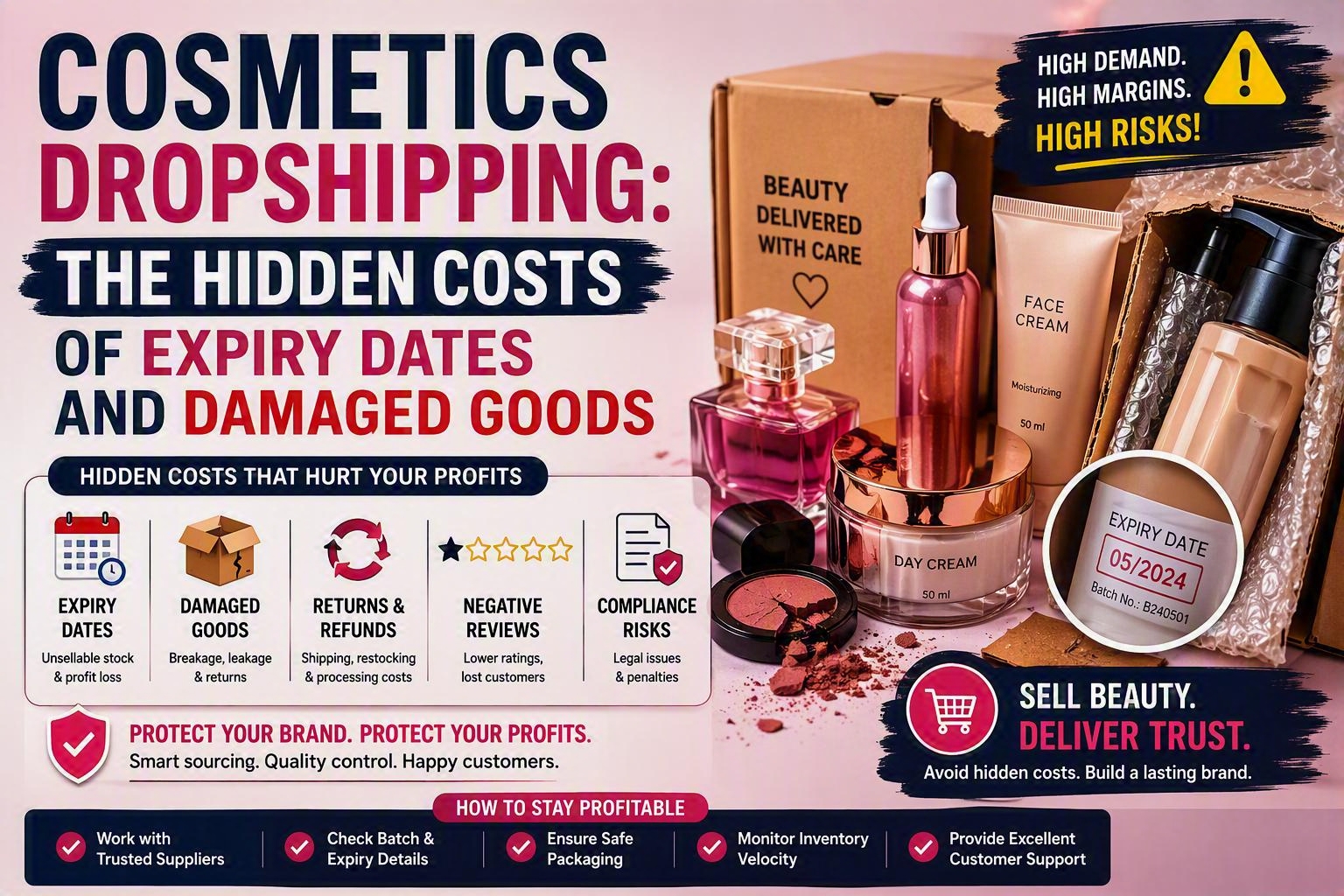
Cosmetics dropshipping can appear highly profitable due to strong demand and attractive margins, but many sellers underestimate the financial impact of expired inventory, damaged products, customer returns, and compliance risks. Success in 2026 depends on supplier quality, inventory visibility, product handling standards, and proactive risk management. Understanding these hidden costs is essential for building a sustainable and profitable cosmetics business.
The cosmetics industry remains one of the fastest-growing segments in e-commerce. From skincare serums and face masks to lipsticks and beauty kits, online shoppers are purchasing beauty products at record levels.

As a result, cosmetics dropshipping has become an attractive business model for entrepreneurs looking to enter the beauty market without maintaining large inventories.
However, there is one reality that many beginners discover too late:
Not every sale translates into profit.
Behind the promise of high margins lies a set of hidden costs that can significantly impact profitability, particularly expired products and damaged goods.
Before launching or scaling a beauty dropshipping business, it is crucial to understand these risks and how to manage them effectively.
Why Cosmetics Dropshipping Looks So Attractive
Beauty products offer several advantages:
- Strong consumer demand
- Repeat purchases
- Attractive profit margins
- Extensive product variety
- Growing online beauty market
Unlike many categories, consumers often repurchase the same skincare or beauty products regularly, creating opportunities for recurring revenue and customer loyalty.
But cosmetics come with unique challenges that distinguish them from categories like fashion, electronics, or home décor.
The Expiry Date Problem Most Sellers Ignore
A mobile cover can sit in inventory for years without losing value.
Cosmetics cannot.
Every cosmetic product has a shelf life, and many products include expiration dates or recommended usage periods after opening.
This creates multiple business challenges.
Slow-Moving Inventory
A product that fails to gain traction may remain unsold for months.
As expiration approaches:
- Customer confidence decreases
- Marketplace restrictions may apply
- Product value declines
- Discounting becomes necessary
This directly reduces profit margins.
Supplier Inventory Risks
Some suppliers attempt to clear aging inventory through dropshipping networks.
Without proper vetting, sellers may unknowingly offer products with limited remaining shelf life.
This can lead to:
- Customer complaints
- Refund requests
- Negative reviews
- Brand reputation damage
Financial Impact Example
Imagine selling 1,000 skincare products.
- Product Cost: ₹250
- Total Investment Value: ₹2,50,000
If 15% become difficult to sell due to approaching expiration:
- Potential Loss = ₹37,500
This hidden expense can erase a significant portion of profits.
The Cost of Damaged Goods
Beauty products are especially vulnerable during shipping.
Common issues include:
- Broken bottles
- Leaking liquids
- Cracked containers
- Damaged pumps
- Torn packaging
Even when the product itself remains usable, customers often expect cosmetics to arrive in perfect condition.
A damaged package frequently results in:
- Return requests
- Replacements
- Refunds
- Negative reviews
Each damaged order increases operational costs and damages seller credibility.
Returns Are More Expensive Than You Think
Many new dropshippers focus solely on product margins.
For example:
- Selling Price: ₹799
- Product Cost: ₹350
- Gross Profit: ₹449
Looks profitable.
But consider a returned order:
- Product Cost: ₹350
- Shipping Costs
- Return Processing Costs
- Customer Support Costs
- Marketplace Fees
A single return can completely eliminate profits from multiple successful sales.
In beauty categories, product safety concerns often increase return sensitivity compared to other product segments.
Customer Reviews Can Become a Hidden Cost
Negative reviews impact far more than reputation.
Poor product experiences can lead to:
- Reduced product visibility
- Lower conversion rates
- Increased advertising costs
- Declining repeat purchases
When customers receive products near expiration or damaged during transit, review scores often suffer.
Over time, poor ratings make customer acquisition significantly more expensive.
Compliance and Safety Risks
Cosmetics are not ordinary consumer goods.
Sellers must ensure products meet applicable quality, labeling, and safety requirements.
Important considerations include:
- Ingredient transparency
- Manufacturing details
- Product authenticity
- Storage conditions
- Batch tracking
Failure to verify suppliers properly can expose businesses to legal, financial, and reputational risks.
How Successful Cosmetics Dropshippers Protect Their Profits
1. Work Only With Verified Suppliers
Choose suppliers that can provide:
- Manufacturing information
- Batch details
- Shelf-life data
- Quality certifications
Supplier reliability directly impacts customer satisfaction.
2. Prioritize Packaging Quality
Protective packaging reduces damage-related losses.
Investing slightly more in packaging often saves substantially more in returns and refunds.
3. Monitor Product Velocity
Track:
- Fast-moving products
- Slow-moving products
- Seasonal demand patterns
This helps prevent inventory-related expiration issues.
4. Focus on Hero Products
Many successful beauty brands concentrate on a small number of high-performing products rather than listing hundreds of items.
This improves:
- Inventory control
- Customer satisfaction
- Marketing efficiency
- Profitability
5. Build Strong Customer Support
Quick responses to product concerns can prevent negative reviews and preserve customer relationships.
Exceptional service often transforms dissatisfied customers into repeat buyers.
Is Cosmetics Dropshipping Still Worth It in 2026?
Absolutely.
The beauty industry continues to offer substantial e-commerce opportunities for entrepreneurs willing to manage risks responsibly.
However, profitability depends on more than sourcing trendy products.
Successful cosmetics sellers understand:
- Product lifecycle management
- Supplier quality control
- Packaging standards
- Customer expectations
- Return reduction strategies
Those who address these areas effectively can build brands with strong customer loyalty and sustainable growth.
Final Verdict
Cosmetics dropshipping remains one of the most promising online business models, but the hidden costs of expiry dates and damaged goods can quietly erode profits if ignored.
The most successful sellers treat these challenges as strategic priorities rather than operational afterthoughts.
When you combine reliable suppliers, quality assurance, proper packaging, and excellent customer service, cosmetics dropshipping can become a highly scalable and profitable business.
The goal isn’t simply to sell more beauty products.
The goal is to sell products that arrive safely, maintain quality, and keep customers coming back for more.
Ready to Build a Profitable Cosmetics Dropshipping Business?
Don’t let hidden costs undermine your growth. Focus on trusted suppliers, strong quality control, and customer satisfaction from day one. By managing expiry risks and reducing product damage, you can create a beauty brand that delivers both customer trust and long-term profitability.
Start smarter, protect your margins, and build a cosmetics business designed for sustainable success.