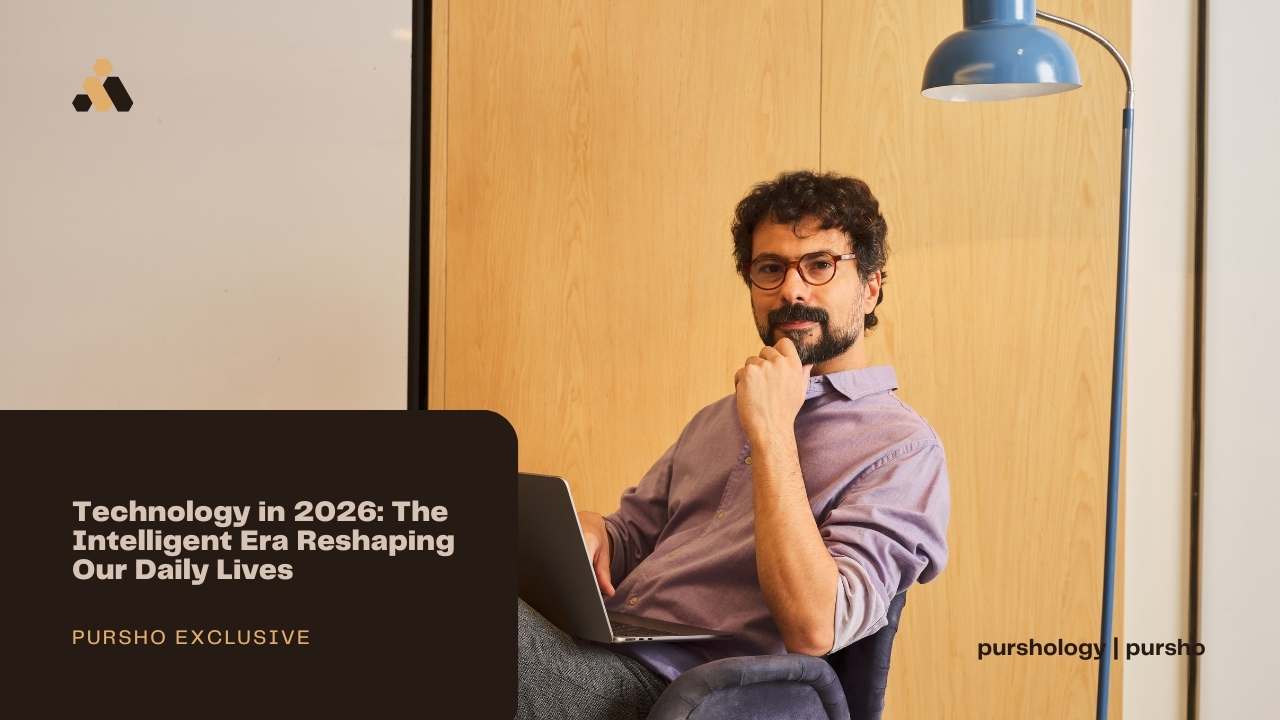
The year 2026 is not about futuristic fantasies anymore—it is about practical, powerful, and deeply integrated technology transforming how we live, work, and connect. From artificial intelligence that understands context to hyper-connected devices and smarter cities, technology in 2026 is more human-centered than ever before.
Let’s explore the key technological trends shaping this year and how they are influencing businesses, families, and everyday life.

- Artificial Intelligence Becomes Personal and Predictive
Artificial Intelligence (AI) is no longer just a tool—it is a companion. In 2026, AI systems are deeply embedded into smartphones, workplaces, healthcare platforms, and even home appliances.
Advanced models inspired by platforms like OpenAI and technologies integrated into companies such as Google and Microsoft have evolved significantly. AI assistants now understand emotional tone, predict needs, and provide proactive suggestions.
For example:
- Your calendar suggests breaks when stress levels increase.
- AI-powered shopping apps predict household needs before you run out.
- Customer service bots resolve complex issues without human intervention.
Businesses are using AI not just for automation, but for strategic decision-making. Predictive analytics helps companies forecast demand, optimize logistics, and personalize marketing campaigns in real time.
- Smarter Homes for Modern Families
In 2026, smart homes are no longer luxury items—they are practical investments. Devices connected through the Internet of Things (IoT) communicate seamlessly.
Voice-controlled ecosystems such as Amazon Alexa and Google Nest now integrate with security systems, lighting, energy management, and even child-monitoring tools.
For families with young children, this technology offers:
- Real-time baby monitoring with AI-based health alerts
- Smart air purifiers adjusting automatically based on pollution levels
- Energy-saving systems that reduce electricity bills
The focus in 2026 is sustainability. Smart thermostats and energy-efficient appliances help households lower carbon footprints while cutting monthly expenses.
- 6G and Hyper-Connectivity
While 5G laid the foundation, 6G networks are beginning to roll out in select regions in 2026. These networks promise near-instant data transfer speeds and ultra-low latency.
This advancement supports:
- Real-time virtual reality collaboration
- Autonomous transportation systems
- Advanced telemedicine surgeries
Countries like South Korea and United States are leading early 6G infrastructure experiments. Faster connectivity enables smarter traffic systems, connected factories, and enhanced remote work experiences.
- The Rise of Autonomous Transportation
Self-driving vehicles are significantly more common in 2026, especially in controlled urban zones. Companies such as Tesla and Waymo have refined their autonomous systems to reduce accidents and improve traffic efficiency.
In logistics and supply chain sectors:
- Autonomous trucks reduce delivery times
- AI route optimization cuts fuel consumption
- Drone deliveries are standard in suburban areas
For working parents and busy professionals, autonomous ride services save time and reduce commuting stress.
- Wearable Health Technology
Healthcare in 2026 is proactive rather than reactive. Wearable devices monitor heart rate variability, blood sugar levels, hydration, and sleep patterns continuously.
Companies like Apple have expanded their wearable ecosystem, building on devices such as the Apple Watch to include advanced health diagnostics powered by AI.
Doctors now receive real-time data, enabling early detection of potential health issues. Families benefit from remote monitoring of elderly members, improving safety and peace of mind.
- Cybersecurity in the Quantum Age
As technology advances, so do cyber threats. In 2026, cybersecurity is heavily influenced by quantum computing research. Organizations are investing in quantum-resistant encryption to protect financial systems, healthcare records, and government databases.
Major tech firms and research institutions are working on post-quantum cryptography to stay ahead of cybercriminals. Data privacy regulations have become stricter, and consumers are more aware of how their information is used.
- Education Powered by Immersive Tech
Education has become more interactive through augmented reality (AR) and virtual reality (VR). Students can:
- Explore historical landmarks virtually
- Conduct science experiments in digital labs
- Practice real-world skills through simulations
Schools and online platforms integrate AI tutors that adjust lessons based on a child’s learning speed and emotional engagement.
For families, this means learning is no longer confined to textbooks. Children develop digital literacy early while maintaining creative exploration.
Final Thoughts
Technology in 2026 is defined by intelligence, integration, and intention. It is not just about faster devices or bigger innovations—it is about solving real problems and improving quality of life.
From AI-powered decision-making to smart homes and wearable healthcare, the focus has shifted toward personalization and sustainability. Businesses are becoming more efficient, families are more connected, and individuals are empowered with tools that make life simpler and smarter.
As we move forward, the key challenge will not be creating new technology—but using it responsibly. Ethical AI, data privacy, and digital well-being will determine whether 2026 becomes the foundation of a balanced technological future.