TL;DR
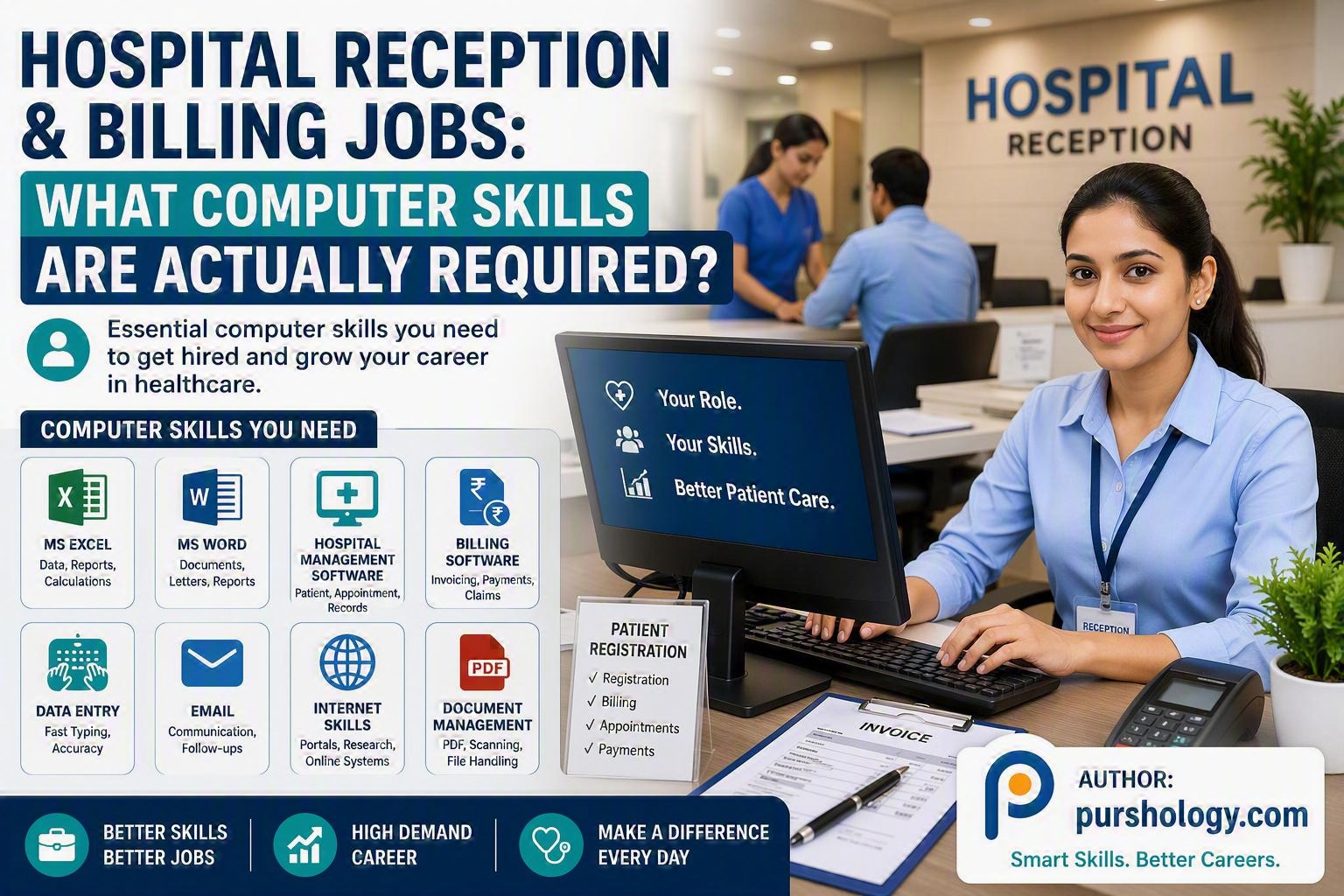
If you’re applying for hospital reception or billing jobs, you don’t need advanced programming or technical expertise. Most employers look for candidates who can confidently use Microsoft Excel, Microsoft Word, hospital management software, billing systems, email, data entry tools, and basic internet applications. Strong computer skills help improve patient service, reduce billing errors, and support smooth healthcare operations.
Healthcare facilities are becoming increasingly digital, making computer proficiency a critical requirement for hospital receptionists and billing executives. Whether you’re applying to a private clinic, diagnostic center, specialty hospital, or multi-specialty healthcare facility, employers expect candidates to be comfortable working with computers on a daily basis.

The good news is that you don’t need an IT degree to qualify for most hospital reception and billing jobs. However, understanding the right software and digital tools can significantly improve your chances of getting hired.
Let’s explore the computer skills employers actually expect from candidates.
Why Computer Skills Matter in Hospitals
Reception and billing staff serve as the first point of contact for patients and handle a large volume of administrative work.
Their responsibilities often include:
- Registering patients
- Scheduling appointments
- Creating invoices
- Processing payments
- Updating medical records
- Coordinating with doctors and departments
- Managing insurance documentation
- Handling patient queries
Since most healthcare facilities now use digital systems, these tasks are performed primarily through computers.
1. Microsoft Excel
Excel remains one of the most valuable skills for hospital administration roles.
Common Uses of Excel in Hospitals
- Patient data tracking
- Billing records
- Daily revenue reports
- Appointment summaries
- Inventory tracking
- Insurance claim records
Important Excel Skills
- SUM formulas
- IF formulas
- COUNTIF
- VLOOKUP or XLOOKUP
- Filters and sorting
- Basic charts
- Pivot Tables
Candidates who understand Excel often perform administrative tasks more efficiently and accurately.
2. Microsoft Word
Hospital receptionists frequently create and manage documents using Word.
Typical Tasks
- Patient letters
- Referral documents
- Reports
- Consent forms
- Administrative notices
- Internal communication
Skills such as formatting, tables, page layouts, and document editing are highly useful in daily hospital operations.
3. Hospital Management Software (HMS)
Most modern hospitals use Hospital Management Systems to manage patient information.
Common Functions
- Patient registration
- Appointment scheduling
- Medical record updates
- Doctor scheduling
- Billing integration
- Laboratory reports
Popular systems vary by organization, but employers generally look for candidates who can quickly learn and adapt to healthcare software.
4. Medical Billing Software
Billing executives must be comfortable working with specialized billing platforms.
Key Tasks
- Generating invoices
- Recording payments
- Managing insurance claims
- Tracking outstanding balances
- Producing financial reports
Accuracy is especially important because billing errors can affect patient satisfaction and hospital revenue.
5. Data Entry Skills
Reception and billing staff spend significant time entering information into hospital databases.
Typical Data Entry Tasks
- Patient demographics
- Contact information
- Insurance details
- Treatment records
- Payment information
Important Qualities
- Fast typing speed
- Accuracy
- Attention to detail
- Ability to verify information
Even minor mistakes can create billing issues or scheduling problems.
6. Email and Communication Tools
Hospitals rely heavily on professional communication.
Common Applications
- Outlook
- Gmail
- Internal messaging platforms
- Appointment reminders
- Patient communication
Receptionists often coordinate with doctors, nurses, patients, insurance providers, and administrative departments through email.
7. Internet and Online Portal Navigation
Many healthcare processes now involve online systems.
Examples
- Insurance portals
- Government healthcare platforms
- Laboratory systems
- Appointment booking systems
- Payment gateways
Being comfortable navigating online platforms can improve productivity and reduce administrative delays.
8. Basic Accounting and Billing Knowledge
Hospital billing professionals benefit from understanding basic financial operations.
Common Tasks
- Recording payments
- Reconciling accounts
- Applying discounts
- Processing refunds
- Generating financial summaries
While advanced accounting isn’t typically required, familiarity with billing procedures is a significant advantage.
9. PDF and Document Management
Healthcare organizations handle a large volume of documents daily.
Useful Skills
- Creating PDFs
- Editing PDFs
- Scanning documents
- Uploading patient records
- Organizing digital files
Efficient document management helps maintain compliance and streamline workflows.
Soft Skills That Complement Computer Skills
Technical abilities alone are not enough for success in hospital reception and billing jobs.
Employers also value:
- Communication skills
- Professional behavior
- Customer service orientation
- Problem-solving ability
- Confidentiality awareness
- Time management
- Attention to detail
Combining these soft skills with computer proficiency makes candidates more competitive.
Common Interview Questions About Computer Skills
If you’re applying for hospital reception or billing positions, be prepared to answer questions such as:
- Are you comfortable using Microsoft Excel?
- Have you worked with billing software before?
- How would you handle patient data entry?
- Can you generate reports using Excel?
- What hospital management systems have you used?
- How do you ensure data accuracy?
Practicing answers to these questions can boost your confidence during interviews.
Final Thoughts
Hospital reception and billing jobs require practical computer skills rather than advanced technical expertise. Employers primarily look for candidates who can efficiently use Excel, Word, hospital management software, billing systems, email, and online portals.
By developing these skills, you can increase your employability, perform daily tasks more effectively, and build a successful career in healthcare administration.
Ready to Start a Career in Hospital Reception or Billing?
Begin strengthening your Excel, billing, and hospital software skills today. The combination of computer proficiency, customer service, and administrative knowledge can help you secure rewarding opportunities in hospitals, clinics, and healthcare facilities.
Visit Purshology.com for more career guides, job readiness tips, and workplace skill development resources.