
TL;DR
Starting a white-label skincare brand in India doesn’t require lakhs of rupees or a manufacturing facility. With a budget of under ₹50,000, you can partner with a white-label manufacturer, create your own branded products, sell through online channels, and begin building a profitable beauty business. Focus on a small product range, professional branding, compliant packaging, and digital marketing to launch quickly and cost-effectively.
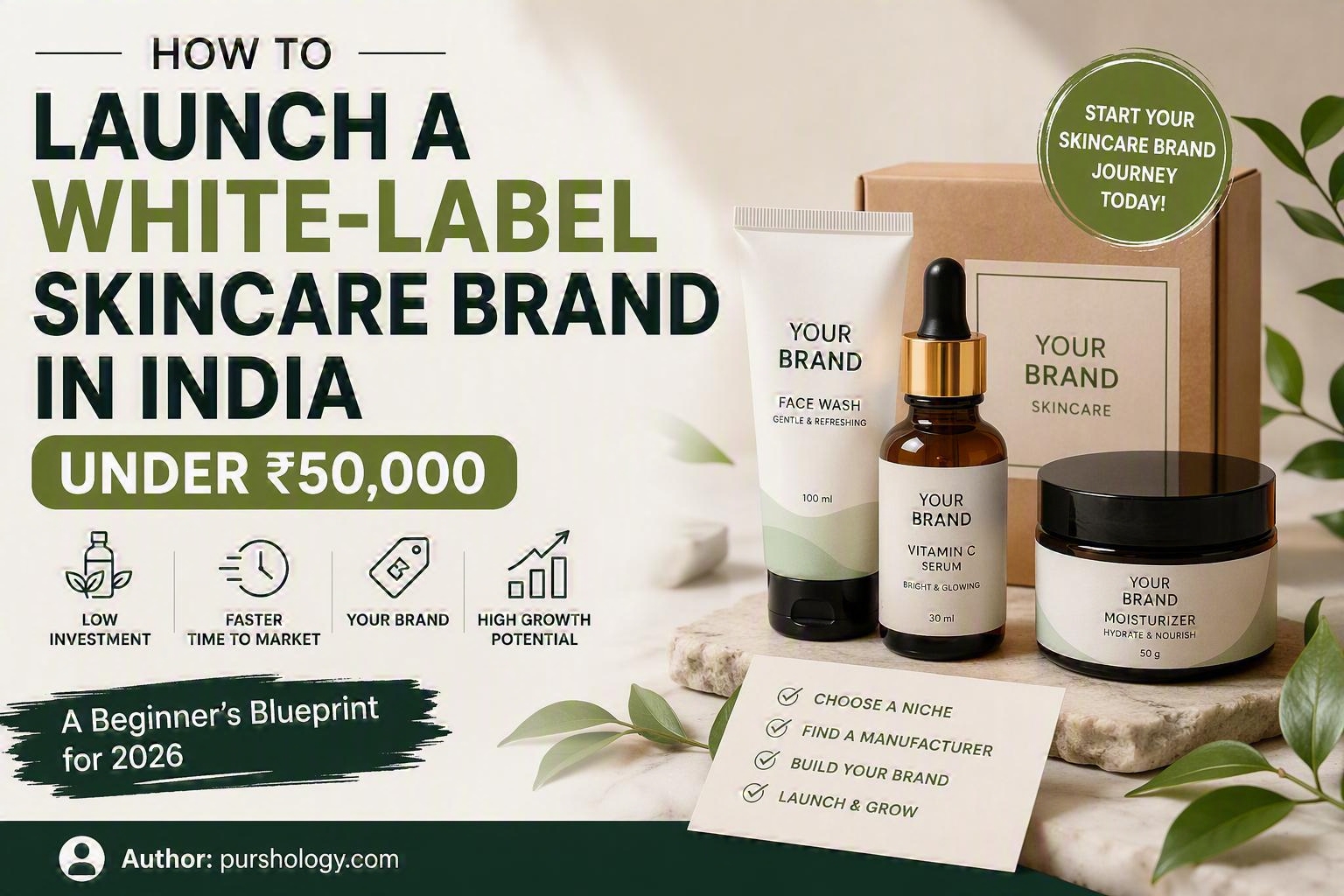
How to Launch a White-Label Skincare Brand in India Under ₹50,000
The Indian skincare market is growing rapidly as consumers increasingly seek specialized skincare solutions, natural ingredients, and affordable premium products. This creates a massive opportunity for entrepreneurs who want to enter the beauty industry without investing heavily in product development or manufacturing.

One of the smartest ways to start is through white-label skincare, where manufacturers provide ready-made formulations that can be sold under your own brand name.
The best part? You can launch a white-label skincare brand in India for less than ₹50,000 if you plan strategically.
What Is a White-Label Skincare Brand?
A white-label skincare business allows you to purchase pre-formulated products from a manufacturer and market them under your own brand identity.
Instead of spending time and money on:
- Product formulation
- Research and development
- Manufacturing infrastructure
- Quality testing
You focus on:
- Branding
- Packaging
- Marketing
- Sales
- Customer acquisition
This makes white-label skincare one of the lowest-risk ways to start a beauty business in India.
Why Choose White-Label Skincare?
Low Investment
You can start with a small inventory and avoid large manufacturing costs.
Faster Time to Market
Since formulations already exist, products can be launched within weeks rather than months.
Reduced Risk
Test product-market fit before investing in custom formulations.
Scalability
As your brand grows, you can expand into new categories like serums, face washes, moisturizers, body care, and haircare.
Step 1: Choose a Profitable Niche
Avoid launching with too many products.
Instead, focus on a specific skincare concern such as:
- Acne control
- Vitamin C brightening
- Anti-aging
- Hydration
- Sensitive skin
- Men’s skincare
- Herbal skincare
- Korean-inspired skincare
A focused niche helps you stand out in a crowded market and simplifies your marketing efforts.
Recommended Starter Products
Start with 2–3 products:
- Face Wash
- Vitamin C Serum
- Moisturizer
These products usually have consistent demand and can be bundled together for higher average order values.
Step 2: Find a White-Label Skincare Manufacturer
The right manufacturing partner is critical to your success.
Look for manufacturers that offer:
- Low minimum order quantities (MOQs)
- Cosmetic-grade packaging
- Regulatory compliance
- Product documentation
- Label customization
Before committing:
- Request samples
- Test product quality
- Compare pricing
- Review ingredient lists
- Confirm production timelines
Choose manufacturers willing to support startups with smaller orders.
Step 3: Create Your Brand Identity
A strong brand makes customers remember you.
Elements You Need
Brand Name
Choose a name that is:
- Easy to pronounce
- Memorable
- Relevant to skincare
Logo
You can get a professional logo designed for a few hundred rupees through freelance platforms.
Brand Positioning
Define:
- Who your target customer is
- What problem you solve
- Why customers should choose your products
For example:
“Affordable dermatologist-inspired skincare for young professionals.”
Step 4: Design Product Labels and Packaging
Your packaging significantly influences purchase decisions.
Ensure your labels include:
- Brand name
- Product name
- Ingredients
- Net quantity
- Manufacturing details
- Batch number
- Usage instructions
Keep the design clean, modern, and trustworthy.
Budget-friendly packaging can still look premium when you use minimalist branding.
Step 5: Build an Online Presence
You do not need a physical store when starting.
Create Social Media Profiles
Focus on:
- YouTube Shorts
- LinkedIn (for brand credibility)
Post content around:
- Skincare education
- Product benefits
- Before-and-after transformations
- Customer testimonials
- Ingredient highlights
Launch a Website
A basic e-commerce website can be set up using platforms like Shopify or WordPress.
Include:
- Product pages
- About section
- Contact information
- Frequently asked questions
- Customer reviews
Step 6: Allocate Your ₹50,000 Budget Wisely
Here’s a sample startup budget:
| Expense | Estimated Cost |
|---|---|
| Product Samples | ₹2,000 |
| Initial Inventory | ₹20,000 |
| Labels & Packaging | ₹8,000 |
| Logo & Branding | ₹3,000 |
| Website Setup | ₹5,000 |
| Marketing & Ads | ₹10,000 |
| Miscellaneous | ₹2,000 |
| Total | ₹50,000 |
This budget allows you to launch professionally while keeping costs under control.
Step 7: Start Marketing Immediately
Many skincare startups fail because they invest in products but not marketing.
Focus on:
Content Marketing
Create educational content addressing:
- Acne
- Pigmentation
- Skincare routines
- Ingredient benefits
Influencer Marketing
Partner with micro-influencers who have engaged audiences.
They often deliver better ROI than larger influencers.
User-Generated Content
Encourage customers to:
- Share reviews
- Post unboxing videos
- Tag your brand
Customer-created content builds trust and social proof.
Performance Advertising
Run targeted campaigns on:
Start small, analyze results, and scale gradually.
Step 8: Sell Through Multiple Channels
Don’t rely on a single sales source.
Expand into:
- Your own website
- Instagram Shop
- Amazon
- Flipkart
- Meesho
- WhatsApp Business
Multiple sales channels reduce dependency and increase customer reach.
Common Mistakes to Avoid
Launching Too Many Products
Start small and scale based on demand.
Ignoring Branding
Customers buy brands, not just formulations.
Choosing the Cheapest Manufacturer
Low-quality products can damage your reputation.
Neglecting Customer Support
Fast responses build loyalty and increase repeat purchases.
Underinvesting in Marketing
Even excellent products require visibility.
Final Thoughts
Launching a white-label skincare brand in India under ₹50,000 is entirely achievable for aspiring entrepreneurs. By starting with a focused product range, partnering with the right manufacturer, building a memorable brand, and leveraging digital marketing, you can enter one of India’s fastest-growing consumer sectors without a massive upfront investment.
The key is to validate demand, maintain product quality, and consistently build trust with your audience. As your sales grow, you can expand your product portfolio and evolve from a startup brand into a recognized skincare business.
Ready to Launch Your Own Skincare Brand?
Whether you’re an aspiring entrepreneur, beauty enthusiast, salon owner, or e-commerce seller, now is the perfect time to enter India’s booming skincare market.
Start small, build a strong brand, and turn your skincare business idea into reality. Contact us today to explore white-label skincare manufacturing solutions and take the first step toward launching your own skincare brand.