
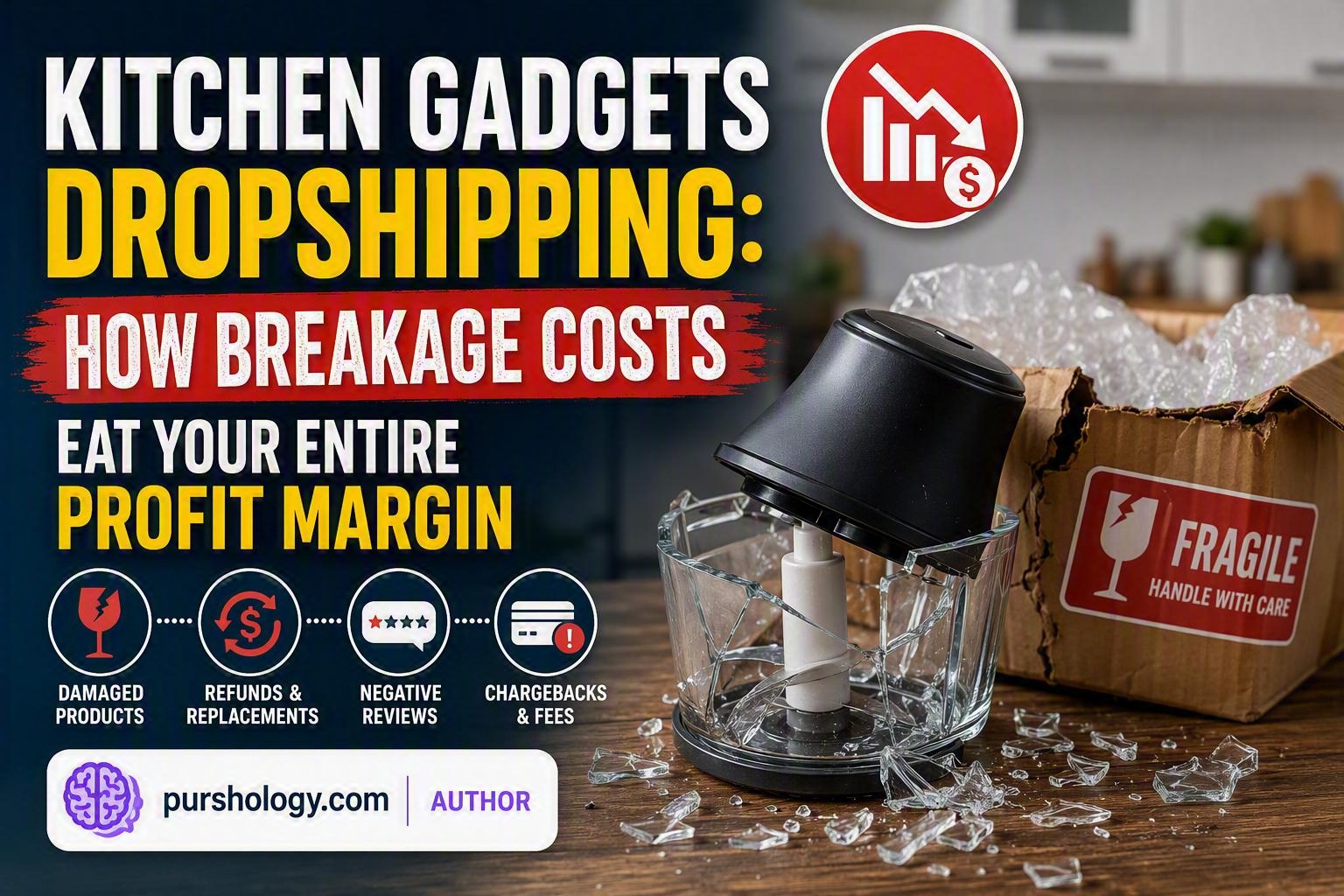
Kitchen Gadgets Dropshipping may seem profitable, but fragile products can erode earnings. However, this happens through damaged shipments, refunds, replacements, negative reviews, and chargebacks. Without proper product selection, packaging standards, and supplier vetting, breakage costs can turn a profitable store into a money-losing business. Here’s how to identify the risks and protect your margins.
The Hidden Profit Killer in Kitchen Gadgets Dropshipping
Kitchen gadgets are among the most popular products in ecommerce. From electric frothers and digital scales to glass storage containers and specialty cooking tools, these products attract a wide range of consumers seeking convenience and innovation.

However, many new dropshippers focus solely on product demand and selling price while overlooking one critical factor: breakage costs.
A product that generates healthy sales can still become unprofitable if too many orders arrive damaged. In the kitchen gadgets niche, fragile materials, electronic components, and international shipping create a perfect storm that can seriously impact your bottom line.
Understanding these hidden costs is essential if you want to build a sustainable and profitable dropshipping business.
Why Kitchen Gadgets Have Higher Breakage Rates
Many kitchen products combine sensitive materials and moving parts, making them particularly vulnerable during shipping.
Common examples include:
- Glass spice jars
- Measuring cups and kitchen scales
- Electric food choppers
- Coffee accessories
- Ceramic storage containers
- Digital thermometers
- Milk frothers
- Glass oil dispensers
Unlike apparel or non-fragile household goods, these items can suffer damage from:
- Rough handling during transit
- Insufficient packaging
- Long international shipping routes
- Warehouse storage conditions
- Temperature fluctuations
- Manufacturing defects
Even a small percentage of damaged orders can significantly impact profitability.
How Breakage Costs Eat Into Your Profit Margin
Let’s look at a simple example.
Scenario
- Product selling price: $39.99
- Product cost: $13
- Advertising cost per sale: $12
- Payment processing and platform fees: $3
Expected Profit:
$39.99 – $13 – $12 – $3 = $11.99 profit per order
This appears healthy.
Now consider a 10% damage rate.
For every 100 sales:
- 10 customers receive damaged products
- Replacement cost per unit: $13
- Additional shipping cost: $6
- Customer support cost and processing time increase
Total extra cost:
10 × ($13 + $6) = $190
Spread across 100 orders, that’s $1.90 lost per order.
Your profit drops from $11.99 to $10.09 per order before considering bad reviews or chargebacks.
If damage rates rise to 20%, profitability can disappear quickly.
The Hidden Costs Most Dropshippers Ignore
The actual financial impact extends far beyond replacing broken products.
Refunds
Many customers prefer refunds instead of replacements. In these situations, businesses often lose:
- Product cost
- Shipping costs
- Payment processing fees
- Advertising spend
You essentially pay to acquire a customer and receive nothing in return.
charge-backs
Repeated damaged deliveries can trigger chargebacks when customers dispute transactions.
charge-backs result in:
- Lost revenue
- Additional processing fees
- Increased payment gateway risk scores
Too many disputes can even restrict your payment processing capabilities.
Negative Reviews
A few broken deliveries may seem minor, but online shoppers heavily rely on reviews.
Common review complaints include:
- “Arrived shattered.”
- “Stopped working after one use.”
- “Packaging was terrible.”
Poor reviews reduce conversion rates and increase customer acquisition costs.
Customer Support Overhead
Every complaint generates:
- Emails
- Live chat conversations
- Refund requests
- Replacement coordination
As order volume grows, support costs can become substantial.
Supplier Selection Is Your First Line of Defense
One of the biggest mistakes in kitchen gadget dropshipping is choosing suppliers based solely on price.
The cheapest supplier often uses:
- Lower-quality materials
- Weak packaging
- Minimal quality control
Instead, evaluate suppliers based on:
Packaging Standards
Ask suppliers:
- How products are protected during shipment
- Whether bubble wrap is used
- If reinforced boxes are available
- Whether drop-testing has been conducted
Defect Rates
Request data on:
- Product returns
- Damage complaints
- Warranty claims
Sample Orders
Always place test orders before launching a product.
Inspect:
- Packaging quality
- Product durability
- Shipping condition
- Customer experience
A slightly higher unit cost may significantly reduce losses later.
Avoid High-Risk Products Whenever Possible
Not all kitchen gadgets are equally profitable.
Many successful dropshippers prioritize durable products instead of fragile ones.
Lower-Risk Examples
- Silicone cooking utensils
- Vegetable choppers made from durable plastic
- Reusable storage bags
- Drawer organizers
- Sink accessories
- Cabinet organizers
- Dish drying racks
Higher-Risk Examples
- Glass containers
- Ceramic products
- Electronic kitchen appliances
- Battery-powered gadgets
- Fragile decorative kitchen items
The lower the breakage rate, the more predictable your profit margins become.
Build Breakage Costs Into Your Pricing Strategy
Many store owners make the mistake of pricing products based solely on acquisition costs.
A smarter approach is to calculate an expected damage allowance.
For example:
If historical data shows a 5% replacement rate, include this cost in your pricing model from the beginning.
This creates a buffer that protects profitability when damaged shipments occur.
Businesses that ignore these costs often find themselves losing money despite strong sales volume.
Improve Customer Satisfaction When Damage Happens
Even with excellent suppliers, some breakage is unavoidable.
The key is responding quickly and professionally.
Best practices include:
- Offering hassle-free replacements
- Responding within 24 hours
- Providing clear support channels
- Using simple claim submission processes
- Following up after resolution
Fast resolutions can transform frustrated customers into loyal repeat buyers.
Long-Term Success Depends on Margin Protection
Many entrepreneurs enter kitchen gadgets dropshipping because of the niche’s strong demand and wide product variety.
However, sustainable success depends on more than generating orders.
The most profitable stores consistently:
- Monitor damage rates
- Vet suppliers carefully
- Test products before scaling
- Invest in better packaging
- Avoid excessively fragile items
- Track replacement and refund trends
When these practices become part of your operations, breakage costs remain manageable and profits remain predictable.
Final Thoughts
Kitchen gadgets can be a profitable dropshipping niche. However, you must account for the hidden costs associated with product breakage.
Damaged shipments don’t just create replacement expenses. They can lead to refunds, chargebacks, poor reviews, and declining customer trust.
By choosing reliable suppliers, focusing on durable products, and incorporating breakage costs into your pricing strategy, you can protect your margins and build a more resilient ecommerce business.
Ready to Build a More Profitable Dropshipping Store?
Don’t let hidden shipping and breakage costs undermine your growth. Evaluate your current product catalog, audit your suppliers, and identify margin-draining products before scaling your business. Taking action today can save thousands in lost profits tomorrow and help you create a stronger, more sustainable dropshipping brand.