TL;DR:
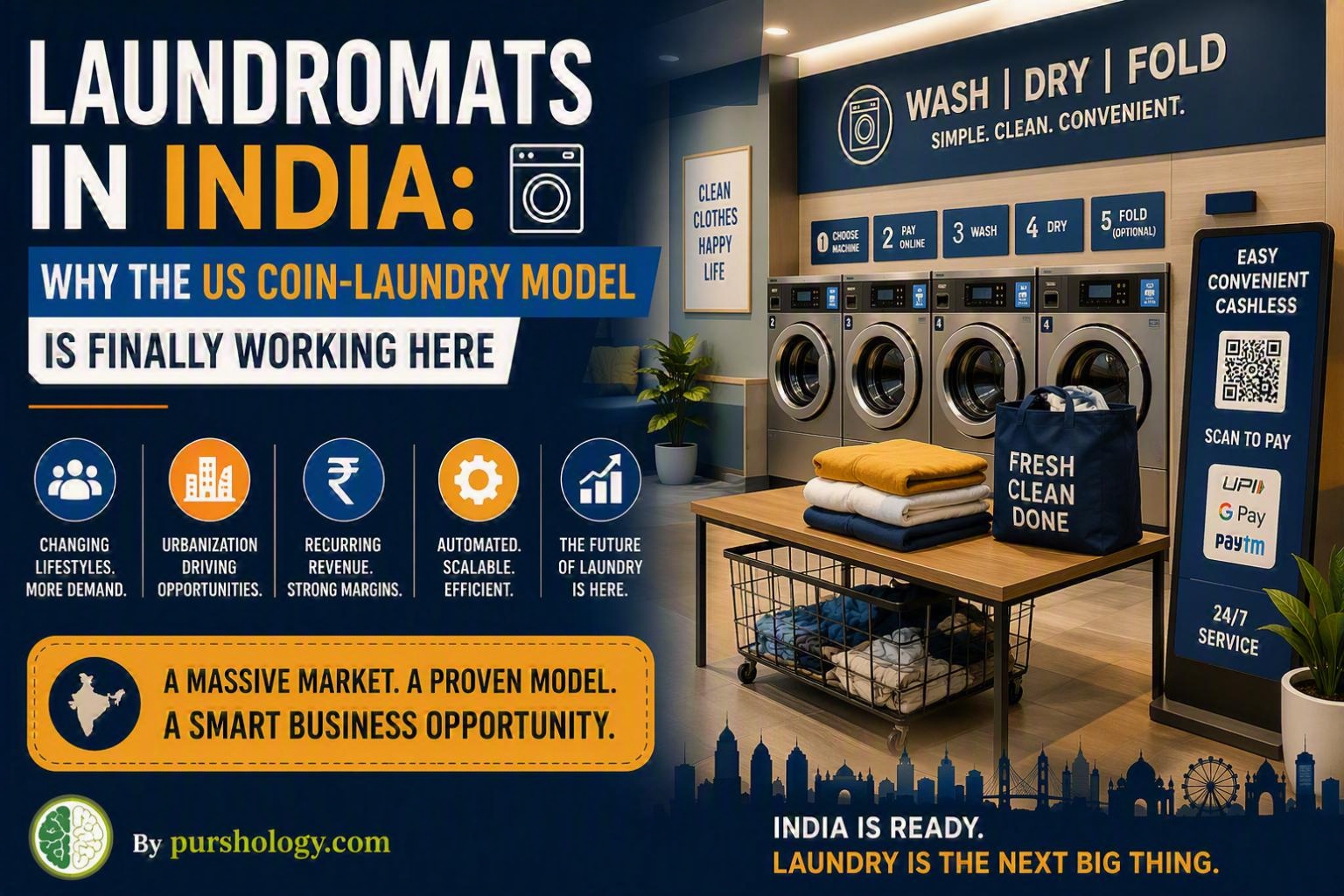
India’s laundromat industry is experiencing a major transformation. Rising urbanization, smaller living spaces, busy lifestyles, and growing acceptance of self-service models are creating the perfect conditions for modern laundromats to thrive. What made coin-operated laundry stores a staple in the United States is now becoming a scalable, high-margin business opportunity across Indian cities.
Laundromats in India: Why the US Coin-Laundry Model Is Finally Working Here
For decades, the laundromat business was synonymous with the United States. Apartment dwellers, students, and busy professionals relied on self-service laundry facilities for an affordable and convenient solution to a routine household chore.

In India, however, the concept struggled to gain traction. Most households relied on domestic help, personal washing machines, or local dhobis. But a major shift is underway.
Today, India’s urban landscape, changing consumer behavior, and growing demand for convenience are creating a fertile environment for the modern laundromat business. What was once considered a foreign concept is rapidly evolving into one of the country’s most promising automated retail and service opportunities.
Why Laundromats Are Gaining Momentum in India
Several powerful trends are driving the growth of organized laundry services.
1. Urban Living Is Changing Fast
Modern apartments in large cities are becoming smaller and more expensive. Many young professionals and students live in rented accommodations where large washing machines are impractical.
As urban density increases, shared laundry infrastructure becomes more attractive.
2. The Rise of the Convenience Economy
From food delivery to quick commerce, consumers are increasingly willing to pay for convenience.
Laundry is one of the most time-consuming household tasks, making it an ideal service for outsourcing. Customers now prioritize saving time over managing laundry themselves.
3. Growth of Rental Housing
India’s growing population of:
- Students
- Working professionals
- Digital nomads
- Migrant workers
- Co-living residents
creates a steady customer base for laundromats. Many tenants prefer avoiding the upfront cost and maintenance of personal washing machines.
4. Increased Acceptance of Self-Service Models
The success of self-service businesses such as ATMs, vending machines, kiosks, and automated retail has helped normalize unattended service environments.
Consumers are becoming increasingly comfortable using technology-driven facilities with minimal staff involvement.
Why the US Laundromat Model Works So Well
The American laundromat industry has long demonstrated the power of recurring demand.
People may skip entertainment purchases or delay discretionary spending, but laundry remains a necessity.
This creates several business advantages:
Recurring Revenue
Laundry isn’t seasonal.
Customers need clean clothes every week, creating predictable demand throughout the year.
Essential Service Business
Unlike many retail categories, laundry services are largely recession-resistant because they satisfy a basic need.
Operational Simplicity
Modern laundromats operate with relatively few employees compared to restaurants, retail stores, or service centers.
Many systems now offer:
- Digital payments
- Remote machine monitoring
- Automated billing
- App-based management
- Machine diagnostics
This reduces operating complexity significantly.
The Indian Opportunity: A Massive Underserved Market
Despite India’s enormous urban population, organized laundromat penetration remains remarkably low.
This gap represents an opportunity for entrepreneurs willing to enter the market early.
High-potential locations include:
Student Hubs
Areas near universities and colleges often generate strong demand due to limited laundry facilities in student housing.
IT and Corporate Corridors
Busy professionals value convenience and often outsource laundry instead of spending personal time on household work.
Residential Communities
Large apartment complexes can support dedicated neighborhood laundromats or pickup-and-delivery models.
Co-Living Spaces
The expanding co-living sector provides a built-in customer base with recurring laundry needs.
What Makes Modern Laundromats More Profitable?
Today’s successful operators don’t simply provide washing machines.
They offer a complete laundry ecosystem.
Self-Service Laundry
Customers wash and dry clothes using automated machines.
Wash-and-Fold Services
Staff members handle washing, drying, folding, and packaging for customers seeking greater convenience.
Pickup and Delivery
Many urban consumers now prefer app-based laundry services with doorstep collection and delivery.
Subscription Models
Monthly laundry packages create predictable revenue while increasing customer loyalty.
Technology Is Transforming the Industry
Just as smart vending machines changed automated retail, technology is redefining laundromats.
Modern operators use:
- QR-code payments
- Mobile apps
- Machine utilization tracking
- Online scheduling
- Loyalty programs
- Digital customer management
These tools improve efficiency while enhancing the customer experience.
Data analytics also helps operators optimize capacity, staffing, and pricing.
The Economics Behind the Business
One reason investors are paying increasing attention to laundromats is their attractive business model.
Key benefits include:
Low Inventory Requirements
Unlike retail businesses, laundromats don’t require large inventories that risk becoming obsolete.
Predictable Operating Costs
The primary recurring expenses include:
- Rent
- Utilities
- Maintenance
- Cleaning supplies
- Labor
This predictability can simplify financial planning.
High Customer Retention
Once customers find a reliable laundromat, they tend to return regularly, reducing customer acquisition costs over time.
Common Challenges to Watch For
Success isn’t automatic.
New operators should carefully evaluate:
Location Selection
A poor location can undermine an otherwise excellent business.
Water and Electricity Costs
Efficient machines are critical for maintaining profitability.
Customer Experience
Cleanliness, machine uptime, and quick service can significantly influence customer retention.
Competition
As awareness grows, more operators will enter the market, making brand differentiation increasingly important.
The Future of India’s Laundromat Industry
India’s laundry market is transitioning from fragmented and largely unorganized services toward organized, technology-driven solutions.
The same societal forces that helped laundromats flourish in the United States are now emerging across Indian cities:
- Urbanization
- Smaller living spaces
- Increasing workforce participation
- Higher disposable incomes
- Demand for convenience
- Technology adoption
For entrepreneurs seeking a scalable service business with recurring demand and operational efficiency, laundromats may be one of the most undervalued opportunities in India’s growing convenience economy.
Ready to Capitalize on India’s Laundry Revolution?
The laundromat model is no longer just an American success story. India’s changing urban lifestyle is creating a powerful opportunity for entrepreneurs who can combine automation, convenience, and excellent customer experience.
If you’re exploring your next business venture, now is the time to evaluate laundromats, pickup-and-delivery laundry services, and technology-enabled laundry franchises. The market is still early, and the operators who establish strong local brands today could become tomorrow’s industry leaders.