
TL;DR:
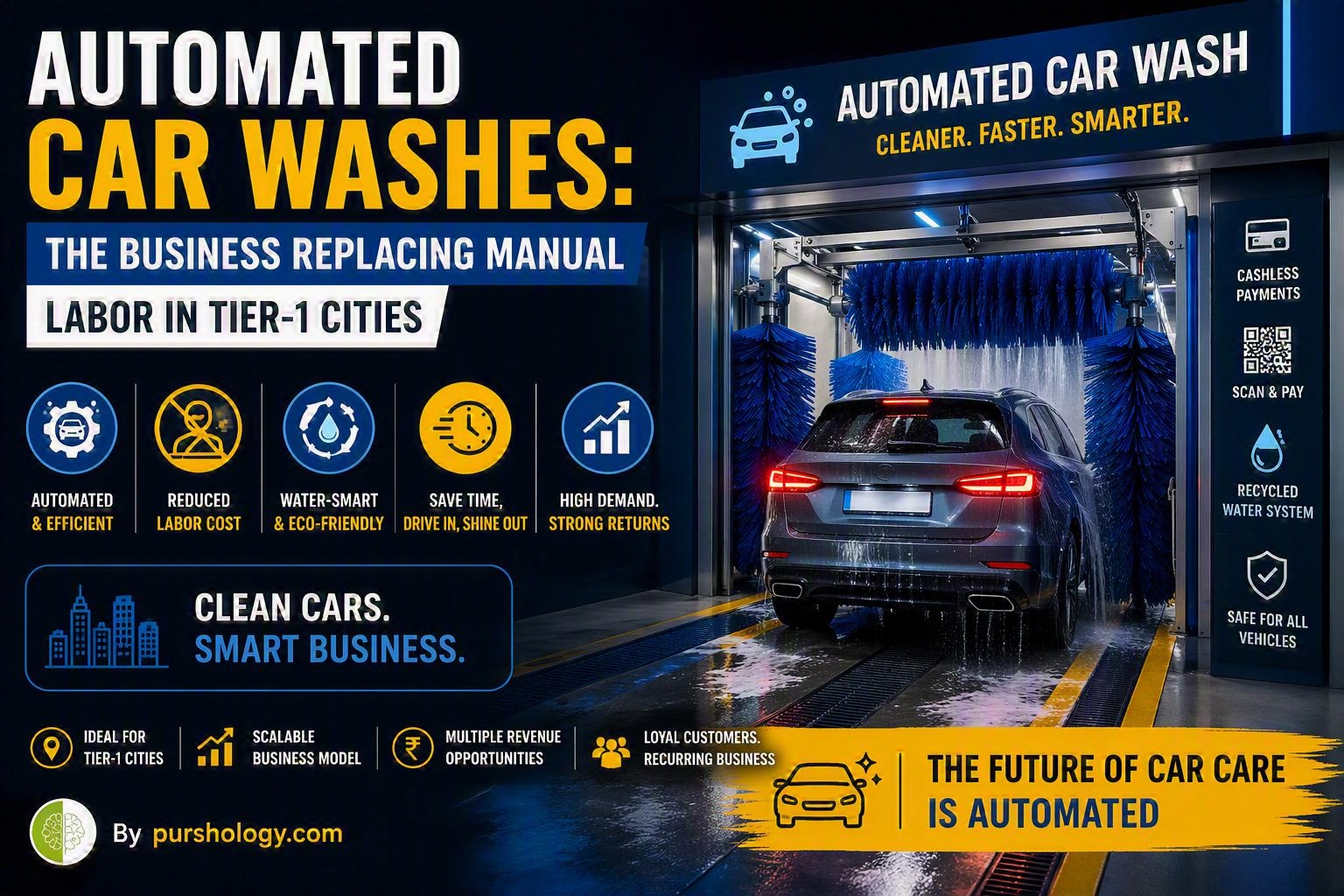
Automated car wash businesses are rapidly gaining traction in India’s Tier-1 cities as rising labor costs, vehicle ownership growth, water conservation concerns, and consumer demand for convenience reshape the automotive services industry. With faster turnaround times, standardized quality, and scalable operations, automated car washes are emerging as a high-potential investment opportunity for entrepreneurs looking to capitalize on the future of vehicle care.
Automated Car Washes: The Business Replacing Manual Labor in Tier-1 Cities
The traditional hand-car-wash model has dominated India’s vehicle cleaning industry for decades. However, a significant shift is underway.

Across major metropolitan cities such as Mumbai, Delhi, Bengaluru, Hyderabad, Chennai, Pune, and Gurgaon, automated car wash centers are steadily replacing labor-intensive operations. Driven by technology, efficiency, and changing consumer expectations, these businesses are transforming vehicle care from a manual service into an automated, scalable enterprise.
For entrepreneurs seeking opportunities in the growing automotive services sector, automated car washes represent one of the most promising business models emerging in urban India.
Why Automated Car Washes Are Booming
Several market forces are fueling the growth of automated vehicle cleaning services.
1. Rising Vehicle Ownership
India’s growing middle class continues to purchase more cars, SUVs, and premium vehicles.
As vehicle ownership expands in major cities, demand for reliable cleaning and maintenance services grows alongside it. More vehicles on the road equate to a larger customer base for car wash operators.
2. Labor Costs Are Increasing
Finding and retaining reliable workers has become increasingly difficult for many service businesses.
Traditional car washing depends heavily on manual labor for:
- Washing
- Drying
- Vacuuming
- Polishing
- Detailing
Automated systems significantly reduce manpower requirements while maintaining consistent service quality.
3. Consumers Want Convenience
Urban professionals increasingly value time over price.
Many customers prefer a machine-driven wash that takes 5–15 minutes rather than waiting for manual cleaning that may take significantly longer.
Convenience has become a key competitive advantage.
4. Standardized Quality
One major challenge with manual car washes is inconsistency.
Automated systems deliver:
- Consistent wash quality
- Uniform cleaning processes
- Predictable service times
- Reduced human error
This reliability attracts repeat customers.
How Automated Car Wash Businesses Work
Modern facilities utilize advanced equipment designed to clean vehicles efficiently.
Popular formats include:
Tunnel Car Washes
Vehicles move through a sequence of automated cleaning stages including pre-soak, washing, rinsing, waxing, and drying.
These facilities can process large volumes of vehicles daily.
In-Bay Automatic Systems
The vehicle remains stationary while robotic equipment moves around it.
These setups require less space and are ideal for urban locations.
Touchless Car Washes
High-pressure water and specialized chemicals clean vehicles without brushes or physical contact.
This appeals to owners of premium and luxury vehicles.
Hybrid Models
Many operators combine automation with detailing services such as:
- Interior cleaning
- Ceramic coating
- Wax treatments
- Upholstery care
- Engine cleaning
These premium services enhance profitability.
Why Tier-1 Cities Are Leading the Adoption Curve
India’s largest cities offer ideal conditions for automated car wash businesses.
Higher Disposable Incomes
Urban consumers are more willing to pay for convenience-driven services.
Time-Constrained Customers
Long commutes and busy schedules make quick, technology-enabled services attractive.
Premium Vehicle Ownership
Luxury and premium vehicle owners often prefer modern cleaning technologies that minimize the risk of paint damage.
Commercial Fleet Demand
Ride-hailing operators, rental companies, and corporate fleets require consistent and efficient cleaning solutions.
This creates recurring revenue opportunities.
The Economics Behind the Model
One of the biggest attractions of automated car wash businesses is their operational efficiency.
High Throughput
A manual team may clean a limited number of vehicles daily.
Automated systems can process significantly more vehicles in the same timeframe.
Lower Labor Dependency
With automation handling the core wash process, operators can maintain lean staffing structures.
Recurring Demand
Unlike discretionary purchases, vehicle cleaning is a recurring need.
Customers often return weekly, bi-weekly, or monthly.
Additional Revenue Streams
Operators can increase earnings through:
- Membership programs
- Monthly subscriptions
- Premium detailing
- Waxing packages
- Ceramic coatings
- Fleet contracts
These services often generate higher margins than basic washing.
Technology Is Driving Industry Growth
Modern car wash centers are becoming increasingly data-driven.
Advanced operators utilize:
- QR-code payments
- UPI integration
- Cashless transactions
- Mobile applications
- Queue management systems
- Customer loyalty programs
- Subscription platforms
Technology improves customer retention while streamlining operations.
Sustainability Is Becoming a Competitive Advantage
Water conservation is a growing concern in many Indian cities.
Modern automated systems often use:
- Controlled water consumption
- Water recycling systems
- Filtration technologies
- Eco-friendly cleaning chemicals
Compared to traditional washing methods, these technologies can significantly improve resource efficiency and appeal to environmentally conscious customers.
Challenges Entrepreneurs Should Consider
While the opportunity is attractive, success requires careful planning.
Capital Investment
Automated systems require higher upfront investment than manual setups.
Location Selection
Visibility, accessibility, and traffic flow are critical factors in business performance.
Equipment Maintenance
Regular servicing is essential to avoid downtime and maintain customer satisfaction.
Customer Education
Some consumers still prefer traditional washing services and may need reassurance regarding automated cleaning quality.
The Future of Vehicle Care in India
The shift toward automation is reshaping numerous industries, and vehicle cleaning is no exception.
As labor costs rise, urbanization accelerates, and customers demand faster, more predictable services, automated car washes are positioned to become a mainstream solution in India’s Tier-1 cities.
What happened years ago in developed markets is now beginning to play out across urban India. Early adopters who establish strong locations, implement quality technology, and build trusted brands have the potential to capture a significant share of this growing market.
Ready to Enter the Automated Car Wash Industry?
The future of vehicle cleaning is fast, efficient, and technology-driven. Automated car washes offer a compelling blend of recurring demand, operational scalability, and premium revenue opportunities.
If you’re exploring your next venture, now is the time to evaluate automated car wash systems, subscription-based wash models, and fleet servicing opportunities. The market is evolving quickly—and the businesses that automate today may become tomorrow’s market leaders.