Phone calls still matter when a sale is too complex for a form or chat. The problem is that many sales teams know that a call happened but cannot reliably connect the call to the campaign, landing page, rep, outcome or revenue it influenced.
Call tracking software solves that measurement gap by assigning trackable numbers, recording or transcribing calls, routing them to the right people and connecting call activity to marketing or CRM data.

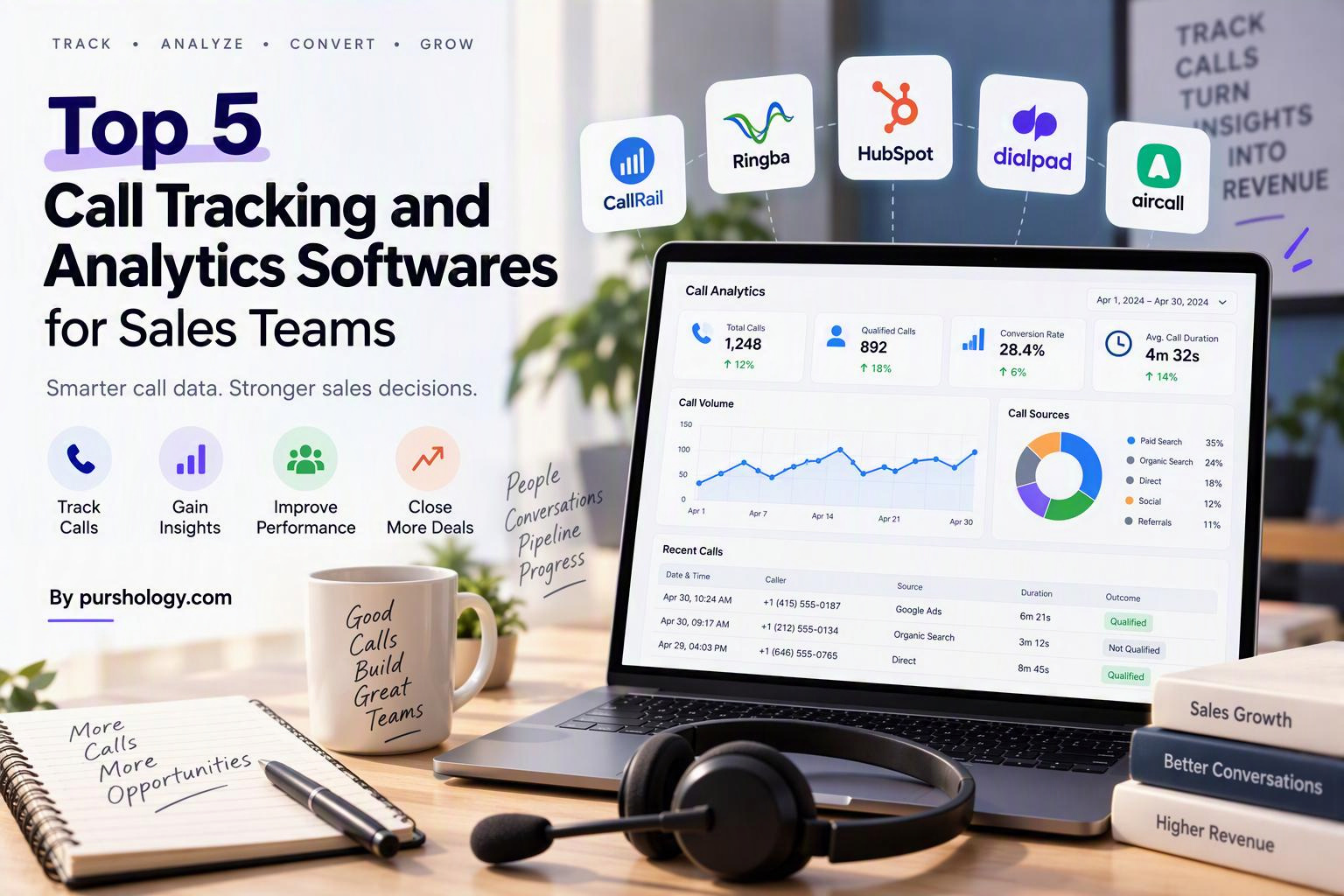
This guide compares five practical options for sales teams: CallRail, HubSpot, Aircall, RingCentral and Invoca. The best choice depends less on the longest feature list and more on how your team sells.
Quick comparison
| Platform | Best for | Standout strength | Watch-out |
|---|---|---|---|
| CallRail | SMB marketing + sales | Call attribution and tracking | Usage-based costs can grow |
| HubSpot | CRM-first sales teams | Call activity inside CRM workflows | Best value when you already use HubSpot |
| Aircall | Sales/support teams | Cloud phone system + integrations | More phone-system oriented than marketing attribution |
| RingCentral | Growing organizations | Broad communications suite | Can be more platform than a small team needs |
| Invoca | Enterprise call intelligence | Deep marketing attribution and conversation intelligence | Typically suited to larger, more complex programs |
1. CallRail — best for straightforward call attribution
CallRail is a strong starting point when the core problem is answering: “Which marketing source generated this call?” Its current Lead Tracking plan includes five numbers and 250 minutes, with call and text tracking, attribution, recording, routing, transcription, analysis and automation rules. The listed starting price is $50/month plus additional usage. citeturn1search2
Best fit: agencies, local businesses and SMB sales teams that need marketing attribution without deploying a large communications platform.
2. HubSpot — best for CRM-centered sales operations
If your team already manages contacts, deals, tasks and lifecycle stages inside HubSpot, keeping call activity in the same system can reduce data fragmentation. The important question is not simply whether a platform can record a call; it is whether the resulting activity helps a rep move a deal forward.
Best fit: teams where call activity must sit next to pipeline and contact records.
3. Aircall — best for sales teams that need a cloud phone system
Aircall is built around business calling rather than only marketing attribution. That makes it useful when the requirement includes numbers, routing, queues, recordings, coaching and CRM integrations.
Best fit: sales development and customer-facing teams that need a structured business phone system.
4. RingCentral — best for broader communications
RingCentral becomes more attractive when voice is only one part of the communication stack. Organizations that also need messaging, meetings, contact-center capabilities or broader administration may prefer an integrated platform.
Best fit: larger teams that want communications consolidation rather than a narrowly focused call-tracking tool.
5. Invoca — best for complex call intelligence
Invoca is aimed at organizations where inbound calls are economically significant and marketing attribution needs to go deeper. It is a better match for sophisticated programs that need conversation intelligence, campaign-level measurement and integrations across a larger marketing stack.
Best fit: enterprise marketing teams where phone leads are a major conversion channel.
What sales teams should actually measure
Do not buy call analytics simply to count calls. Track metrics that connect activity to outcomes:
- Qualified call rate: how many calls meet your definition of a real sales opportunity?
- Answer rate: how many inbound calls reach a person?
- Missed-call rate: how much demand is lost before a conversation starts?
- Speed to lead: how quickly does a rep respond to a qualified call or callback request?
- Conversion by source: which campaigns generate revenue, not just phone volume?
- Outcome by rep: which patterns correlate with closed business?
- Average talk time: useful as context, but not a standalone quality metric.
Call recording vs call analytics
Recording tells you what happened in a conversation. Analytics should help you understand patterns across many conversations. A sales manager might discover that calls from one campaign contain more pricing objections, while another source produces fewer calls but more qualified opportunities.
How to choose the right platform
- Start with the source of truth: CRM, marketing platform or phone system?
- Define attribution: first touch, last touch, campaign, keyword, landing page or account?
- Check integrations: confirm the tools your reps already use.
- Audit recording and consent requirements: rules vary by jurisdiction and call context.
- Model usage costs: numbers, minutes, recordings, transcripts and AI features can all affect the bill.
- Test the reporting workflow: a beautiful dashboard is useless if reps and managers cannot act on it.
Our practical shortlist
Choose CallRail when attribution is the priority. Choose HubSpot when CRM context is the priority. Choose Aircall when you need a sales phone system. Choose RingCentral when you want a wider communications platform. Choose Invoca when phone leads are strategically important and attribution needs to operate at enterprise depth.
Final takeaway
The best call tracking software is the one that closes the loop between call → source → sales activity → opportunity → revenue. Before comparing feature checklists, map that data path. It will usually make the right platform much easier to identify.
Related reading: For broader sales workflow and CRM ideas, explore PURSHOLOGY’s Sales coverage.