Women entrepreneurs are transforming India’s startup and MSME ecosystem—and the Government of India actively supports this shift through dedicated schemes offering funding, training, subsidies, and market access.
If you’re a woman planning to start, sustain, or scale a business in 2026, these government schemes can dramatically reduce financial barriers and risk.

This guide covers the Top 5 Government Schemes for Women Entrepreneurs in India, eligibility, benefits, and how they help at different business stages.
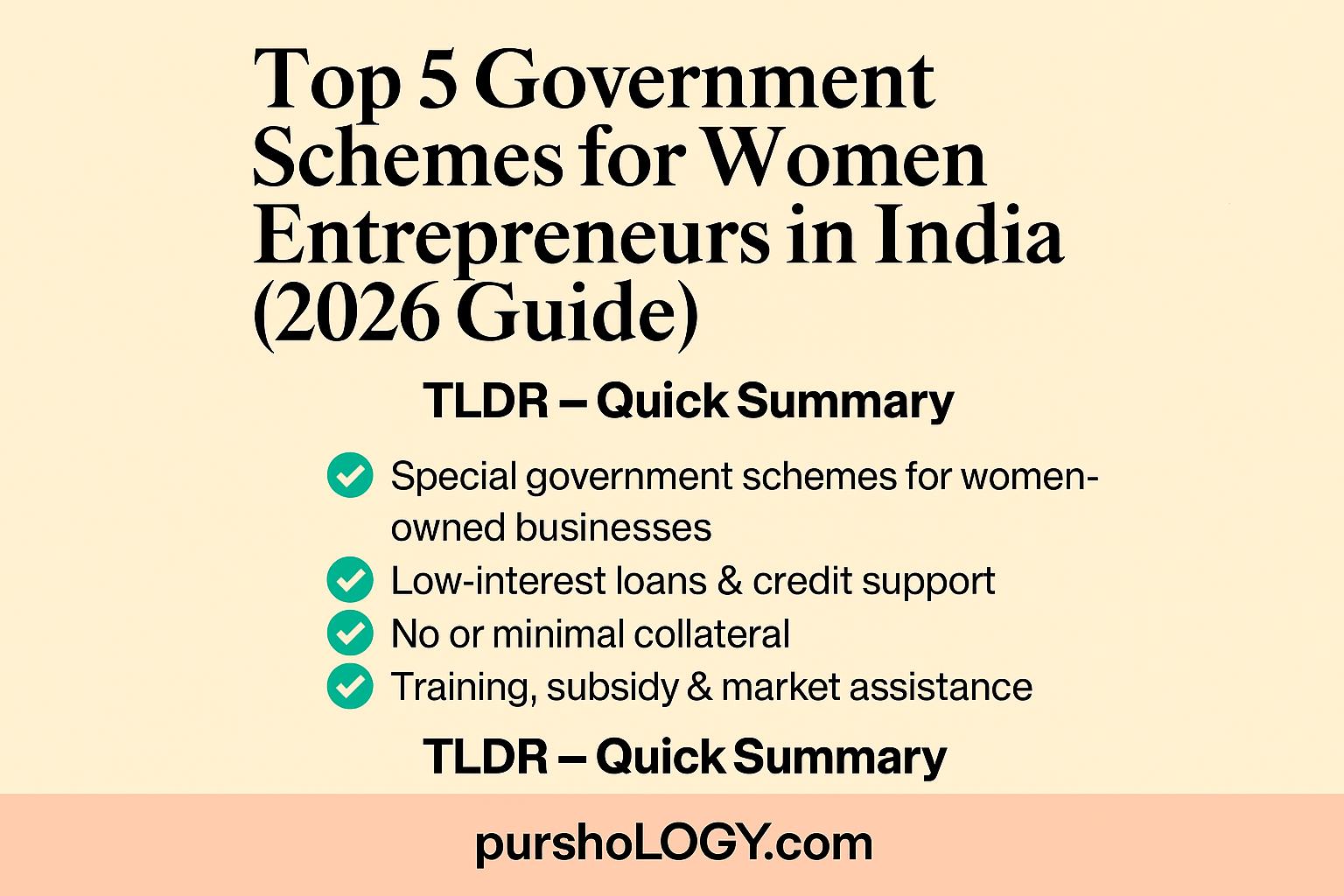
TL;DR – Quick Summary
- ✅ Special government schemes for women‑owned businesses
- ✅ Low‑interest loans & credit support
- ✅ No or minimal collateral
- ✅ Training, subsidy & market assistance
- ✅ Ideal for startups, MSMEs & self‑employed women
1️⃣ PM Mudra Yojana (Women-Focused Loans)
Best for: New & early‑stage women entrepreneurs
While Mudra Loans are open to all, a large portion of beneficiaries are women, with relaxed norms and encouragement from banks.
Key benefits:
- Loan up to ₹10 lakh
- No collateral required
- Lower interest rates for women
- Suitable for retail, service, and manufacturing businesses
Loan categories:
- Shishu: Up to ₹50,000
- Kishor: ₹50,001 – ₹5 lakh
- Tarun: ₹5 lakh – ₹10 lakh
✅ Ideal for first‑time women founders.
2️⃣ Stand‑Up India Scheme
Best for: Women entrepreneurs seeking larger funding
This scheme is specifically designed to empower women and SC/ST entrepreneurs through bank financing.
Key benefits:
- Loan from ₹10 lakh to ₹1 crore
- Mandatory allocation for women entrepreneurs
- Covers manufacturing, trading & service businesses
- Training & handholding support included
✅ Ideal for women planning scalable or capital‑intensive businesses.
3️⃣ Mahila Udyam Nidhi Scheme
Best for: Small manufacturing & service enterprises
This scheme supports women entrepreneurs with financial assistance to start or modernize businesses.
Key highlights:
- Loan up to ₹10 lakh
- Long repayment period
- Focus on women‑led MSMEs
- Supports equipment purchase & working capital
✅ Suitable for women transitioning from small to structured businesses.
4️⃣ Annapurna Scheme
Best for: Women in food & catering businesses
The Annapurna Scheme is designed specifically for women running kitchen‑based businesses.
Benefits include:
- Loan up to ₹50,000
- Used for cooking equipment, utensils, raw materials
- Flexible repayment options
- Often supported by women‑focused banks & MFIs
✅ Ideal for home‑based women entrepreneurs.
5️⃣ Trade‑Related Entrepreneurship Assistance and Development (TREAD) Scheme
Best for: Skill development + funding
This scheme combines training, credit, and NGO support to help women become successful entrepreneurs.
Key benefits:
- Government grants for training programs
- Credit support through lending institutions
- NGO‑based implementation
- Focus on sustainable entrepreneurship
✅ Best for women seeking both education and financial backing.
Who Can Apply for These Schemes?
Women who are:
- Indian citizens
- Startup founders or MSME owners
- Self‑employed or home‑based business operators
- Running proprietorships, partnerships, LLPs, or companies
Tips to Increase Approval Chances
✅ Register under Udyam (MSME)
✅ Maintain clean bank records
✅ Start with realistic loan amounts
✅ Prepare a simple business plan
✅ Apply under women‑specific categories
✅ Choose the right scheme for your business stage
Why These Schemes Matter
- Reduce financial dependency
- Encourage women‑led economic growth
- Improve access to credit
- Promote inclusive entrepreneurship
- Support long‑term sustainability
Final Thoughts
In 2026, women entrepreneurs in India have more support, funding options, and government backing than ever before. Whether you’re starting small or dreaming big, these schemes can provide the foundation you need—without sacrificing ownership or control.
The opportunity exists. The support system is ready.
The next move is yours.
🚀 Thinking of starting or expanding your business?
✅ Identify the scheme that fits your stage
✅ Prepare basic documents
✅ Apply through a bank or government portal
👉 Bookmark this guide
👉 Share it with aspiring women founders
👉 Explore more startup & finance resources on Purshology.com