
TL;DR
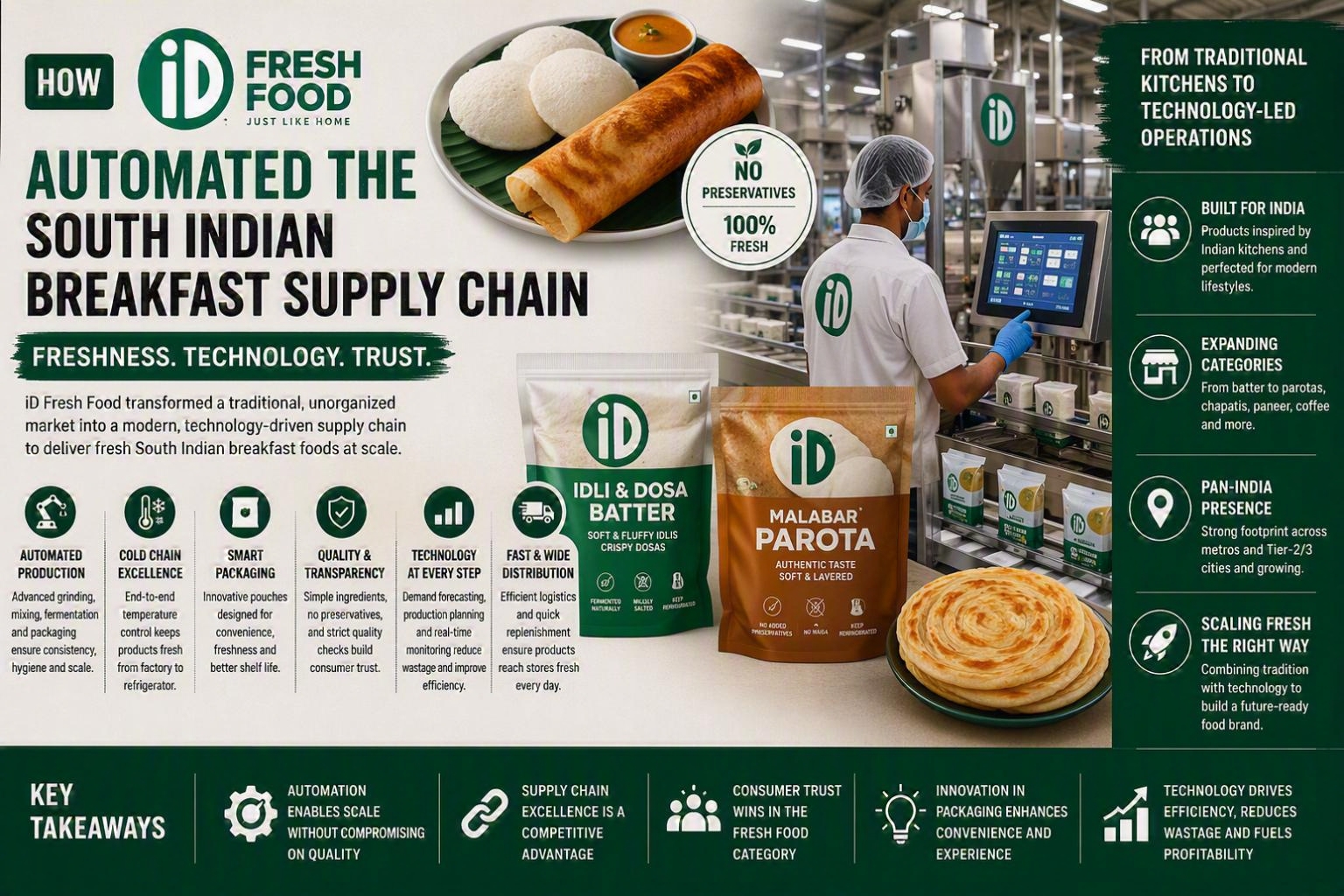
iD Fresh Food transformed a traditionally unorganized market by combining technology, automation, cold-chain logistics, and quality control to deliver fresh idli-dosa batter, parotas, and other breakfast staples at scale. By solving the challenges of freshness and consistency, iD Fresh built one of India’s most successful fresh food brands.
Introduction: Modernizing a Traditional Kitchen Staple
For decades, making idli and dosa batter at home was a time-consuming process involving soaking, grinding, fermenting, and storing ingredients. While many households shifted to convenience foods, they were often forced to compromise on freshness and taste.

iD Fresh Food identified a massive opportunity:
👉 Deliver homemade-quality South Indian breakfast products with the convenience of packaged food.
The challenge? Fresh food has a short shelf life, making production and distribution far more complex than traditional FMCG products.
1. Identifying an Untapped Market
Most packaged food companies focused on:
- Snacks
- Instant foods
- Frozen products
- Ready-to-eat meals
iD Fresh took a different route.
The Opportunity
The company recognized that millions of consumers wanted:
✅ Freshness over preservatives
✅ Convenience without sacrificing authenticity
✅ Restaurant-quality batter at home
By focusing on fresh food rather than processed food, iD Fresh created a category of its own.
2. Automation at the Core
As demand grew, manual production became unsustainable.
The Solution
iD Fresh invested heavily in:
- Automated grinding systems
- Hygienic mixing facilities
- Controlled fermentation processes
- Standardized packaging operations
Benefits
- Consistent product quality
- Higher production capacity
- Reduced human error
- Improved food safety
Automation allowed the brand to scale while maintaining the taste consumers expected.
3. Solving the Freshness Challenge
Fresh food businesses live or die by their supply chain.
The Problem
Unlike packaged snacks that can sit on shelves for months, batter has a limited lifespan.
The Strategy
iD Fresh built a robust cold-chain ecosystem:
- Temperature-controlled manufacturing
- Refrigerated transportation
- Fast retailer replenishment cycles
- Strict inventory monitoring
This ensured products remained fresh from factory to refrigerator.
4. Smart Packaging Innovation
A major breakthrough came through packaging design.
What Made It Different
The company introduced:
- Functional batter pouches
- User-friendly dispensing packs
- Packaging designed to support natural fermentation
Why It Worked
Consumers received:
✅ Convenience
✅ Better storage
✅ Reduced wastage
✅ Improved product experience
Sometimes innovation isn’t about the product—it’s about how the product reaches the consumer.
5. Building Trust Through Transparency
Fresh food requires strong consumer trust.
iD Fresh Focused On
- Simple ingredient lists
- No unnecessary preservatives
- Clear manufacturing standards
- Transparent brand communication
The company’s messaging revolved around one core promise:
Fresh food, just like home.
This helped establish credibility in a market filled with highly processed alternatives.
6. Expanding Beyond Batter
Once consumer trust was established, iD Fresh expanded into adjacent categories.
Product Portfolio Growth
- Idli & dosa batter
- Chapatis
- Parotas
- Paneer
- Coffee decoction
- Other fresh food offerings
Strategic Advantage
Existing customers were already comfortable with the brand’s freshness promise.
This allowed iD Fresh to cross-sell successfully across multiple categories.
7. Technology-Driven Demand Forecasting
Fresh food cannot be overproduced.
Why Forecasting Matters
Excess inventory leads to:
- Product spoilage
- Revenue loss
- Supply chain inefficiencies
iD Fresh’s Approach
The company leverages data to:
- Predict buying trends
- Manage regional demand patterns
- Optimize production schedules
- Reduce wastage
The result is a leaner and more profitable operation.
8. Scaling Across India Without Losing Quality
Many food brands struggle when expanding geographically.
iD Fresh tackled this through:
- Regional production capabilities
- Standardized manufacturing processes
- Strict quality protocols
- Technology-led monitoring systems
This enabled the company to grow across cities while maintaining product consistency.
Key Lessons from iD Fresh Food’s Success
✅ Automation can preserve quality at scale
✅ Supply chains can be a competitive advantage
✅ Freshness is a powerful brand differentiator
✅ Packaging innovation improves customer experience
✅ Technology reduces waste and improves profitability
✅ Trust is critical in the food business
Conclusion: Turning Fresh Food into a Scalable Business
iD Fresh Food achieved what many believed was impossible: scaling fresh, preservative-free food across multiple markets without compromising quality.
Its success wasn’t built on flashy advertising or massive discounts. Instead, it came from mastering the fundamentals—automation, logistics, freshness, and consumer trust.
In a world increasingly dominated by processed foods, iD Fresh demonstrated that convenience and authenticity don’t have to be opposing forces.
🚀 Building a consumer brand?
Take inspiration from iD Fresh Food’s journey: the biggest innovations often happen behind the scenes—in operations, technology, and supply chains.
If you enjoyed this case study, share it with your team, bookmark it for your next strategy session, and explore more brand breakdowns that reveal how leading companies are transforming traditional industries through smart execution.