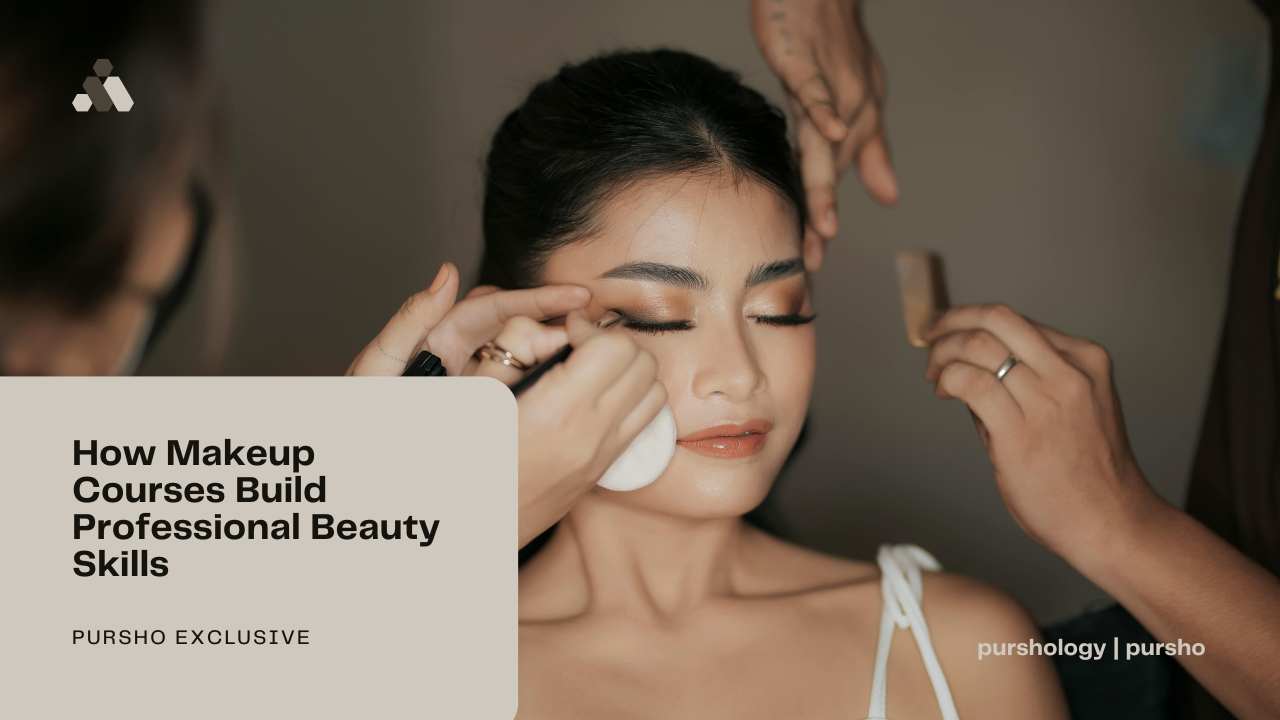
Hobbyists who take to their professional duties earn more money than those that rely on online tutorials on makeup application. In a structured course you will learn techniques that will translate that passion to a career. The following is a guide to the structure of makeup courses developing a successful career in beauty. Knowledge is the major aspect of embodiment that differentiates the working from non-working artists.
Build professional beauty skills from makeup courses
Skin preparation and sanitation protocols for client safety
Students are taught to wash brushes, disinfect makeup products, and prepare skin for makeup. These are the routines that help to avoid infection and allergic reactions that have the potential to wreak harm on clients. Professional artists need to be able to work in a hygienic way, both for their own protection and that of their customers. In any good makeup course, the first step of training is sanitation.

Color theory and foundation matching for all skin tones
Understanding foundation undertones and mixing custom shades work hand in hand to achieve optimum color-matching. Students practice matching on models that have different skin colours. Skin is pink, yellow, olive or neutral in tone, which influences the type of foundation to be chosen. Learners develop undertone awareness through veins and jewelry.
How contouring changes face shape perception
Light colours tend to reveal features and shadows tend to recede toward the background. Students are taught techniques for slimming out wide jaws, curbing a long nose and lifting low brows strategically placed. They practice with different facial shapes until they feel at ease with being placed and look natural. One of the most popular skills that make bridal/red carpet clients happy is contouring.
Bridal makeup application that lasts all day
Tears, dancing, hours of wear and fading or smudging are just a few reasons why wedding cosmetics have to last. Learn how to waterproof products and purpose the appropriate long wear product for bridal customers. They use make up which won’t flashback or shine in the photos. Working makeup artists usually find their most rewarding career to be bridal makeup.
Editorial and fashion makeup for photoshoots
Colors, graphic lines and artistic looks are created in magazines and in ad campaigns. Students are introduced to how to produce these high impact styles in the context of fashion and editorial. They learn how to photograph in a high contrast set up and how to make up when shooting in black and white. A makeup artist that has these skills brings in more money for his or her company whether working for commercial or magazine clients.
Product knowledge and ingredient awareness
It is important for the professional artist to have an understanding of the various products and which types of skin they would work well with. Students are introduced to ingredients which can trigger reactions as well as how to read labels. They feature how to construct kit suggestions based upon budget and requirements. With knowledge of the various products, allergies are avoided and you can get a longevity of product which lasts for a long time.
How portfolio development works in courses
Improved portfolio pictures of work that students take on live models. Every completed look translates into a new client who is willing to pay. Images are carefully chosen and arranged for maximum impact with the help of instructors. The knowledge gained in the course is more important than any type of certificate if it is in the form of a strong portfolio that can be turned over to agencies or private clients.
Summary
Self teaching cannot teach skin preparation, color matching, contouring, bridal techniques and proper make up, which are taught in a formal makeup course. Business training enables artists to prepare for real client work and marketing and develop a portfolio. Professional education enables you to build a career that’s profitable and self-sustaining by taking a passion for makeup to a new level.