TL;DR
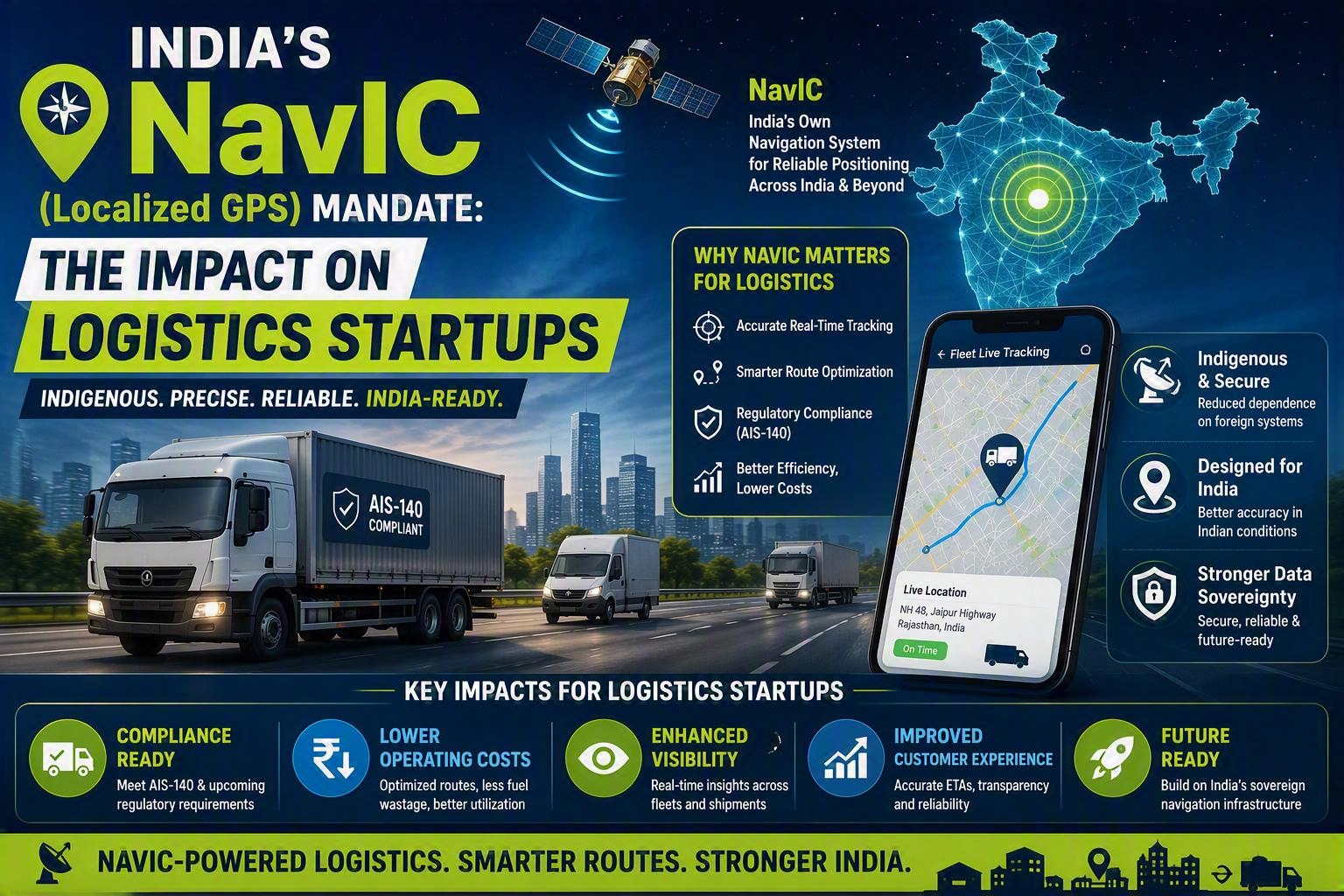
India’s push toward NavIC (Navigation with Indian Constellation), the country’s indigenous satellite navigation system, is creating significant changes for logistics startups. As AIS-140 compliance expands and NavIC-compatible tracking becomes increasingly important for commercial fleets, startups will need to upgrade hardware, modernize fleet management systems, and rethink location intelligence strategies. While compliance costs may rise in the short term, NavIC could improve fleet visibility, operational efficiency, and navigation sovereignty in the long run.
The logistics sector is undergoing a major digital transformation.

From AI-powered route optimization to real-time fleet tracking, location data has become the foundation of modern supply chains. Now, India’s indigenous navigation system, NavIC (Navigation with Indian Constellation), is poised to play a far bigger role in how logistics companies track vehicles, optimize routes, and manage nationwide operations.
For logistics startups, the shift toward NavIC is more than a compliance update.
It could reshape the economics, technology stack, and competitiveness of fleet operations across India.
What Is NavIC?
NavIC is India’s satellite navigation system developed by ISRO to provide precise positioning, navigation, and timing services across India and surrounding regions extending roughly 1,500 km beyond the country’s borders.
The system was designed to reduce dependence on foreign navigation networks and provide reliable positioning services for civilian, commercial, and strategic applications.
Today, NavIC is increasingly being integrated into:
- Vehicle tracking systems
- Commercial fleet management
- Automotive platforms
- IoT devices
- Public transportation
- Maritime operations [isro.gov.in]
Why NavIC Matters for Logistics
Location data drives nearly every logistics operation.
Startups depend on navigation systems to:
- Track vehicles in real time
- Monitor driver behavior
- Predict delivery ETAs
- Optimize routes
- Manage fuel consumption
- Enhance customer visibility
As government agencies increasingly encourage and standardize NavIC adoption, logistics companies must ensure their technology infrastructure remains compatible.
The AIS-140 Connection
One of the biggest drivers of NavIC adoption is AIS-140.
AIS-140 standards require vehicle tracking systems for many categories of public and commercial vehicles, with support for real-time positioning, backend connectivity, and compatibility with India’s navigation ecosystem.
As enforcement becomes broader and compliance expectations increase across commercial fleets, logistics startups may need to ensure their tracking hardware supports NavIC-enabled positioning.
This transforms navigation technology from a convenience into a regulatory requirement.
Immediate Challenges for Logistics Startups
1. Hardware Upgrade Costs
Many startups currently rely on traditional GPS-based telematics devices.
Transitioning to NavIC-compatible systems may require:
- New trackers
- Firmware upgrades
- Device certification
- Fleet-wide hardware replacement
For startups operating hundreds or thousands of vehicles, these costs can be substantial.
2. Integration Complexity
Fleet management software must adapt to support multiple satellite navigation inputs.
Engineering teams may need to:
- Update APIs
- Modify telematics platforms
- Validate location accuracy
- Build interoperability layers
The transition requires both technical expertise and capital investment.
3. Vendor Selection Risks
As NavIC adoption grows, logistics startups must carefully evaluate telematics providers.
Questions now include:
- Is the device NavIC-compatible?
- Is it AIS-140 certified?
- Does it support hybrid GNSS positioning?
- Can it scale nationwide?
Choosing the wrong hardware partner could create compliance and operational challenges later.
The Opportunities Are Bigger Than the Costs
While compliance expenses grab headlines, the long-term opportunities may be far more valuable.
Improved Fleet Visibility
NavIC is specifically optimized for the Indian operating environment.
Enhanced positioning reliability can help logistics operators gain better visibility into fleet movement, delivery status, and route performance.
Better Route Optimization
Accurate positioning enables smarter decisions.
Benefits include:
- Reduced idle time
- Faster deliveries
- Lower fuel expenses
- Improved driver productivity
For startups competing on delivery speed, these improvements directly affect profitability.
Stronger Supply Chain Analytics
Granular location intelligence powers:
- Predictive maintenance
- Dynamic routing
- Demand forecasting
- Warehouse optimization
The more reliable the location data, the better these analytical capabilities become.
Impact on Last-Mile Delivery Startups
Last-mile logistics companies may benefit significantly.
Sectors such as:
- E-commerce delivery
- Quick commerce
- Food delivery
- Hyperlocal logistics
depend heavily on accurate vehicle tracking and real-time routing.
As consumer expectations around delivery speed continue rising, NavIC-enabled tracking could become a competitive advantage rather than just a compliance requirement.
Why Investors Are Watching Closely
Investors increasingly favor startups that align with national digital infrastructure initiatives.
The growth of:
- ONDC
- UPI
- Account Aggregator
- Open mobility networks
- NavIC-based positioning
signals a broader trend toward India’s digital public infrastructure ecosystem.
Logistics startups building NavIC-ready solutions may find themselves better positioned for future regulatory changes and partnership opportunities.
Could NavIC Become the Default Standard?
Momentum is clearly building.
Government agencies continue supporting pilot deployments across transportation, railways, fisheries, and commercial vehicle tracking, while automotive and IoT ecosystems are expanding NavIC compatibility.
With more than 140 certified NavIC-enabled device models already deployed in over 1.5 million public and commercial vehicles, adoption is moving from experimentation toward scale.
For logistics founders, waiting too long to prepare may create unnecessary disruption.
Final Verdict
India’s NavIC push represents more than a navigation upgrade. It is part of a broader effort to build indigenous digital infrastructure for transportation, logistics, and mobility. For logistics startups, the transition will bring short-term compliance costs and technical challenges, but it also offers opportunities to improve fleet intelligence, operational efficiency, and long-term resilience.
The startups that adapt early will likely gain a strategic advantage as India’s logistics ecosystem becomes increasingly connected, regulated, and data-driven.
Ready for the Next Generation of Fleet Intelligence?
If your logistics startup relies on real-time tracking, now is the ideal time to evaluate your telematics stack, fleet hardware, and compliance readiness. The shift toward NavIC isn’t just about meeting regulations. It’s about building a smarter, more efficient, and future-ready logistics operation for the next decade.