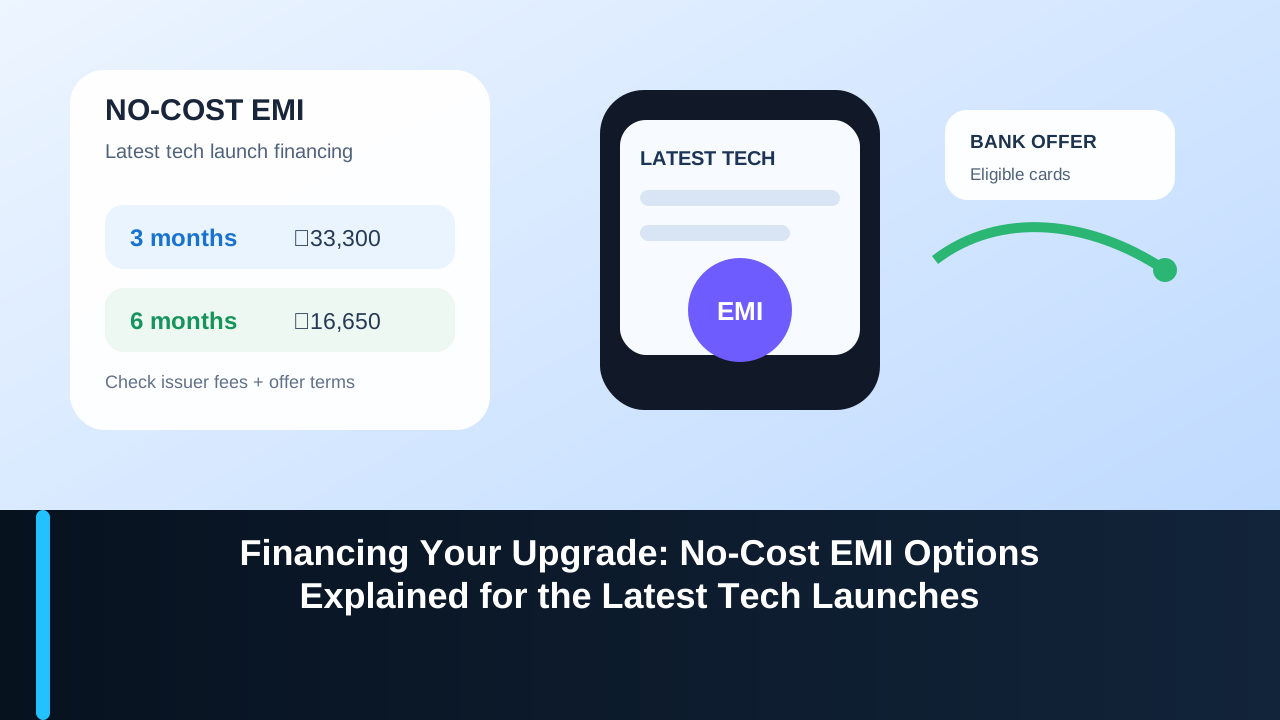
Buying a new phone, laptop or other premium gadget through No-Cost EMI can make a large purchase easier to fit into a monthly budget. But “no cost” does not mean every EMI-related charge disappears, and the offer can change by product, bank, tenure and promotion.
For example, Apple’s India store currently advertises up to six months of No-Cost EMI on eligible purchases, while its financing terms explain that the interest amount is discounted from the transaction value but the card issuer may still charge processing or convenience fees.

What No-Cost EMI actually means
With a normal EMI, the lender charges interest over the repayment period. With No-Cost EMI, the interest amount is effectively offset through a discount on the purchase transaction, subject to the offer’s terms. You still repay the principal and any applicable issuer charges.
Apple’s current India terms state that Apple does not charge a processing or convenience fee for facilitating EMI or No-Cost EMI, but the eligible card issuer may charge such fees. That distinction is important when comparing the final cost of two offers.
How to calculate the real cost before choosing EMI
| Item | What to check |
|---|---|
| Product price | Cash price after any instant discount or exchange benefit |
| EMI tenure | 3, 6, 9, 12 months or the available term |
| Interest adjustment | Confirm that the offer is genuinely advertised as No-Cost EMI |
| Processing fee | Check the bank or card issuer terms |
| GST on fees | Check whether taxes apply to the issuer’s fee |
| Cashback | Confirm eligibility, cap and credit timeline |
| Exchange value | Compare trade-in credit with selling the old device separately |
Example: a ₹99,900 purchase
Suppose an eligible product costs ₹99,900 and the offer provides six months of No-Cost EMI. The simple principal split would be about ₹16,650 per month before any issuer-specific charges or offer adjustments.
The useful comparison is not only the monthly EMI. Compare the effective acquisition cost:
Effective cost = product price – genuine discounts – cashback – trade-in credit + applicable fees.
This makes two apparently similar EMI offers easier to compare.
What Apple’s current India offer tells us
As of September 2026, Apple India’s shopping pages show iPhone models including iPhone 18 Pro, iPhone Air, iPhone 17, iPhone 17e and iPhone 16, and advertise up to six months of No-Cost EMI on eligible products. The current store also lists instant cashback on selected models and eligible cards.
Apple’s payment-help page says EMI and No-Cost EMI options appear at checkout when the order qualifies and the card is from an eligible bank.
No-Cost EMI vs regular EMI
| Factor | No-Cost EMI | Regular EMI |
|---|---|---|
| Interest | Interest is offset through the merchant offer, subject to terms | Interest is normally charged over the tenure |
| Processing fee | May still apply from the issuer | May apply from the issuer |
| Monthly payment | Usually predictable for the principal under the offer | Includes interest and applicable charges |
| Best comparison method | Check total effective cost | Check total repayment amount |
Five mistakes to avoid
- Looking only at the EMI amount. A low monthly payment can simply mean a longer tenure.
- Ignoring issuer fees. Read the bank’s EMI terms, not just the store banner.
- Assuming every product qualifies. Eligibility can depend on model, transaction value and card.
- Forgetting exchange economics. Compare the trade-in offer with the realistic resale value of your old device.
- Using EMI for a purchase you cannot comfortably carry. A promotional financing offer does not change your underlying budget.
A simple upgrade decision worksheet
Before checkout, write down these six numbers: cash price, discount, cashback, trade-in credit, issuer fees and EMI tenure. Then calculate the amount that will actually leave your pocket over the entire transaction.
Frequently asked questions
Is No-Cost EMI literally free?
No. The financing offer can offset the interest component, but issuer fees or taxes may still apply.
Can I get No-Cost EMI on every card?
No. Eligibility depends on the merchant offer and the card issuer.
Does cancelling an EMI purchase affect the refund?
It can. Apple advises customers to check with the card issuer about how returns, cancellations, pre-closure or interest adjustments affect an EMI transaction.
Bottom line
No-Cost EMI is best understood as a pricing and financing structure, not a magic discount. Compare the total effective cost, eligibility conditions, issuer fees, cashback and trade-in value before deciding how to fund the upgrade.