
When was the last time you asked a question out loud to a device instead of typing it into a box?
For decades, website development was about designing for eyes and fingers. You looked, you clicked, you typed. That assumption is becoming outdated.

More than 1 billion people now use LLMs and GenAI platforms every month. As people increasingly get used to asking questions to AI tools in simple language, AI voice assistants are bringing that conversational experience to websites.
Heading into 2027, voice stops being something a team bolts on after launch. It becomes a part of the brief.
Find out how that shift is changing the way you plan, build, host, and maintain websites. Get the numbers, the expert cautions, and the trade-offs worth knowing before you commit a budget.
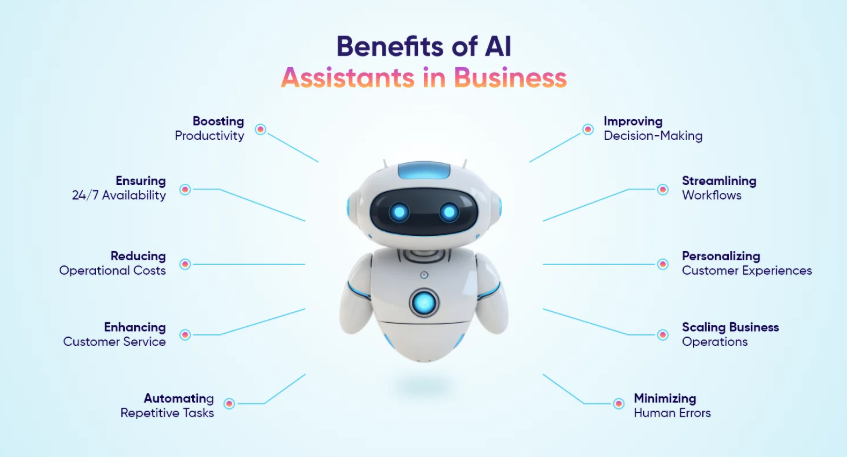
1. Voice Becomes an Interface Layer, Not an Add-On
Until now, voice meant a microphone icon near the search bar. That is now reversing. Teams now map spoken journeys during wireframing, alongside the visual ones.
The reason is behavioural. Around 20.5% of global internet users already use voice search regularly, and a large share of those queries carry local intent. Someone asking for clinic hours or a service price wants an answer rather than a homepage to scroll.
This changes the code. An assistant can only speak what your markup describes properly. Heading order, labelled fields, and clean schema become the input that voice depends on instead of mere SEO hygiene.
Example: A dental clinic that makes its opening hours, location, and service pricing available as structured data can have that information read aloud by an assistant. A competitor who hides the same details inside a hero image cannot.
Tip: If you are choosing a platform, check what markup it outputs before you pick on looks. Several of the free website builders produce clean semantic HTML, and several do not.
2. Developers Build Faster, But Only Where It Genuinely Helps
Voice has also moved into the development process. Engineers describe a component, scaffold a route, or dictate test cases, and the assistant writes the first pass.
Adoption is already mainstream. In 2025, 84% of developers were using or planning to use AI tools, up from 76% a year earlier.
The honest counterpoint matters here. In a randomised trial by METR, experienced developers took 19% longer with AI tools on their own codebases, even though they anticipated advanced tools would significantly improve productivity and shorten the time by around 24%. The gap between felt speed and measured speed is the real finding.
Tip: Measure before you scale. Give one squad the tooling, keep another on the existing workflow, and compare cycle time over a sprint. Most custom software development companies now run this comparison before standardising a stack.
3. Conversational Layers Replace Static Forms
The clearest visitor-facing change is the shrinking form. Booking flows, support tickets, and quote requests are being replaced by a short spoken exchange that collects the same information in a fraction of the clicks.
The cost-saving behind this is not speculative. Gartner predicted that conversational AI in contact centres would cut agent labour costs by $80 billion in 2026, with 1 in 10 agent interactions automated.
Daniel O’Connell, VP Analyst at Gartner, noted that labour can represent up to 95% of contact centre costs, which explains why adoption moved quickly once the technology worked.
Building this well is harder than embedding a widget. A pause longer than a second reads as a broken page, answers have to come from company records rather than guesswork, and the handover to a human needs to carry context with it.
This is why most teams now use a dedicated AI voice agent platform instead of stitching speech services together. Agents on a platform like Murf run on a proprietary speech stack with each component tuned to work with the others, delivering end-to-end agent latency under 800 milliseconds. They embed on a website as a standalone widget or add voice to an existing chatbot, with calls carried over WebRTC, and turn-taking, multilingual support, and contextual human handover are built in rather than added later.
The accuracy problem is handled separately. A custom RAG design keeps every answer grounded in the company’s knowledge base, while real-time function calling lets an agent pull customer data, update records, or book an appointment mid-conversation.
Developers get REST APIs and SDKs for Python, Node, and Go, plus the choice to run the agent on OpenAI, Anthropic, Gemini, or their own fine-tuned model. Murf reports results of roughly 40% lower cost-to-serve and a 30% lift in CSAT across deployments, which is the kind of outcome that gets a voice layer signed off rather than shelved.
4. Speed and Accessibility Become Build Requirements
Voice punishes slow backends. A visual page can load progressively and still feel fine. A spoken reply cannot because silence reads as failure.
Accessibility is the other pressure point, and the data is not flattering. The 2026 WebAIM Million report found detectable WCAG 2 failures on 95.9% of the top one million home pages, averaging 56.1 errors per page, up 10.1% year on year. Missing form input labels appeared on 51% of pages. Those same labels are what a voice agent reads to know which field it is filling.
Hilary Stephenson, Managing Director at Nexer Digital, said that accessibility is about consistency and intent rather than perfection. Pages are also getting heavier, averaging 1,437 elements, a 22.5% jump in one year.
Tip: Fix the six common errors first, since low contrast, missing alt text, unlabelled inputs, empty links, empty buttons, and missing page language account for a majority of all detected failures. Then look at where your server sits, because voice-heavy sites increasingly need the predictable response times of regional VPS hosting rather than shared plans.
5. Maintenance and Support Move Into Conversation
After launch, voice changes the operating routine. Owners check traffic, flag broken pages, and request small edits by talking to an assistant wired into their CMS and analytics.
Support sees the bigger shift. A voice agent covers the first layer of questions around the clock and in multiple languages, then passes complex cases to a person with full transcript and context attached.
Example: An e-commerce brand can let an agent handle order status, return windows, and sizing, then route a damaged-delivery complaint straight to a human with the order already on screen.
The deployments that fail are usually the ones that automated everything. Teams that bring in AI consulting partners tend to start by mapping which journeys are genuinely repetitive and leaving the rest alone.
Make Voice a Part of the Web Experience
Voice is not replacing the screen in 2027. It is sitting beside it, and the websites that do well will serve both without compromising. That means semantic markup, backends fast enough to hold a conversation, grounded agents instead of hallucinating chatbots, and accessibility treated as core infrastructure rather than compliance paperwork.
The teams getting value are measuring honestly, as the METR findings show, and deciding deliberately where speaking beats clicking.
Start with one journey that frustrates people today, instrument it properly, and expand only once the numbers agree with the enthusiasm.
For more guides, tool comparisons, and practical breakdowns on AI and web technology, visit purshoLOGY.