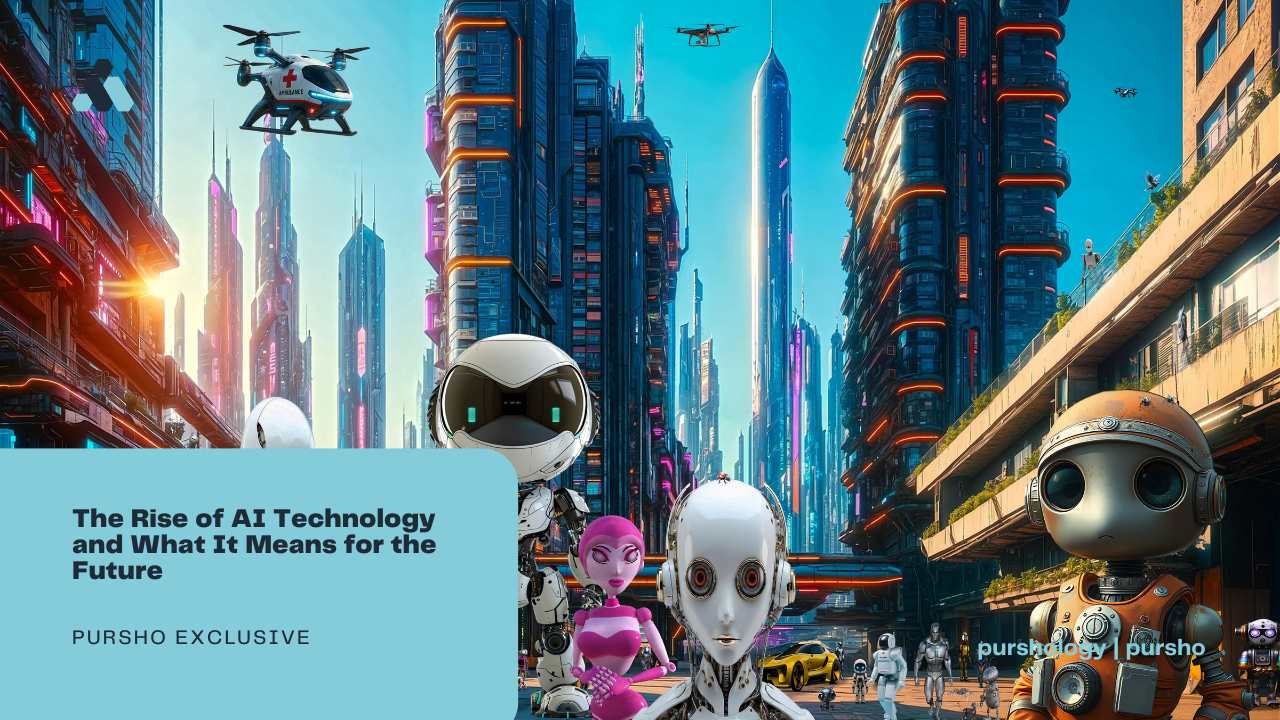
Artificial Intelligence (AI) has rapidly evolved from a futuristic concept into a powerful force shaping nearly every aspect of modern life. Once limited to science fiction and theoretical research, AI technology is now embedded in everyday tools, industries, and decision-making processes. From virtual assistants and recommendation algorithms to medical diagnostics and autonomous vehicles, the rise of AI marks one of the most significant technological shifts of the 21st century. Understanding what this growth means for the future is essential for individuals, businesses, and societies worldwide.
Understanding Artificial Intelligence
Artificial Intelligence refers to computer systems designed to perform tasks that typically require human intelligence. These tasks include learning, problem-solving, speech recognition, image analysis, and decision-making. Modern AI systems rely heavily on machine learning, deep learning, and neural networks, which allow machines to learn from large amounts of data and improve over time without explicit programming.

The availability of big data, increased computing power, and advances in algorithms have accelerated AI development. As a result, AI systems are becoming more accurate, efficient, and accessible across various sectors.
AI in Everyday Life
AI technology is already deeply integrated into daily routines. Smartphone assistants help manage schedules, streaming platforms recommend content, and navigation apps like 55 club optimize travel routes using real-time data. In e-commerce, AI personalizes shopping experiences, while in finance, it detects fraud and manages investments.
In healthcare, AI-powered tools assist doctors in diagnosing diseases, analyzing medical images, and predicting patient outcomes. In education, adaptive learning platforms tailor lessons to individual students’ needs, enhancing engagement and performance. These applications demonstrate how AI improves convenience, efficiency, and decision-making.
Transforming Industries and the Workforce
One of the most profound impacts of AI is its effect on industries and employment. Automation driven by AI is transforming manufacturing, logistics, customer service, and data analysis. Routine and repetitive tasks are increasingly handled by machines, allowing human workers to focus on creative, strategic, and interpersonal roles.
While AI creates new job opportunities in fields such as data science, robotics, and AI ethics, it also raises concerns about job displacement. The future workforce will require new skills, including digital literacy, critical thinking, and adaptability. Lifelong learning and reskilling will become essential as AI continues to reshape job markets.
Ethical and Social Considerations
As AI technology advances, ethical questions become more pressing. Issues such as data privacy, algorithmic bias, transparency, and accountability must be addressed to ensure responsible AI use. AI systems trained on biased data can unintentionally reinforce inequalities, affecting decisions in hiring, lending, and law enforcement.
There is also concern about the misuse of AI, including surveillance, misinformation, and deepfake technology. Governments, organizations, and researchers are increasingly calling for ethical guidelines, regulations, and global cooperation to ensure AI benefits society as a whole.
AI and the Future of Innovation
AI is expected to play a central role in solving complex global challenges. In climate science, AI helps analyze environmental data and optimize energy use. In agriculture, it supports precision farming to increase crop yields while reducing resource waste. In scientific research, AI accelerates discoveries by analyzing vast datasets more efficiently than humans alone.
The integration of AI with other emerging technologies—such as the Internet of Things (IoT), biotechnology, and quantum computing—has the potential to unlock innovations that were previously unimaginable. These advancements could significantly improve quality of life and economic growth worldwide.
Human–AI Collaboration
Rather than replacing humans entirely, the future of AI is likely to focus on collaboration between humans and machines. AI excels at processing large amounts of data and identifying patterns, while humans bring creativity, empathy, and ethical judgment. Together, this partnership can lead to better outcomes in decision-making, innovation, and problem-solving.
Education systems and workplaces will increasingly emphasize how to work alongside AI tools effectively. Understanding AI will become as fundamental as basic computer skills are today.
Looking Ahead
The rise of AI technology represents both immense opportunity and significant responsibility. Its impact will depend on how thoughtfully it is developed, regulated, and integrated into society. Ensuring that AI is inclusive, ethical, and aligned with human values is critical for building a future where technology serves humanity rather than controls it.
Conclusion
Artificial Intelligence is no longer a distant possibility—it is a defining force of the present and future. As AI continues to evolve, it will reshape industries, redefine work, and influence how we live and interact with the world. By embracing innovation while addressing ethical and social challenges, society can harness the power of AI to create a smarter, more sustainable, and more equitable future.