TL;DR
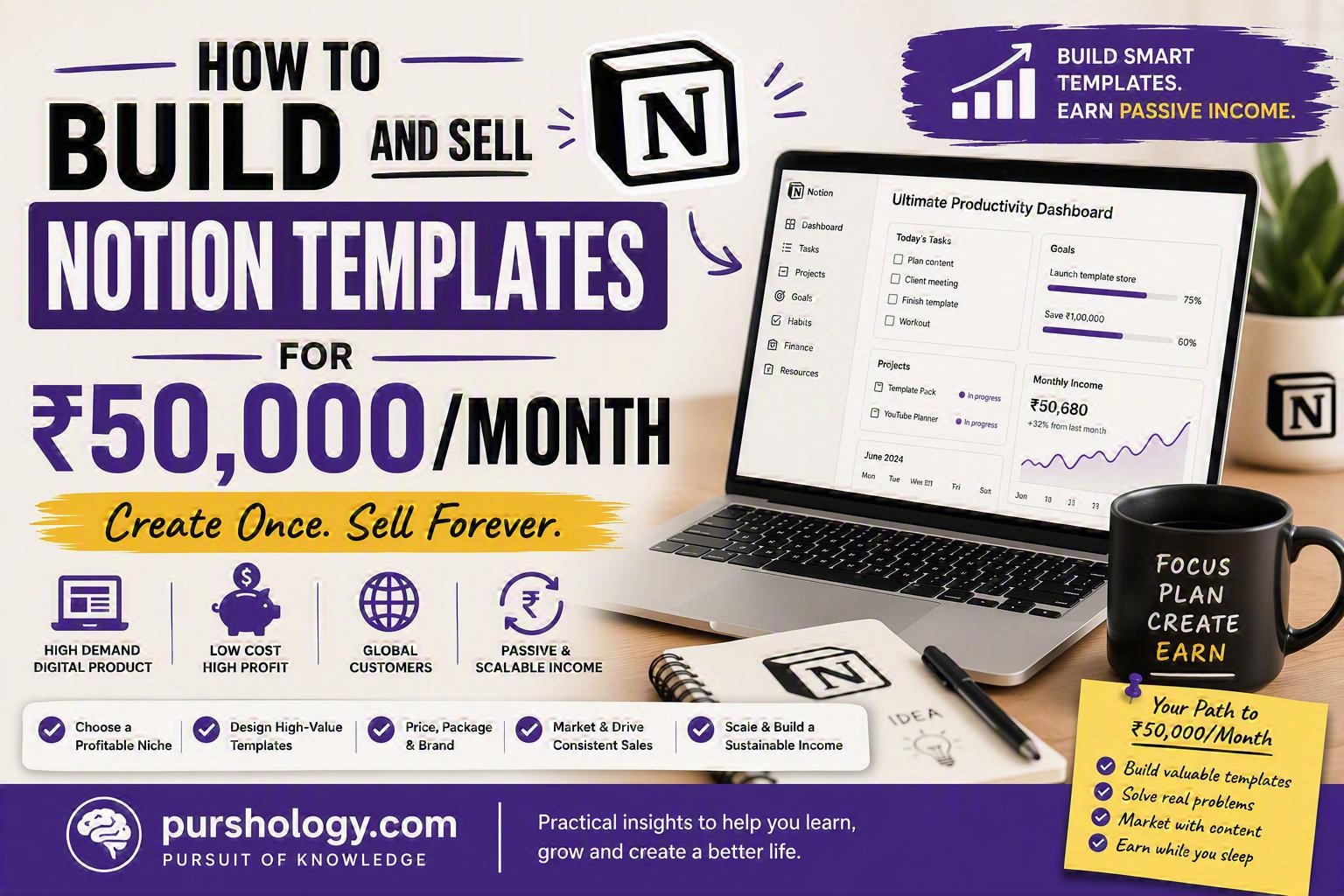
Selling Notion templates is one of the simplest digital product businesses to start. You create productivity, business, finance, or planning systems once and sell them repeatedly. With the right niche, strong template design, and consistent marketing, earning ₹50,000 or more per month from Notion templates is an achievable goal for creators, freelancers, students, and entrepreneurs.
The creator economy has made it easier than ever to earn income from digital products. Among the fastest-growing opportunities is creating and selling Notion templates.
Notion has become a go-to workspace for individuals, startups, content creators, students, and businesses. As more people seek ready-made systems to organize their lives and work, demand for high-quality templates continues to grow.
The best part? You only need to build a template once and can sell it hundreds of times.
Here’s a step-by-step guide to building a profitable Notion template business capable of generating ₹50,000 per month or more.
Why Notion Templates Are a Great Business
Notion templates offer several advantages over traditional freelancing or service-based work:
- Low startup costs
- No inventory required
- Global customer base
- Recurring sales potential
- Passive income opportunities
- Easy to scale
Unlike client work where income is directly tied to your time, template sales can continue generating revenue even while you’re sleeping.
Step 1: Identify a Profitable Template Niche
One of the biggest mistakes beginners make is creating generic templates.
Instead, solve specific problems.
Popular Notion template categories include:
Productivity
- Daily planner
- Habit tracker
- Goal-setting dashboard
- Time management system
Business
- CRM templates
- Startup operating systems
- Project management dashboards
- Client management tools
Content Creation
- Content calendars
- YouTube planning systems
- Blog workflow templates
- Social media planners
Personal Finance
- Budget trackers
- Expense managers
- Debt payoff planners
- Investment trackers
Student Templates
- Study planners
- Assignment trackers
- Semester organizers
- Exam preparation systems
The more specific the problem, the easier it becomes to sell.
Step 2: Create a High-Quality Notion Template
Successful templates are not just visually attractive.
They should save users time and help them achieve meaningful results.
Focus on:
- Easy navigation
- Clean layouts
- Clear instructions
- Automation where possible
- Mobile-friendly design
- Professional aesthetics
Ask yourself:
“Would someone pay to avoid building this themselves?”
If the answer is yes, you’re on the right track.
Step 3: Add Premium Features
To increase perceived value, include extras such as:
- Setup guides
- Video tutorials
- Quick-start checklists
- Bonus template packs
- Productivity frameworks
- Workflow documentation
These additions can justify higher pricing while improving customer satisfaction.
Step 4: Price Your Templates Correctly
New creators often make the mistake of undervaluing their work.
Consider pricing ranges such as:
Beginner Templates
₹299 to ₹999
Advanced Systems
₹999 to ₹4,999
Business Dashboards
₹2,999 to ₹9,999
You can also bundle multiple templates together to increase average order value.
Example:
- Personal Finance Tracker: ₹799
- Goal Planner: ₹599
- Productivity Bundle: ₹1,999
Bundles often convert better than individual products.
Step 5: Build a Sales Page That Converts
Your sales page should clearly answer three questions:
What Problem Does It Solve?
Explain the pain point.
How Does It Work?
Show screenshots and walkthroughs.
What Result Will Users Get?
Highlight outcomes rather than features.
For example:
❌ “Includes 12 databases”
✅ “Manage projects, track goals, and plan your entire week from one dashboard”
Focus on benefits that matter to buyers.
Step 6: Sell on Multiple Platforms
Don’t rely on a single marketplace.
Popular options include:
- Gumroad
- Etsy
- Lemon Squeezy
- Payhip
- Notion Marketplace
- Personal website
Multiple distribution channels create more opportunities for sales.
Step 7: Use Social Media to Attract Buyers
You don’t need millions of followers.
Consistently showcasing your templates can generate sales.
Create content such as:
- Notion tutorials
- Productivity tips
- Before-and-after workspace transformations
- Template walkthroughs
- Case studies
- Behind-the-scenes creation videos
Short-form content on LinkedIn, Instagram, YouTube Shorts, and X can effectively drive traffic.
Step 8: Leverage SEO for Long-Term Sales
Search engine traffic can become a significant revenue source.
Create content targeting keywords such as:
- Best Notion templates
- Notion productivity templates
- Notion business dashboard
- Notion finance tracker
- Student Notion templates
Blog articles, YouTube videos, and tutorials can help people discover your products organically.
Step 9: Collect Customer Feedback
Your first version doesn’t need to be perfect.
Launch early and improve based on feedback.
Focus on:
- Ease of use
- Missing features
- Design improvements
- Integration requests
- Customer onboarding experience
The best-selling templates often evolve through multiple updates.
How Much Can You Actually Earn?
Here’s a simple example.
If your average template sells for ₹999:
- 10 sales/month = ₹9,990
- 25 sales/month = ₹24,975
- 50 sales/month = ₹49,950
Just 50 sales per month can bring you close to the ₹50,000 milestone.
With premium products, bundles, and repeat customers, scaling beyond ₹1 lakh per month becomes increasingly realistic.
Common Mistakes to Avoid
Avoid these beginner errors:
- Creating generic templates
- Ignoring customer feedback
- Copying existing products
- Poor template documentation
- Weak product descriptions
- Selling without marketing
- Complicated user interfaces
Remember, the best templates prioritize user experience over complexity.
Final Thoughts
Selling Notion templates is one of the most accessible digital businesses available today. Whether you’re a student, freelancer, creator, or entrepreneur, you can build systems that solve real problems and generate income repeatedly.
The key is simple: create valuable templates, package them professionally, market them consistently, and keep improving based on customer feedback.
A few successful templates can become a reliable source of monthly income and potentially grow into a full-time online business.
Ready to Start Your Notion Template Business?
Pick one problem to solve today, create your first Notion template this week, and launch it for sale before the end of the month. The sooner you start building, the sooner you’ll begin creating a digital asset that can generate income long after the work is done.
Visit Purshology.com for more insights on digital products, online income opportunities, productivity systems, and building a smarter creator business.