TL;DR:
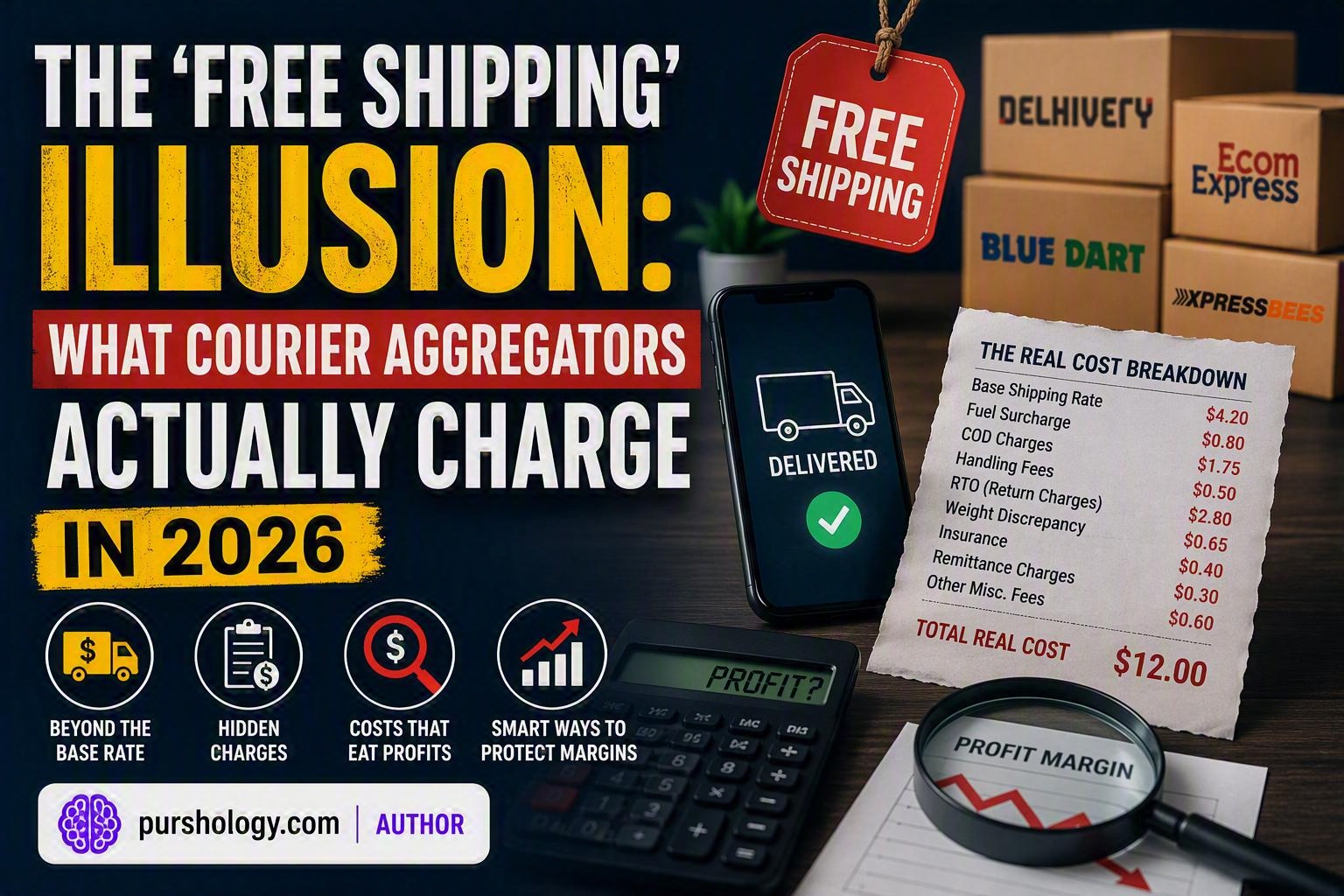
Free shipping is rarely free for ecommerce sellers. In 2026, courier aggregators offer competitive shipping rates, but merchants still absorb costs through shipping fees, fuel surcharges, COD charges, weight disputes, return-to-origin (RTO) fees, remittance fees, and add-on services. Understanding the true cost structure behind courier aggregators is essential to protecting profit margins and building a sustainable ecommerce business.
Free Shipping Isn’t Free. Someone Is Paying for It.
“Free Shipping” remains one of the most effective conversion drivers in ecommerce. Customers love seeing it, marketplaces promote it, and brands use it to increase checkout completion rates.

But behind every “Free Shipping” badge lies a reality many sellers discover too late: somebody pays the shipping bill.
For most online businesses, that somebody is the merchant.
In 2026, courier aggregators continue to simplify logistics for ecommerce brands by giving access to multiple carriers through a single platform. However, many sellers focus on the advertised shipping rate while overlooking the numerous additional charges that slowly eat away at profits.
The result? High sales volume, shrinking margins, and confusion about why the business isn’t generating the expected profits.
What Is a Courier Aggregator?
A courier aggregator acts as a logistics marketplace.
Instead of negotiating separately with multiple shipping companies, sellers can access various courier partners through one platform.
Benefits typically include:
- Centralized shipping management
- Automated label generation
- Multiple courier options
- Shipment tracking
- COD support
- Return management
- Faster onboarding
While these benefits are valuable, merchants must understand that the quoted shipping rate is often only one component of the total logistics cost.
The Hidden Charges Sellers Often Ignore
Many ecommerce businesses calculate shipping expenses based solely on the base courier rate.
Unfortunately, actual shipping costs can be much higher.
Fuel Surcharges
Courier companies frequently adjust fuel-related fees based on transportation costs.
While individual charges may appear small, they can significantly impact profitability across hundreds or thousands of shipments.
Cash on Delivery (COD) Fees
COD remains a preferred payment method in many markets.
However, sellers often face:
- COD handling fees
- Collection charges
- Remittance processing fees
A low-value order can quickly become less profitable when COD costs are added.
Return to Origin (RTO) Charges
One of the largest hidden expenses in ecommerce logistics is RTO.
When a package is:
- Rejected by the customer
- Undeliverable
- Incorrectly addressed
The shipment often returns to the seller.
In many cases, businesses pay shipping costs twice:
- Forward shipment
- Return shipment
High RTO rates can destroy profit margins surprisingly fast.
Volumetric Weight: The Margin Killer Nobody Talks About
Many sellers assume shipping costs are based purely on actual product weight.
That’s often not the case.
Courier companies commonly use volumetric weight calculations.
For example, a lightweight kitchen organizer may weigh only 500 grams but occupy enough package space to be charged as a 1 kg or 2 kg shipment.
This frequently affects:
- Kitchen storage products
- Home organization items
- Appliance accessories
- Gift bundles
Many ecommerce brands discover these costs only after receiving shipping invoices.
Weight Disputes and Reconciliation Charges
A common issue in ecommerce logistics occurs when courier measurements differ from seller-declared dimensions.
When discrepancies arise:
- Extra weight charges may be applied
- Billing adjustments occur after shipment
- Profit forecasts become inaccurate
Even a small weight difference multiplied across hundreds of orders can have a substantial impact on monthly profitability.
Successful sellers routinely audit shipping invoices to identify these billing discrepancies.
Insurance Fees and Damage Costs
Shipping fragile products without insurance can expose businesses to significant risk.
Popular categories such as:
- Kitchen gadgets
- Glassware
- Small appliances
- Home décor products
Often experience damage during transit.
Adding shipping insurance increases costs but may reduce financial exposure from replacement shipments and customer refunds.
The key is finding the right balance between protection and profitability.
The Real Cost of Offering “Free Shipping”
Let’s look at a simple example.
Order Value
- Product Price: $40
- Product Cost: $14
- Marketing Cost: $10
At first glance:
Profit = $16
Now add logistics expenses:
- Shipping Fee: $4
- COD Processing: $1
- Fuel Surcharge: $0.50
- Packaging Cost: $0.75
- Average RTO Allocation: $1.25
Revised Profit:
$16 – $7.50 = $8.50
More than 45% of the expected profit disappears.
The customer still sees “Free Shipping.”
The seller absorbs the cost.
Why Courier Aggregators Still Matter
Despite these additional expenses, courier aggregators remain extremely valuable.
The goal isn’t avoiding them.
The goal is understanding operational costs before scaling.
Benefits include:
- Access to competitive shipping rates
- Multiple courier partners
- Better delivery coverage
- Automated shipping workflows
- Simplified returns management
- Performance analytics
The most successful ecommerce businesses use aggregators strategically while carefully monitoring shipping-related expenses.
How Successful Brands Protect Margins in 2026
Top-performing ecommerce stores follow a few common practices.
Increase Average Order Value
Bundling products helps spread shipping costs across larger orders.
Set Free Shipping Thresholds
Rather than offering unconditional free shipping, many brands require a minimum order value.
Monitor RTO Trends
Identifying high-risk locations and customer behaviors can dramatically reduce losses.
Audit Shipping Bills
Regular invoice reviews help detect weight discrepancies and unnecessary charges.
Optimize Packaging
Smaller, more efficient packaging can reduce volumetric weight charges.
Build Shipping Costs Into Product Pricing
Many successful brands factor logistics costs into pricing models from the beginning rather than treating them as unexpected expenses.
Final Thoughts
The biggest ecommerce shipping myth in 2026 is that free shipping is actually free. While courier aggregators make fulfillment easier and more efficient, the advertised shipping rate is only one piece of the puzzle. Fuel surcharges, COD fees, volumetric weight calculations, RTO costs, insurance, packaging, and reconciliation adjustments can significantly impact profitability.
Businesses that understand these realities can price products correctly, optimize shipping operations, and maintain healthy margins. Businesses that ignore them often find themselves working harder for less profit.
Ready to Calculate Your Real Shipping Costs?
If you’re running an ecommerce or dropshipping business, stop evaluating logistics providers based solely on their advertised shipping rates. Conduct a complete shipping cost audit, analyze hidden charges, and optimize your fulfillment strategy today. Understanding your true logistics costs could be the difference between a growing brand and shrinking profits.