TL;DR:
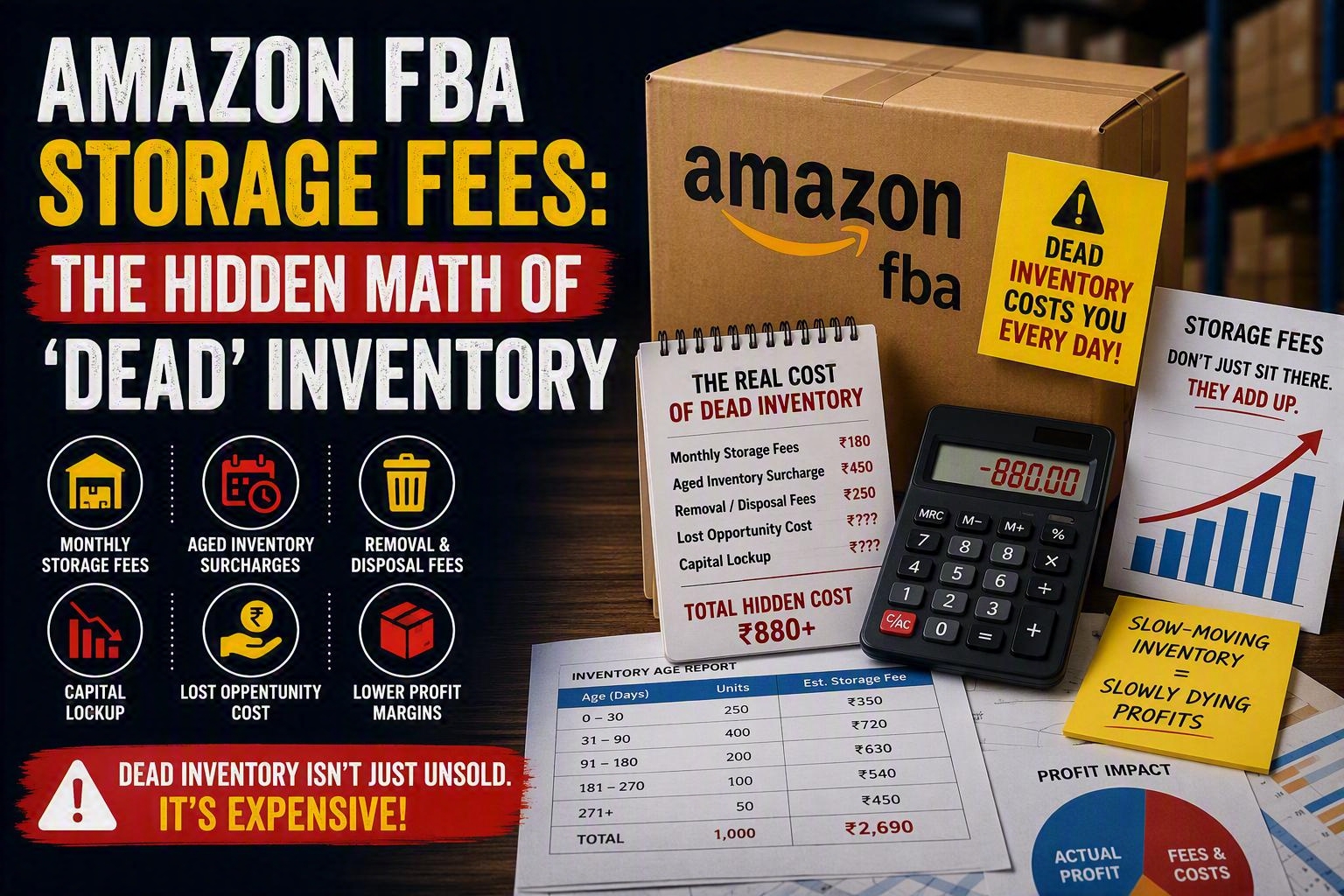
Many Amazon sellers obsess over PPC costs and product sourcing while ignoring a major profit killer: FBA storage fees. Unsold inventory sitting in Amazon warehouses doesn’t just occupy shelf space, it continuously drains profit through monthly storage charges, aged inventory surcharges, capital lockup, and removal fees. What looks like an asset on your balance sheet can quickly become a liability if inventory isn’t moving fast enough.
The Silent Profit Leak Inside Amazon FBA
Amazon FBA has transformed ecommerce by allowing sellers to outsource storage, packing, shipping, and customer service.

For many businesses, it’s the fastest route to scaling an ecommerce brand.
However, there’s a hidden danger that catches thousands of sellers by surprise:
Dead inventory.
Inventory that isn’t selling quickly doesn’t just sit quietly in Amazon’s warehouses. Every day it remains unsold, it generates costs that slowly eat away at your margins.
Many sellers discover too late that their biggest business expense isn’t advertising or sourcing.
It’s inventory that nobody is buying.
What Is Dead Inventory?
Dead inventory refers to products that remain in Amazon fulfillment centers without selling at an acceptable rate.
Common examples include:
- Failed product launches
- Seasonal products after peak demand
- Overstocked items
- Poorly optimized listings
- Products with declining demand
- Variations customers don’t want
While these items may technically retain value, they often become a financial burden rather than an asset.
Why FBA Storage Fees Matter More Than You Think
Many new sellers assume storage costs are insignificant.
After all, paying a small monthly fee for warehouse space doesn’t sound alarming.
The problem is that storage fees compound over time.
A product that sits for:
- 1 month
- 3 months
- 6 months
- 12 months
Continues accumulating costs while generating no revenue.
As inventory ages, the impact on profitability becomes increasingly severe.
The Hidden Cost of Holding Unsold Inventory
Let’s consider a simple example.
Initial Product Economics
- Selling Price: ₹1,499
- Product Cost: ₹500
- Advertising Cost: ₹250
- Amazon Fees: ₹350
Expected Profit:
₹399 per unit
Looks promising.
Now imagine ordering 1,000 units.
Inventory Investment:
₹5,00,000
If sales slow unexpectedly, hundreds of units may remain stored for months.
The result?
Ongoing storage costs, aging inventory surcharges, and locked-up cash.
The original profit projection starts shrinking every month.
Storage Fees Are Only the Beginning
Many sellers believe storage fees represent the complete cost of excess inventory.
In reality, several hidden costs emerge.
Capital Lockup
Money sitting inside unsold inventory cannot be used for:
- New product launches
- Advertising campaigns
- Reordering bestsellers
- Business expansion
Dead inventory restricts cash flow and limits growth opportunities.
Lost Opportunity Cost
Imagine:
- ₹10,00,000 invested in stagnant inventory
Instead of producing returns, that capital remains trapped in products that aren’t moving.
Meanwhile, winning products may run out of stock due to insufficient cash for replenishment.
Aged Inventory Fees Can Become Brutal
One of the biggest mistakes Amazon sellers make is assuming inventory has unlimited time to sell.
Once inventory reaches certain age thresholds, additional surcharges may apply.
These fees are specifically designed to discourage long-term storage.
As products move from:
- New inventory
- Slow-moving inventory
- Aged inventory
Storage costs climb dramatically.
The longer products remain in fulfillment centers, the more expensive they become to keep.
This often shocks sellers who expected inventory to sell eventually.
Dead Inventory Creates Inventory Planning Problems
Unsold products don’t just hurt profits.
They distort decision-making.
Common consequences include:
- Overstocking future purchases
- Forecasting inaccuracies
- Reduced warehouse efficiency
- Inventory turnover declines
Many sellers continue ordering new products while old inventory quietly accumulates in the background.
Over time, the problem compounds.
PPC Can’t Always Save a Bad Product
When inventory stops moving, many sellers increase advertising spend.
The logic seems reasonable:
“More traffic will solve the problem.”
Unfortunately, that isn’t always true.
Sometimes inventory remains unsold because:
- Product reviews are weak
- Market demand has declined
- Pricing is uncompetitive
- Product quality is poor
- Better alternatives exist
Increasing ad spend can simply convert a storage problem into both a storage problem and an advertising problem.
The Removal Fee Trap
Eventually, sellers may decide to remove dead inventory from Amazon warehouses.
At this point, another cost emerges:
Removal Orders
Amazon may charge fees to:
- Return inventory to the seller
- Dispose of inventory
- Liquidate inventory
After paying sourcing, shipping, storage, and advertising costs, many sellers discover they must pay again just to get rid of products.
This is often the final blow to profitability.
Why Inventory Turnover Is More Important Than Margin
Many new sellers focus exclusively on per-unit profit.
Experienced sellers focus on inventory turnover.
Consider two products:
Product A
- Profit: ₹500 per unit
- Sells every 10 months
Product B
- Profit: ₹250 per unit
- Sells every month
Product B often generates significantly more annual profit despite the lower margin.
Cash flow and turnover usually outperform theoretical profits trapped in slow-moving stock.
How Successful Amazon Sellers Avoid Dead Inventory
Top-performing FBA businesses treat inventory management as seriously as marketing.
Start With Smaller Orders
Avoid excessive inventory commitments before validating demand.
Track Inventory Age
Regularly monitor aging reports and identify slow-moving SKUs early.
Improve Demand Forecasting
Use historical sales data to make smarter purchasing decisions.
Run Clearance Promotions
Discounting inventory early is often cheaper than paying months of storage fees.
Bundle Slow Movers
Combining stagnant products with bestselling products can increase sell-through rates.
Audit Inventory Monthly
Waiting six months to identify dead inventory can be extremely expensive.
Warning Signs Your Inventory Is Becoming Dead Stock
Watch for:
- Declining sales velocity
- Increasing storage costs
- Rising advertising spend
- Inventory older than 90 days
- Excess stock compared to monthly demand
- Falling conversion rates
The earlier you act, the easier it is to recover margins.
Final Thoughts
Amazon FBA makes ecommerce easier, but it doesn’t eliminate inventory risk. Every unsold product sitting in a fulfillment center represents more than just stored inventory. It represents accumulating storage fees, aging surcharges, trapped capital, forecasting challenges, and lost growth opportunities.
The most successful Amazon sellers understand that inventory is only valuable when it moves. A product generating sales creates profit. A product collecting dust creates expenses.
Ready to Protect Your Amazon FBA Margins?
Review your inventory age reports today. Identify slow-moving SKUs, calculate the true cost of holding excess stock, and take action before storage fees start consuming your profits. In Amazon FBA, the fastest-selling inventory is often the most profitable inventory.