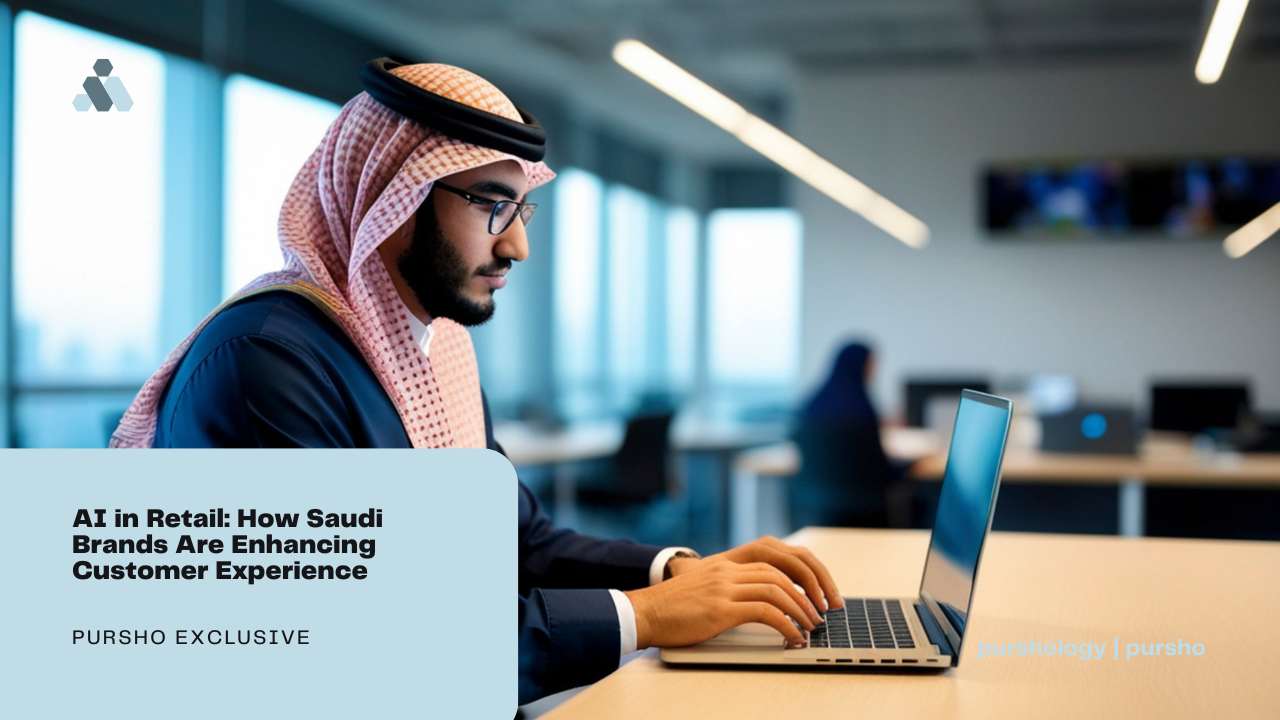
The Kingdom of Saudi Arabia is experiencing a radical change in the retail environment. Saudi Vision 2030 is an ambitious action that is accelerating the development of the digital economy of the country, and the retail sector is the first area of this transformation. AI in retail in Saudi Arabia is no longer a visionary idea today. It is a current-day fact that is transforming the relationship between the brands and the customers.
From the shopping malls of Riyadh to the luxury boutiques of Jeddah, Saudi retail brands operating on AI are capitalizing on data to develop smooth, personalized, and hyper-efficient shopping experiences.

The emergence of AI in the Saudi Retail Industry
A population that is tech savvy and a government devoted to innovation have facilitated the retail digital transformation Saudi Arabia is making. The recent reports suggest that by the year 2030, AI will make vast contributions to Saudi economy. This is applied in the retail arena with wiser stores, more intuitive e-commerce sites, and customer experience in Saudi retail, which was once beyond imagination.
The retailers are shifting away the traditional forms of business to embrace artificial intelligence in Saudi Arabia. With machine learning and data analytics, they can now forecast consumer trends with disturbing precision, not to mention that the correct products are now always available in the correct location at the appropriate time.
Why Retail Solutions using AI are Gaining Traction
The desire to be fast and relevant is the major aspect that promotes the use of AI-based retail solutions in Saudi Arabia. Contemporary Saudi customers are demanding a hassle-free experience. They demand personal attention, whether they are using a mobile application to shop or going to a hard-and-brick-and-mortar flagship store. AI will enable brands to apply this personal touch to millions of users at the same time.
Reasons Saudi Brands are Adopting AI to Change Customer Experience
Hyper-Personalized Recommendations
Among the most apparent effects of AI in the Saudi Arabian retail industry, the emergence of recommendation engines can be identified. Local brands apply generative AI to become a virtual stylist. These AI support systems provide personalized recommendations on items to wear, depending on the trends in the area and personal tastes, which increases the conversion rates to a very high level.
Charismatic Commerce and Robot Chatbots
Days are gone when one had to wait hours to get a customer support representative. The current AI-based customer experience approaches include advanced chatbots that are capable of grasping the specifics of the Arabic language and local dialect. These virtual assistants process simple questions, monitor orders, and even give styling suggestions at any time of the day and night, which greatly increases the score of customer satisfaction.
Inventory is also intelligently managed
Out of stock notification is worse than a bad omen for a customer experience. AI-based analytics can assist Saudi retailers in managing their supply chains in a better way. Analyzing historical data, seasonal peaks, like Ramadan and Eid, and even weather patterns, AI can assist a brand to optimize stocks and decrease waste and shortages.
Virtual Try Ons and AR
Saudi consumers are passionate users of immersive technology. AR try-on is being used in brands in the beauty and furniture industries. It gives the customers an opportunity to view what a particular lipstick color would appear on their skin or what a sofa would look like in their living room through their smartphone camera, closing the divide between online shopping and the real world.
Smart In-Store Experiences
Footfall and customer behavior are being analysed using computer vision and heat mapping in physical stores. This will enable retailers to streamline the store layouts and give shoppers just-in-time promotions through mobile notifications, which will form a real omnichannel customer experience in Saudi retail.
Digital Transformation by AI
The transition to an AI-based customer experience is quantifiably helpful to both the retailer and the consumer. To the retailer, it implies that the inventory costs will be reduced, and average order values will become significantly higher. Brand loyalty is enhanced when the consumer gets recommendations that actually fit his or her personal taste.
Moreover, artificial intelligence in retail in Saudi Arabia has efficiency as one of its significant byproducts. The first line of inquiries is managed by AI, which slashes customer service response times. This enables the human agents to concentrate on complicated tasks so that the human aspect of retail is maintained at the point of need.
Disputes and The Way Ahead
Though the trend to use artificial intelligence in retail in Saudi Arabia is good, issues exist. The Saudi Data and AI Authority (SDAIA) is most concerned with data privacy and the use of skilled local labor. Nevertheless, as most Saudi businesses already implement industry-specific AI solutions, the way is obvious.
By 2030, AI-driven retail solutions in Saudi Arabia will be more advanced. We may look forward to dark stores to deliver goods at supersonic speed, self-service checkout lanes in grocery stores, and AI algorithms capable of anticipating the need of an individual customer before he/she can even guess what he/she may require.
Conclusion
The digital transformation of retail in Saudi Arabia is the attestation of the vision of a technological future by the Kingdom. The adoption of AI within retail in Saudi Arabia does not only mean that the local brands are following the global trends; they are also leading them. This translates into a faster, smarter, and more personal experience that the Saudi consumer can have in terms of shopping.