TL;DR
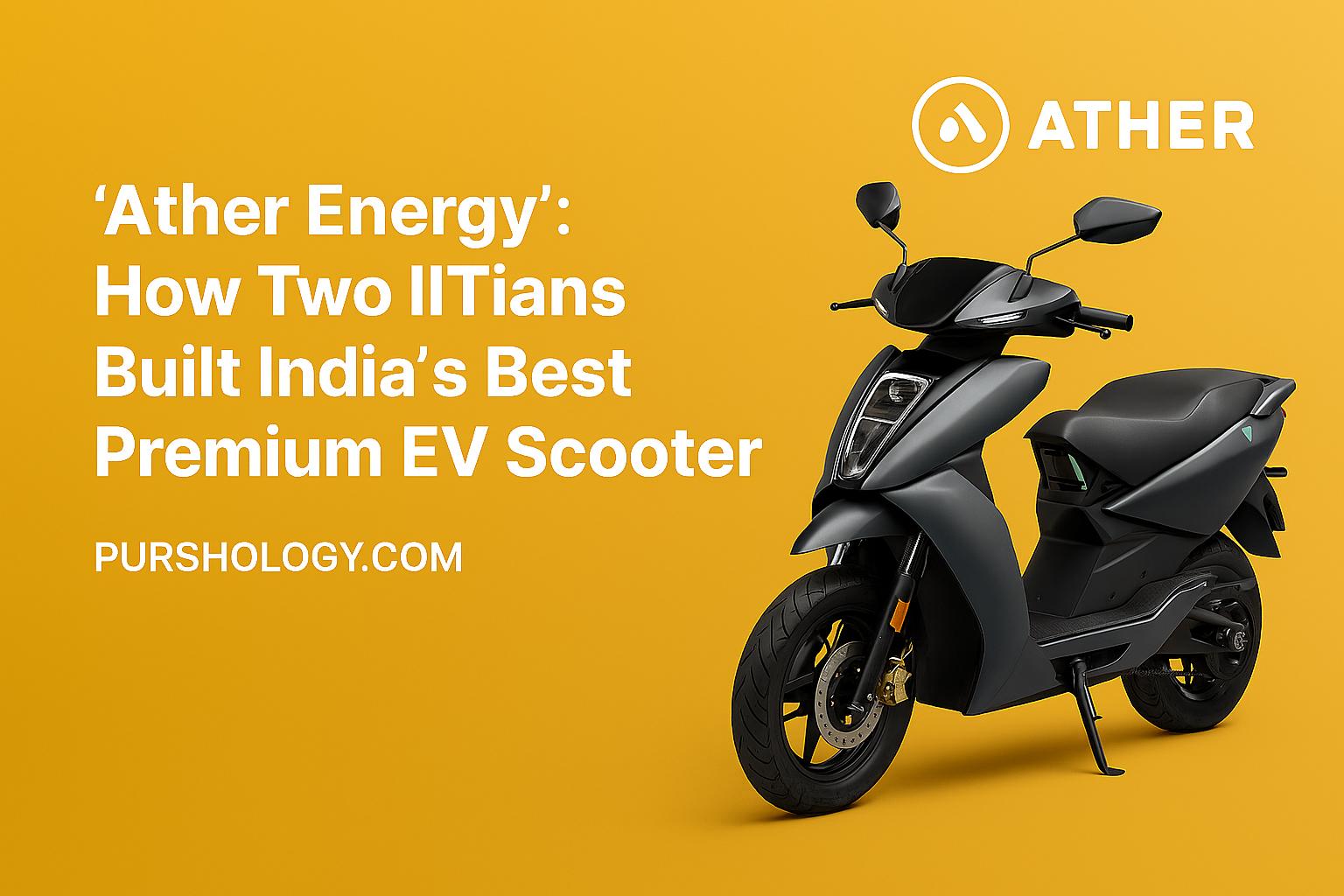
Ather Energy redefined India’s electric two-wheeler market by refusing to build a compromise product. Founded by two IIT Madras alumni, the company focused on design, performance, software, and charging infrastructure—not just price. The result: India’s most aspirational premium EV scooter brand and a benchmark for homegrown EV innovation.
Introduction: Building an EV, Not Just an Scooter
When electric vehicles were still seen as slow, plastic, and utilitarian, Ather Energy chose a different path. Instead of chasing subsidies or entry-level pricing, Ather set out to answer a harder question:

Can an Indian startup build a world-class electric scooter people actually desire?
The answer became the Ather 450 series—and a completely new standard for EVs in India.
The Founders’ Insight: EVs Deserve Better Design
The company was founded by two IIT Madras alumni who were frustrated with:
- Poorly designed electric scooters
- Lack of performance focus
- No software or user experience differentiation
Rather than retrofitting an electric motor into a petrol scooter mindset, Ather built everything from the ground up—vehicle, software, hardware, and ecosystem.
This “full-stack” approach became their biggest differentiator.
Strategy 1: Premium First, Mass Later
While most competitors chased affordability, Ather went premium:
- Sporty design
- Fast acceleration
- High-quality materials
- Clean, modern aesthetics
This helped Ather:
- Avoid price wars early on
- Build a strong brand halo
- Attract early adopters who valued quality over cost
Insight: In emerging markets, aspiration scales faster than affordability.
Strategy 2: Software as the Soul of the Scooter
Ather treated its scooter like a tech product, not a mechanical one:
- Touchscreen dashboard
- OTA (over-the-air) software updates
- Navigation, ride metrics, diagnostics
This software-first mindset allowed Ather to:
- Continuously improve post-purchase
- Create switching costs
- Build a tech-savvy user community
It turned the scooter into a living, evolving product.
Strategy 3: Owning the Charging Experience
One of the biggest EV adoption barriers is charging anxiety. Ather didn’t outsource this problem—they solved it.
They built:
- A proprietary fast-charging network
- Predictable, branded charging points
- Seamless integration with the scooter’s navigation
By owning the charging layer, Ather controlled the end-to-end experience—something few EV startups attempt early.
Strategy 4: Manufacturing Excellence Over Assembly
Unlike asset-light EV players, Ather invested heavily in:
- In-house R&D
- Manufacturing capability
- Quality control
This ensured:
- Better performance consistency
- Safety and reliability
- Faster innovation cycles
The focus wasn’t speed to market—it was right to market.
Strategy 5: Community, Not Just Customers
Ather cultivated a passionate user base by:
- Listening to early users obsessively
- Communicating openly about product decisions
- Treating customers as beta partners
This created:
- High brand loyalty
- Strong word-of-mouth
- A premium community feel usually reserved for global brands
Competing With Giants, Not Imitating Them
Ather didn’t try to out-copy petrol scooters or out-discount rivals. Instead, it competed on:
- Experience
- Technology
- Brand trust
This allowed a startup to stand shoulder-to-shoulder with large incumbents—and often outshine them in perception.
The Outcome: India’s Benchmark Premium EV Brand
Through patience, engineering rigor, and brand clarity, Ather Energy achieved:
- Leadership in premium electric scooters
- Strong recall as a “no-compromise” EV
- A defensible moat built on tech + infrastructure
More importantly, it proved Indian startups can build globally competitive, design-led EV products.
Key Lessons from Ather Energy
- Don’t optimize for price before product
- Vertical integration creates differentiation
- Software transforms hardware businesses
- Infrastructure can be a competitive moat
- Brand is built through conviction, not convenience
Final Thought: Premium Is a Strategy, Not a Segment
Ather Energy’s story is not just about electric mobility—it’s about belief. Belief that Indian consumers appreciate quality, performance, and thoughtful design. Belief that startups can out-innovate giants by going deeper, not faster.
In doing so, Ather didn’t just build a scooter—they built a new expectation.
✅ If you’re building a hardware, EV, or D2C brand:
- Resist the urge to race to the bottom
- Invest in experience, not shortcuts
- Think ecosystems, not just products
Because as Ather Energy shows—great brands are engineered, not rushed.