TL;DR
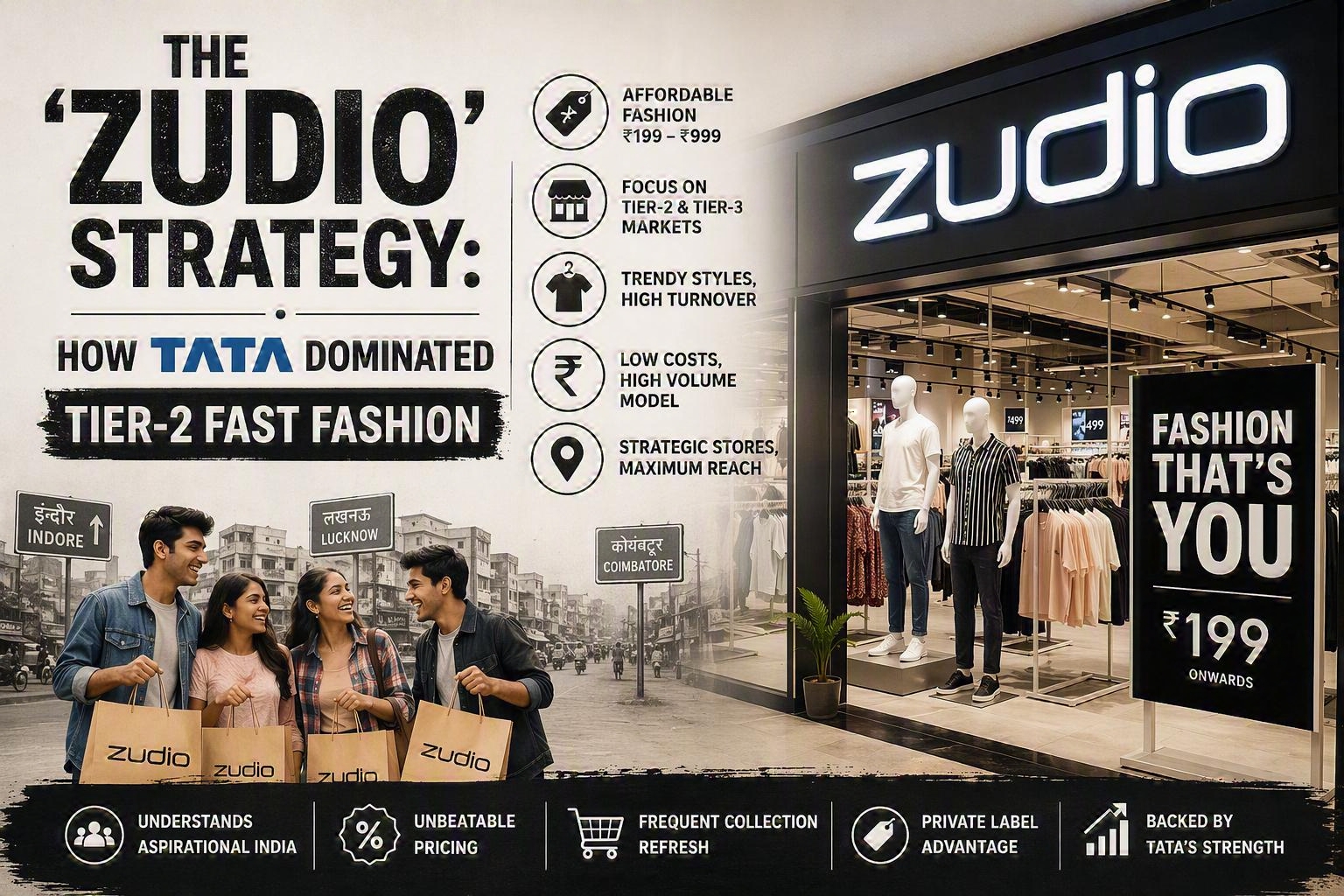
Zudio, Tata’s answer to affordable fast fashion, cracked India’s Tier‑2 and Tier‑3 markets by focusing on ultra-low pricing, minimal marketing, strategic store locations, and rapid inventory turnover. Instead of competing head-on with premium brands, it built a high-volume, value-driven fashion model tailored for India’s aspirational middle class.
Introduction: A Silent Disruptor in Indian Fashion
While major fashion brands battled for dominance in metros, Tata’s Zudio quietly built a retail empire in smaller cities. With store expansions across India and an aggressive pricing strategy, Zudio is redefining how Indians consume fashion—especially in emerging urban markets.

But what exactly is behind Zudio’s explosive growth?
1. The Core Strategy: Fashion at Unbeatable Prices
Zudio’s biggest differentiator is simple:
👉 Keep prices extremely low without compromising perceived style.
Key Highlights:
- Most products priced between ₹199–₹999
- Focus on everyday fashion essentials and trendy basics
- High affordability encourages repeat purchases
Instead of positioning itself as aspirational luxury, Zudio focuses on mass accessibility—making fashion democratic.
2. Winning Tier-2 & Tier-3 India
Zudio recognized early that India’s next growth wave would come from smaller cities, not metros.
Why Tier-2 Markets Worked:
- Rising disposable incomes
- Limited presence of global fast-fashion brands
- High value-conscious consumers
Zudio strategically:
- Opened stores in high-footfall locations
- Avoided expensive mall-dependent growth in early stages
- Entered underserved markets before competitors
This first-mover advantage gave Zudio a strong regional brand recall.
3. Zero-Heavy-Marketing Playbook
Unlike competitors, Zudio spends minimal on advertising.
Instead, it relies on:
- Store visibility and footfall
- Word-of-mouth growth
- Affordable pricing as its biggest marketing tool
This allows Zudio to: ✅ Keep operating costs low
✅ Pass cost benefits directly to consumers
✅ Maintain a strong value perception
4. Fast Inventory Turnover: The Hidden Engine
Zudio thrives on a high inventory churn model.
How it works:
- Frequent refreshing of collections
- Limited stock per design (creates urgency)
- Quick replacement of sold-out items
This leads to:
- Higher store visits
- Faster decision-making by customers
- Reduced dead inventory risk
The strategy mirrors global fast-fashion players—but at a more localized scale.
5. Private Label Dominance
Zudio sells mostly in-house brands, giving it greater control over:
- Design
- Production costs
- Pricing
- Margins
This eliminates dependency on third-party brands and ensures consistent pricing strategy across stores.
6. Simple Stores, Maximum Efficiency
Zudio stores are built for functionality, not luxury.
Key Design Elements:
- Clean layouts
- Self-service model
- High product density per square foot
By avoiding premium interiors, the brand reduces:
- Rental costs
- Store setup investments
This aligns perfectly with its low-cost, high-volume business model.
7. Target Audience: Aspirational India
Zudio deeply understands its core audience:
👉 Young, price-conscious, trend-aware consumers in smaller cities
Their mindset:
- Want fashionable clothing
- Limited willingness to pay premium prices
- Prefer frequent wardrobe updates
Zudio doesn’t sell luxury—it sells affordable aspiration.
8. Backed by Tata’s Retail Muscle
Being part of Trent Ltd. (a Tata Group company) provides Zudio with:
- Strong supply chain capabilities
- Real estate expertise
- Financial backing for expansion
This gives Zudio a competitive edge new entrants struggle to match.
Key Lessons from Zudio’s Success
✅ Affordability can be a moat — Not everything needs premium positioning
✅ Go where competition is low — Tier‑2 India is a goldmine
✅ Keep operations lean — Low costs = pricing power
✅ Speed matters — Fast inventory beats slow perfection
✅ Own your brand — Private labels increase control and margins
Conclusion: Redefining Indian Fast Fashion
Zudio didn’t try to beat global brands at their own game—it changed the game altogether. By focusing on affordability, accessibility, and efficiency, it has built a scalable model uniquely suited to India.
In a country where value matters as much as style, Zudio has found the perfect balance.
🚀 If you’re building a retail or D2C brand,
the biggest takeaway from Zudio is this:
Winning isn’t always about premium—it’s about relevance.
Enjoyed this breakdown? Share it with your team, bookmark it for your next strategy discussion, or explore more insights on building winning brands that resonate with real India.