TL;DR
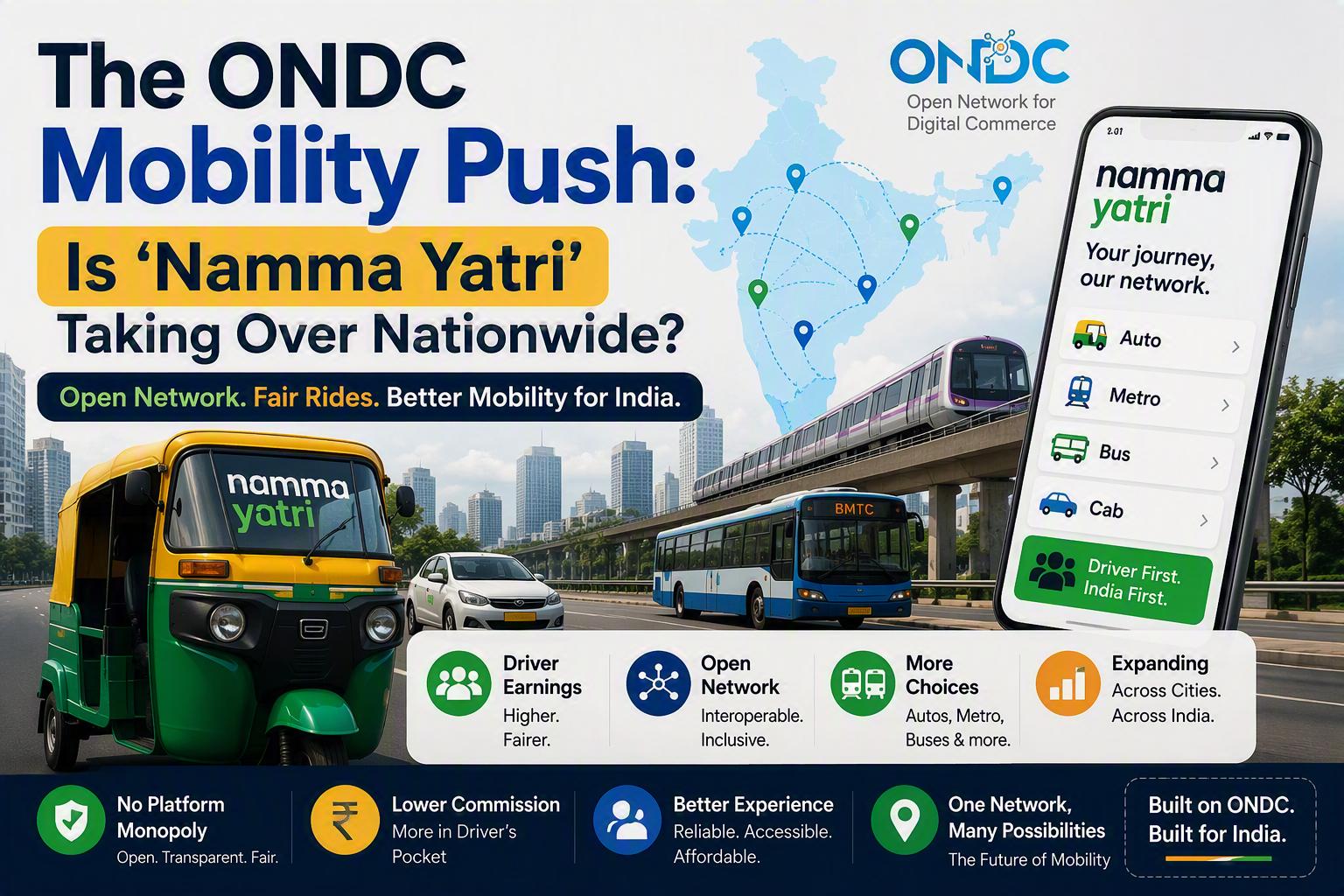
Namma Yatri has evolved from a Bengaluru-focused auto-rickshaw booking app into one of India’s most prominent open mobility platforms. Powered by ONDC principles and the Beckn protocol, the platform has expanded across multiple cities, entered corporate mobility, integrated public transport services, and positioned itself as a credible alternative to commission-based ride-hailing models. While it is not “taking over” India’s mobility market yet, it is increasingly becoming the face of ONDC’s mobility ambitions.
For over a decade, India’s ride-hailing market has largely been dominated by a handful of closed platforms. Whether you needed an auto, cab, or airport ride, the default options were typically the same.

But a new challenger is quietly changing the rules.
Namma Yatri, the driver-first mobility platform built on open network principles, is emerging as one of the biggest success stories within India’s ONDC ecosystem. What began as a Bengaluru experiment is now expanding into multiple cities, new transport categories, and even corporate travel.
The big question is:
Is Namma Yatri becoming India’s nationwide mobility platform?
The answer is more nuanced than a simple yes or no.
Understanding the ONDC Mobility Vision
The Open Network for Digital Commerce (ONDC) was created to bring interoperability to digital commerce, much like UPI transformed digital payments. In mobility, the goal is similar: allow riders, drivers, transit providers, and booking applications to interact through an open network rather than operating within closed platforms.
This means a customer could potentially book rides, metro tickets, buses, or other mobility services from multiple participating apps without being locked into a single platform.
Namma Yatri became one of the first major mobility applications to embrace this vision, making it a natural flagship for ONDC’s mobility push.
From Bengaluru Startup to National Mobility Brand
When Namma Yatri launched, its focus was simple:
- Eliminate driver commissions
- Improve driver earnings
- Create transparent ride-booking experiences
- Build on open digital infrastructure
The model resonated strongly with auto-rickshaw drivers frustrated by high commission deductions on traditional ride-hailing platforms.
Since then, the platform has expanded far beyond Bengaluru. Namma Yatri has launched in several Indian cities, onboarded thousands of drivers, and broadened its offerings beyond auto-rickshaw bookings.
Industry reports in 2026 indicate the platform has crossed millions of users and tens of millions of completed trips, demonstrating that the model can scale beyond a single city.
Why Drivers Are Choosing Namma Yatri
The biggest differentiator remains economics.
Unlike traditional aggregators that often charge a percentage commission from every ride, Namma Yatri was built around a driver-centric approach where drivers retain a larger share of earnings.
Key benefits include:
- Lower platform fees
- Greater pricing transparency
- Direct driver participation
- Open network architecture
- Reduced dependence on a single platform
This proposition has allowed the company to gain significant goodwill among driver communities, especially in cities where commission-related concerns have been a recurring issue.
Beyond Autos: Building a Mobility Ecosystem
The most interesting development is that Namma Yatri is no longer just an auto-booking app.
The broader ONDC mobility vision includes:
- Auto-rickshaws
- Cabs
- Metro integration
- Bus ticketing
- Multimodal journeys
- Corporate transport solutions
In several ONDC-led initiatives, metro booking and public transport integrations have become an important focus area. The long-term objective is creating a seamless mobility experience through interoperable networks.
This gives Namma Yatri an opportunity to become more than another ride-hailing service. It could become a mobility operating layer connecting multiple transportation options.
The Corporate Mobility Opportunity
One of the biggest signs of maturity came in 2026 when Namma Yatri entered the corporate mobility segment through partnerships aimed at streamlining employee transportation and travel expense management.
The move targets a corporate mobility market estimated at billions of dollars annually in India. Features include:
- Centralized travel management
- Automated expense tracking
- Policy compliance
- Enterprise invoicing
- Predictable ride pricing
This development suggests Namma Yatri is actively diversifying beyond consumer ride bookings.
Can It Really Challenge Ola and Uber?
The short answer: Yes.
The practical answer: Not everywhere yet.
Ola and Uber still possess massive user bases, brand recognition, funding, and network effects developed over many years. They remain dominant players in several major markets.
However, Namma Yatri enjoys three structural advantages:
1. Open Network Advantage
ONDC enables interoperability rather than platform lock-in.
2. Driver-Friendly Economics
The platform’s lower commission approach appeals strongly to drivers.
3. Public Digital Infrastructure
The model aligns with India’s broader push toward open digital networks similar to UPI.
These factors make Namma Yatri more than just another startup competing on discounts.
What’s Holding Back Nationwide Dominance?
Despite strong momentum, several challenges remain:
- Customer acquisition at national scale
- Competition from established ride aggregators
- Service consistency across cities
- Supply-demand balancing
- Building awareness outside southern markets
Nationwide leadership requires operational excellence in hundreds of cities, not just success in a handful of urban centers.
Final Verdict
Namma Yatri is not taking over India’s mobility market overnight. But it has unquestionably become one of the most important players in the ONDC mobility ecosystem. Through its zero-commission philosophy, rapid city expansion, public transport integrations, and corporate mobility initiatives, the company is building a compelling alternative to traditional ride-hailing platforms.
If ONDC succeeds in doing for mobility what UPI did for payments, Namma Yatri could emerge as one of the defining platforms of India’s transportation future. Whether it becomes the nationwide leader remains to be seen, but its influence is already far larger than most people realize.
Ready to Explore the Future of Mobility?
The rise of Namma Yatri highlights a larger shift toward open digital ecosystems in India. Businesses, startups, and investors should keep a close eye on ONDC-powered mobility because the next wave of transportation innovation may not come from a single app but from an interconnected network that changes how India moves.