TL;DR:
Shoe ecommerce can look highly profitable on paper, but frequent size exchanges can quietly erode margins through double shipping costs, reverse logistics, inventory complications, customer support expenses, and delayed cash flow. If your sizing strategy isn’t optimized, every exchange request could turn a profitable sale into a loss. Here’s why footwear brands struggle with size-related returns and how to protect your business.
The Hidden Cost Crisis in Online Shoe Sales
The global footwear market continues to grow, and selling shoes online has never been more accessible. From dropshipping stores and private-label brands to established ecommerce retailers, countless businesses are competing for a share of the market.

But beneath the attractive profit margins lies a major operational challenge:
Size exchanges.
Unlike many product categories, shoes require an exact fit. When customers cannot try products on before purchasing, sizing mistakes become almost inevitable.
While a customer requesting an exchange may seem better than requesting a refund, the reality is that exchanges often create a chain of expenses that can severely impact profitability.
Why Shoes Have Some of the Highest Exchange Rates in Ecommerce
Footwear sizing is rarely standardized.
A size 9 from one manufacturer may fit differently than a size 9 from another.
Additional factors include:
- Foot width variations
- Regional sizing differences
- Arch support preferences
- Different shoe constructions
- Thick versus thin socks
- Individual comfort expectations
As a result, many customers routinely order shoes without complete confidence in the fit.
When expectations don’t match reality, exchange requests follow.
How a Simple Size Exchange Destroys Profit Margins
Let’s examine a common scenario.
Original Sale
- Shoe Selling Price: $80
- Product Cost: $30
- Marketing Cost: $20
- Shipping Cost: $8
Expected Profit:
$80 – $30 – $20 – $8 = $22 Profit
Everything looks healthy.
Now the customer requests a size exchange.
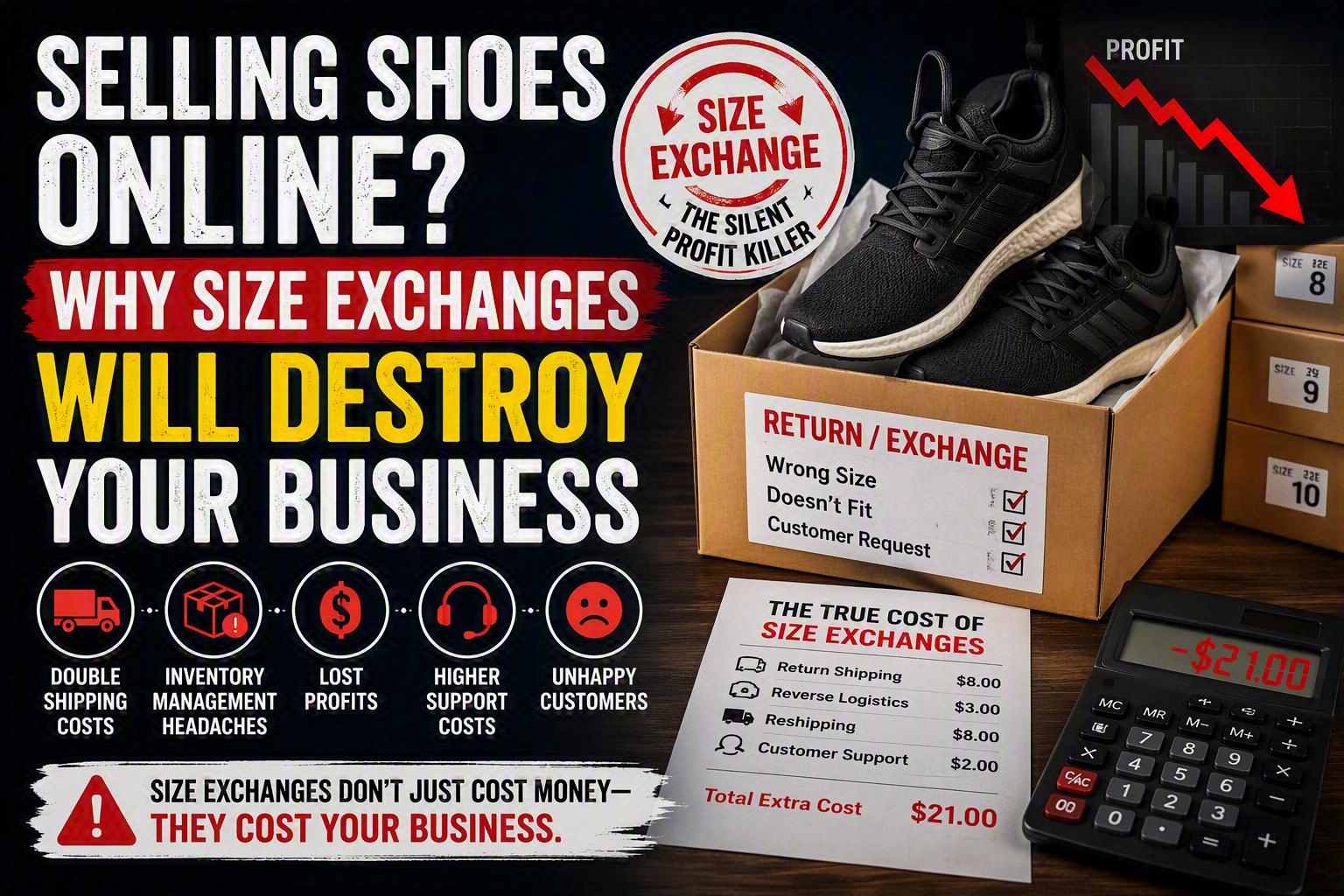
Additional costs include:
- Return shipping: $8
- Inspection and processing: $3
- Reshipping replacement pair: $8
- Customer support handling: $2
Total exchange cost:
$21
The original $22 profit becomes just $1.
One size exchange almost eliminates the entire profit from the sale.
Double Shipping Is the Biggest Margin Killer
Most footwear sellers focus on customer acquisition costs while overlooking logistics.
An exchanged order often requires:
- Original shipment to customer
- Return shipment to warehouse
- Replacement shipment to customer
This means logistics expenses can effectively triple.
For stores operating with thin margins, a modest exchange rate can completely erase profitability.
Inventory Management Becomes a Nightmare
Size exchanges don’t just affect shipping costs.
They also create inventory complications.
Consider what happens when a customer exchanges:
- Size 8 → Size 9
- Black → White variation
- Men’s → Women’s equivalent style
The business must now:
- Reserve inventory
- Receive returned products
- Inspect product condition
- Restock inventory
- Update stock counts
As exchange volume grows, operational complexity grows with it.
Returned Shoes Cannot Always Be Resold
Many sellers assume exchanged shoes immediately return to inventory.
Unfortunately, that’s not always possible.
Returned footwear may arrive:
- With damaged packaging
- Showing visible wear
- Missing accessories
- With sole marks
- In non-resellable condition
Even when customers claim they only tried the shoes on, returned items may no longer qualify as new inventory.
Every unsellable return becomes a direct loss.
Customer Expectations Continue to Rise
Modern shoppers expect frictionless returns and exchanges.
Many brands now advertise:
- Free size exchanges
- Instant exchange approvals
- Free return labels
- Fast replacement shipping
These policies improve conversion rates but significantly increase operating costs.
If not carefully managed, customer-friendly policies can unintentionally create profit-draining behavior.
The Hidden Customer Support Costs
Size-related issues generate significant support workloads.
Common inquiries include:
- Which size should I order?
- Is the fit true to size?
- Can I exchange for another size?
- Has my replacement shipped?
- Have you received my return?
Every support interaction requires staff time and resources.
For growing footwear businesses, customer support costs often rise alongside exchange rates.
Why Dropshippers Face Even Bigger Problems
For footwear dropshipping businesses, size exchanges can be even more dangerous.
Challenges include:
- Longer shipping times
- Cross-border returns
- Higher logistics expenses
- Supplier coordination
- Inventory visibility issues
Many dropshippers discover that managing shoe exchanges is far more difficult than managing exchanges for simpler products like apparel accessories or home goods.
Some suppliers do not even support efficient exchange workflows, forcing merchants to issue refunds or absorb losses.
How Successful Shoe Brands Reduce Exchange Rates
The most profitable footwear sellers focus heavily on prevention.
Create Detailed Size Guides
Include:
- Foot length measurements
- Width recommendations
- Conversion charts
- Fit descriptions
The more sizing information customers receive, the fewer mistakes occur.
Use Fit-Based Product Descriptions
Explain whether shoes are:
- True to size
- Narrow fitting
- Wide fitting
- Best for specific foot shapes
Collect Customer Reviews
Reviews frequently help customers choose correct sizes based on real experiences.
Analyze Exchange Data
Identify:
- Frequently exchanged sizes
- Problematic styles
- Manufacturing inconsistencies
These insights can reduce exchange rates significantly.
Improve Product Photography
Multiple angles and detailed visuals help customers better understand fit and construction.
When Free Exchanges Stop Making Sense
Many new footwear brands offer unlimited free exchanges to reduce purchase hesitation.
While well-intentioned, this strategy can become financially unsustainable.
If exchange rates climb above industry expectations, businesses may see:
- Lower profit margins
- Higher fulfillment costs
- Increased support expenses
- Inventory bottlenecks
- Cash flow pressure
Smart brands evaluate exchange policies regularly to ensure they remain profitable.
The Real Secret to Profitable Shoe Ecommerce
Many entrepreneurs believe success comes from finding trendy designs or running better ads.
In reality, long-term profitability often depends on operational efficiency.
Winning footwear brands focus on:
- Accurate sizing guidance
- Quality control
- Inventory management
- Exchange reduction
- Customer education
- Return prevention
Reducing exchanges by even a few percentage points can dramatically improve overall profit margins.
Final Thoughts
Selling shoes online can be highly rewarding, but size exchanges remain one of the biggest threats to profitability. Every exchange triggers additional shipping, handling, support, and inventory costs that quickly eat away at margins. What looks like a profitable sale on day one can become a break-even transaction after a single size swap.
The brands that thrive in footwear ecommerce aren’t necessarily the ones generating the most sales. They’re the ones minimizing size-related issues before they happen and maintaining control over their fulfillment costs.
Ready to Build a More Profitable Footwear Business?
Take a close look at your exchange rates, sizing guides, and return policies today. Reducing even a small percentage of size exchanges can dramatically improve your margins, increase customer satisfaction, and create a stronger foundation for long-term ecommerce growth.