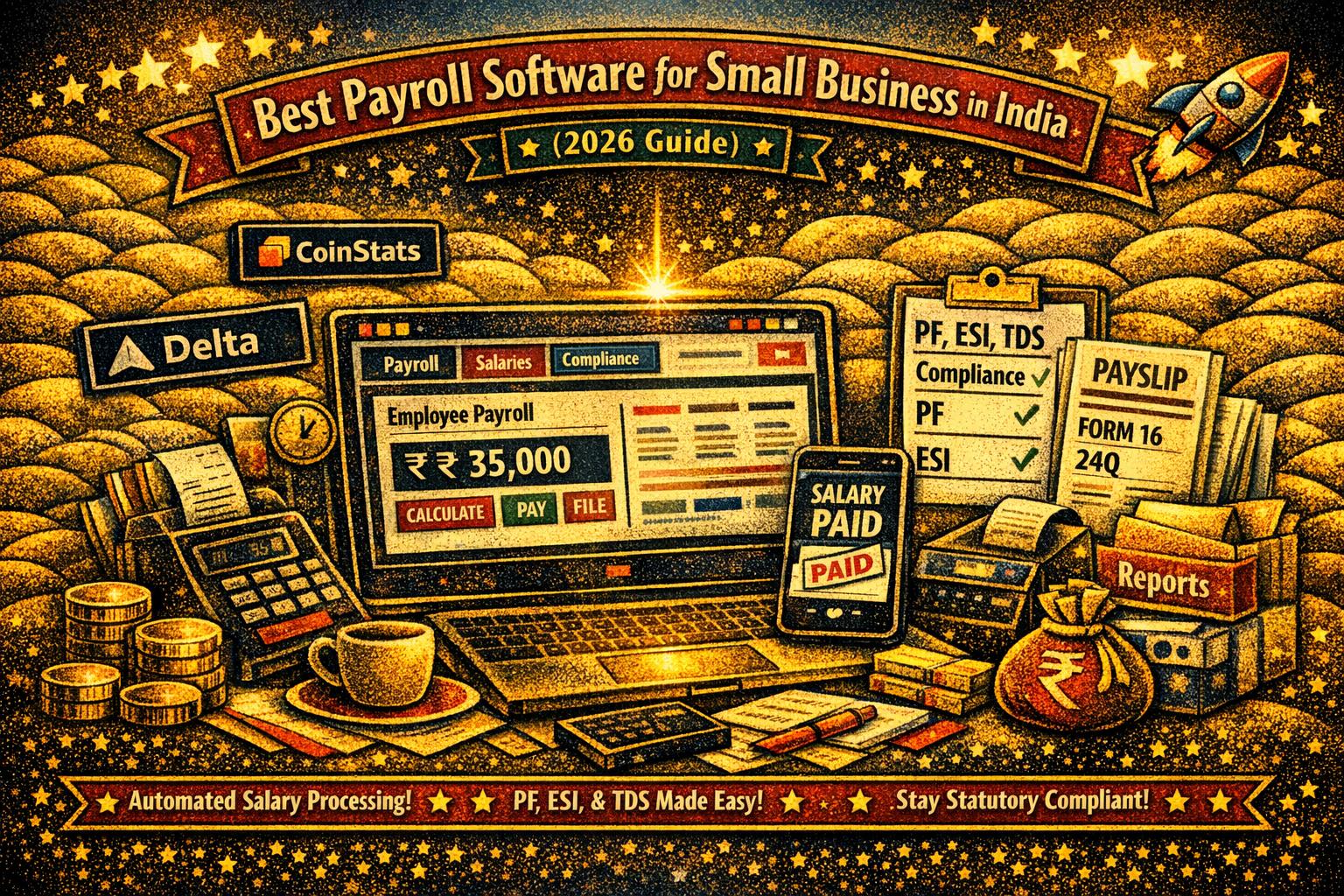
For Indian small businesses, payroll isn’t just salaries—it’s PF, ESI, PT, TDS, Form 16/24Q, multi‑state rules, F&F settlements, and tight deadlines. The right software automates all of this, cuts errors, and keeps you compliant even as rules evolve.
This 2026 guide highlights the best automated payroll tools for Indian SMBs, with quick picks by use case, core features to look for, and a step‑by‑step selection checklist.

TL;DR
Top payroll picks (India, 2026):
- RazorpayX Payroll – best for startups & SMEs that want payouts + automated PF/ESI/PT/TDS filing from one dashboard.
- Zoho Payroll – best if you’re in the Zoho ecosystem (Books/Expense), need multi‑location payroll, ESS, FBP, reimbursements.
- greytHR – best for reliability, low per‑employee cost, and structured onboarding/support at SMB scale.
- Keka – best HRMS + payroll suite with modern UX and deep performance/people features as you scale.
- factoHR – best mobile‑first, hire‑to‑retire with AI‑powered HR and strong payroll/attendance.
- Saral PayPack – best for firms wanting Indian compliance depth with on‑prem or cloud and punch‑to‑payslip workflows.
- sumHR – best simple, cloud‑first HR + payroll with web/biometric/mobile attendance for small, distributed teams.
Why act now: 2026 brings a tighter compliance climate (e.g., Labour Codes, Income Tax Code 2025 effective April 2026), so you want software that auto‑updates rules, digitizes records, and handles new formats.
1) RazorpayX Payroll — fully automated payroll + compliance + payouts
If you want to calculate → pay → file inside one system, RazorpayX Payroll stands out.
Why small businesses pick it
- Automated statutory: payment & filing of TDS, PF, PT, ESIC—from a single dashboard.
- Direct salary deposits to any bank; contractor/vendor payouts and TDS challans.
- Fast onboarding and integrations with time/attendance partners.
Best for: startups/SMEs that want banking‑grade payouts + “no‑spreadsheet” compliance.
2) Zoho Payroll — multi‑location, FBP, reimbursements, ESS
A great fit if you already use Zoho (Books, Expense, People).
Highlights
- Run multi‑location payroll, manage FBP, reimbursements, loans, IT declarations, full & final.
- Employee self‑service, structured onboarding, leave/attendance visibility.
Best for: small businesses needing tight accounting sync and a clean ESS.
3) greytHR — proven payroll at low per‑employee cost
Known for scale (30,000+ companies) and predictable pricing.
Highlights
- Plans for SMBs with pricing from a low ₹/employee; free starter up to 25 employees available via directories.
- Full‑suite HRMS + payroll, mobile ESS, and robust support.
Best for: cost‑sensitive SMBs wanting reliable, compliant payroll and quick adoption.
4) Keka — HRMS + payroll with modern employee experience
Keka combines payroll automation with a strong HR/people layer.
Highlights
- End‑to‑end HRMS with payroll, attendance, performance, surveys, and mobile experience.
- Transparent per‑employee pricing tiers and add‑ons for multi‑entity, SSO, APIs.
Best for: growth‑stage SMBs that want HR + payroll in one polished platform.
5) factoHR — AI‑powered HR & payroll; strong mobile app
A hire‑to‑retire cloud platform built for Indian compliance.
Highlights
- Integrated HR + payroll + geolocation attendance + performance, with SOC2‑backed security claims.
- SMB‑friendly bundles (Core/Premium/Ultimate) with performance‑linked payroll options.
Best for: SMBs that want mobile‑first HR, analytics, and scalable payroll.
6) Saral PayPack — “punch‑to‑payslip” Indian compliance
Available on‑prem or cloud, popular with firms that prefer local control.
Highlights
- Full payroll with PF/ESI/PT/TDS e‑returns, arrears/bonus/gratuity, biometric attendance, ESS.
- Positioned as a complete Indian compliance solution with dedicated implementers.
Best for: businesses needing deep compliance outputs and flexible deployment.
7) sumHR — simple HR + payroll for small, distributed teams
Straightforward HRIS with run‑payroll‑in‑minutes promise and web/biometric/mobile attendance.
Highlights
- Payroll engine, GPS/biometric attendance, leave, ESS, and paperless HR (e‑letters, HR drive).
Best for: small firms moving off spreadsheets who want quick wins without heavy setup.
What to look for (2026) — small‑business payroll checklist
- Automated compliance: PF, ESI, PT, TDS, Form 16/24Q, and multi‑state rules that auto‑update (avoid manual patches).
- Payouts: direct salary deposits to any bank, contractor/vendor TDS support.
- Attendance sync: biometric/GPS or HRMS integration so salaries compute from approved data.
- ESS + mobile: payslips, tax proofs, reimbursements, IT declarations on phone.
- F&F + off‑cycle: handle resignations, two‑day wage settlement requirements, and off‑cycle runs.
- Accounting & ecosystem: smooth Books/ERP sync (Zoho, Tally, etc.) to avoid duplicate entry.
- Support & onboarding: structured migration + helpdesk; this matters as much as features.
At‑a‑glance recommendations
- Need end‑to‑end automation (compute → pay → file)? → RazorpayX Payroll.
- Already on Zoho? → Zoho Payroll for seamless workflows.
- Tight budgets / reliability first? → greytHR.
- Scaling with HR needs? → Keka or factoHR (HRMS + payroll).
- Prefer flexible deployment/Indian compliance depth? → Saral PayPack.
- Simple, cloud start for small teams? → sumHR.
How to shortlist in 30 minutes (fast path)
- List must‑haves (e.g., contractor payments, multi‑state PT, API, FBP, F&F).
- Pick 3 demos that match your stack:
- RazorpayX if you want payouts + filings; Zoho Payroll if you’re on Zoho; greytHR/Keka/factoHR if you want HRMS+payroll.
- Test a live pay run (with dummy data) + Form 16/24Q outputs.
- Check support SLAs and migration plan (imports, opening balances).
- Verify 2026 readiness (Labour Codes, Income Tax Code 2025 forms, digital records).
Final thoughts
Indian payroll in 2026 is automation‑first—and the best tools now compute, pay, and file in one flow while staying aligned with changing rules. Start with your must‑haves, run a trial pay run, and pick the stack that reduces month‑end firefighting—every time.
Need a tailored shortlist?
Tell me your team size, locations/states, attendance setup, contractor usage, and accounting stack. I’ll recommend the best 2–3 options, plus a 90‑day implementation plan for a smooth switch.