TL;DR
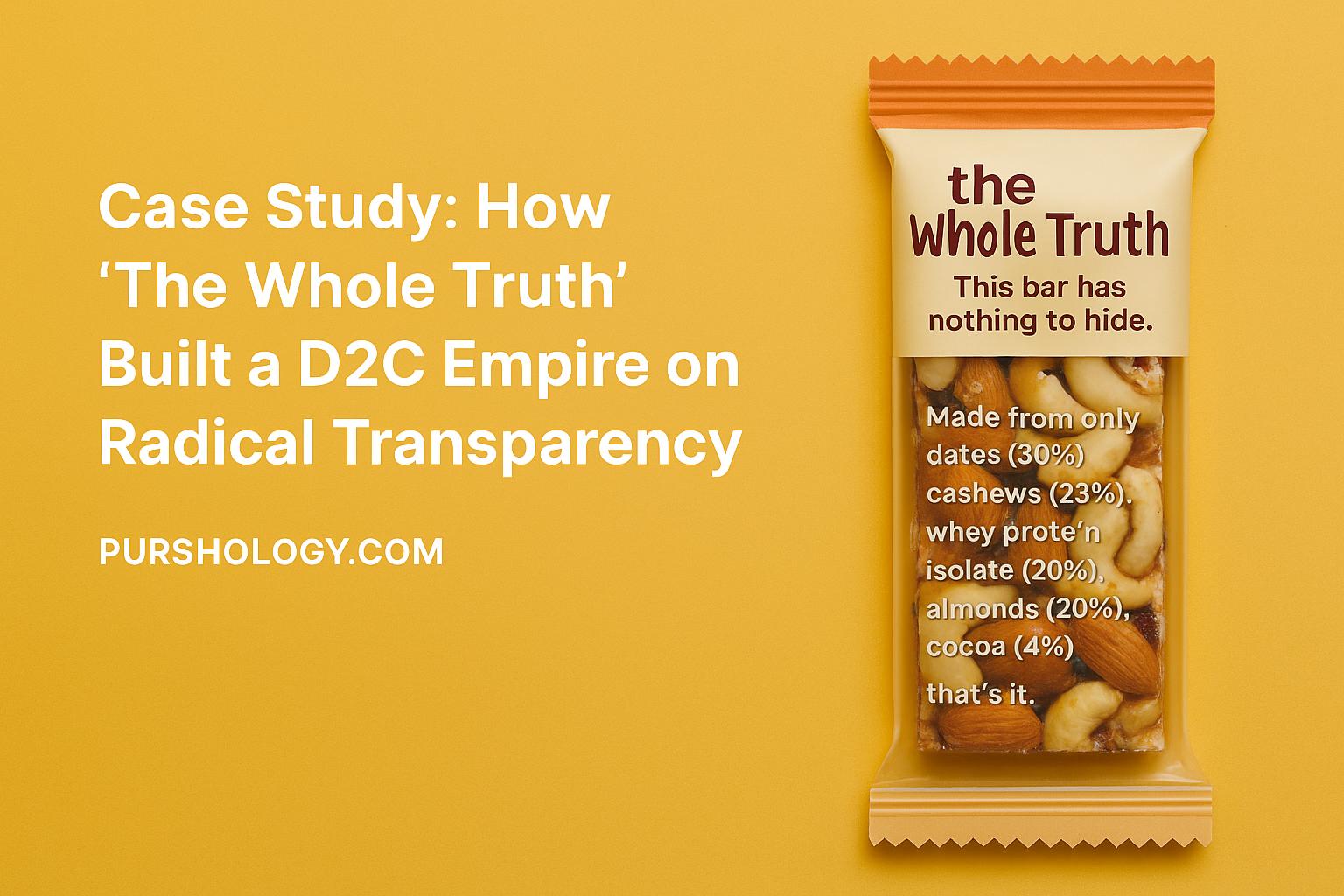
The Whole Truth cracked India’s crowded food D2C market by doing the opposite of traditional FMCG brands: telling consumers everything—every ingredient, every compromise, every limitation. Radical transparency became their strongest growth engine, turning skepticism into trust and trust into repeat sales.
Introduction: Trust Is the Real Product
In an era where consumers scan labels more than advertisements, trust has become the most valuable currency for D2C brands. The Whole Truth (TWT), an Indian clean-label food brand, recognized this early. Instead of selling “health,” they sold honesty—and built a fast-growing D2C empire by making transparency their core brand promise.

This case study explores how The Whole Truth used total transparency to differentiate itself, build credibility, and scale sustainably in a highly competitive market.
The Problem with “Healthy” Food in India
Most packaged food brands in India rely on:
- Ambiguous claims like “natural,” “wholesome,” or “protein-rich”
- Ingredient lists filled with additives, sweeteners, and preservatives
- Marketing-led narratives that hide uncomfortable truths
Consumers were growing skeptical—but had few clean, honest alternatives.
That gap is where The Whole Truth entered.
The Whole Truth’s Core Insight: Consumers Can Handle the Truth
Instead of assuming consumers needed simplified or sugar-coated messaging, TWT made a bold bet:
If we explain food honestly, consumers will reward us with trust.
This insight shaped every aspect of their D2C strategy.
Strategy 1: Radical Ingredient Transparency
The Whole Truth made ingredient disclosure the hero:
- Every product lists exact ingredients—no umbrella terms
- Each ingredient is explained in simple, non-scientific language
- They openly admit what they don’t use—and why
Instead of fear-based marketing, they focused on education.
SEO impact: Ingredient-led content naturally attracts search intent like “is whey protein safe” or “what’s in protein bars”.
Strategy 2: Founder-Led Honesty & Anti-Marketing
TWT’s communication sounded less like a brand and more like a candid conversation:
- Questioning their own category claims
- Publicly acknowledging tradeoffs (taste vs. purity, shelf life vs. preservatives)
- Calling out misleading industry practices—without naming competitors
This anti-marketing tone made their content highly shareable and credible.
Result: High engagement, strong word-of-mouth, and organic brand advocacy.
Strategy 3: Content as a Trust-Building Engine
Rather than relying heavily on performance ads, TWT invested in:
- Long-form educational posts
- Transparent FAQs that address real consumer doubts
- Clear explanations of nutrition myths vs. facts
Their website didn’t just sell products—it answered questions, making it a destination for health-conscious consumers.
D2C lesson: Content that clarifies confusion compounds trust over time.
Strategy 4: Community Over Campaigns
The Whole Truth built a community of informed consumers by:
- Encouraging feedback and criticism
- Responding openly to customer questions
- Letting customers feel like insiders, not targets
This reduced dependence on discounts and increased repeat purchases—critical for D2C profitability.
Strategy 5: Consistency Across the Funnel
Transparency wasn’t a slogan—it was operational:
- Product pages matched packaging claims
- Social media echoed website honesty
- Customer support gave real answers, not scripts
This consistency removed friction across the buyer journey and strengthened brand recall.
The Result: A Scalable D2C Brand Built on Trust
By choosing transparency over traditional marketing tactics, The Whole Truth achieved:
- Strong brand differentiation in a crowded FMCG space
- High repeat purchase behavior driven by trust
- A loyal customer base that values honesty over hype
Their growth proves that clarity beats cleverness in modern D2C brands.
Key Takeaways for D2C Founders & Marketers
- Transparency can be a powerful acquisition and retention lever
- Educated consumers are more loyal—not more difficult
- Trust compounds faster than paid reach
- Long-term brand equity beats short-term marketing tricks
Final Thought: Transparency Is the New Growth Hack
The Whole Truth didn’t build a D2C empire by shouting the loudest—but by speaking the clearest. In a world of half-truths, telling the whole truth became their most scalable advantage.
✅ If you’re building a D2C brand
and want to stand out without gimmicks, start with the truth.
Audit your product claims, simplify your messaging, and ask yourself:
Would my customer trust me more if I explained this honestly?
If the answer is yes—your growth strategy just got clearer.