
Industry Analysis Series: 2026 Confidential Report
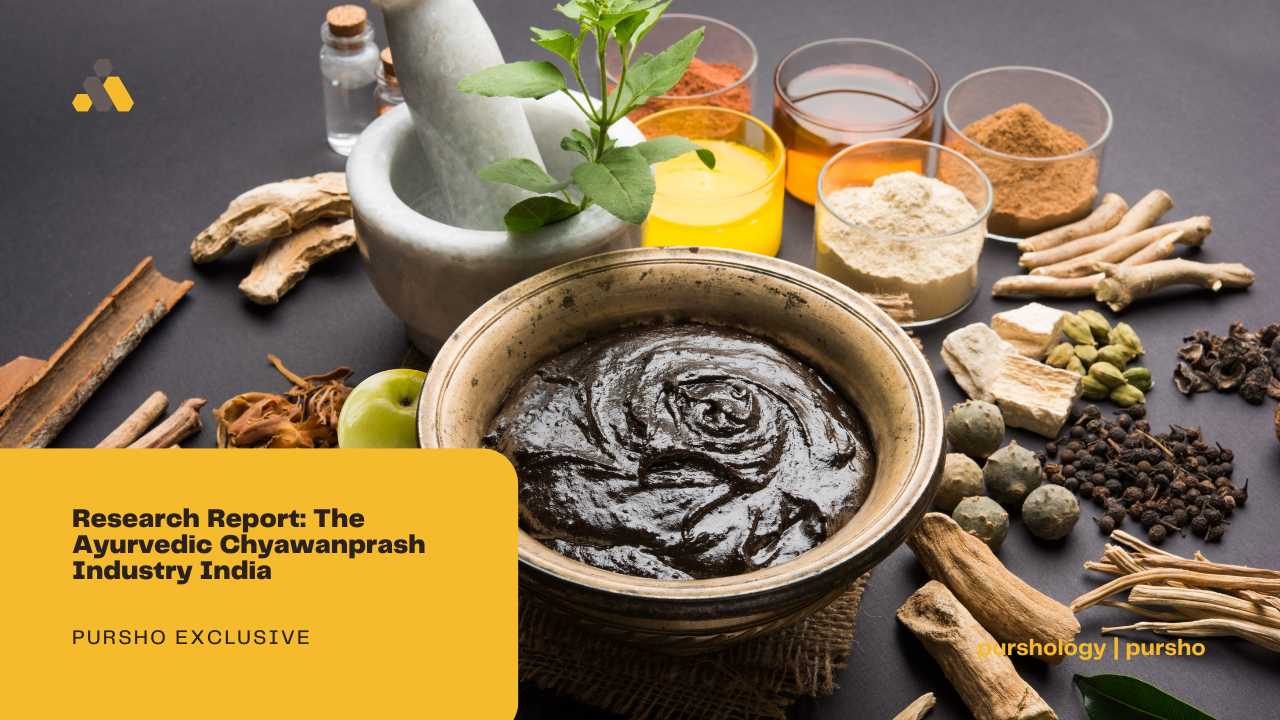
Research Report: The Ayurvedic Chyawanprash Industry India
A Comprehensive Analysis of Market Dynamics, Scientific Efficacy, and Physiological Mechanisms
1. Executive Summary
The Indian Chyawanprash industry represents a significant segment of the broader Fast Moving Consumer (FMCH) and Ayurveda market. Traditionally consumed as a dietary supplement for longevity and immunity, t witnessed unprecedented demand during the COVID-19 pandemic, transforming it from a seasonal winter toni round wellness necessity. This report analyzes the market structure, which is heavily consolidated with Dabur holding a dominant market share of over 60%. Furthermore, it critically evaluates the “wellness” classificat product by examining clinical efficacy, physiological mechanisms of action, and the balance between traditional modern scientific evidence.
2. Introduction to Chyawanprash
Chyawanprash is an ancient Ayurvedic polyherbal jam (avaleha) prepared in a base of Amla (Indian Gooseberry) honey, ghee, and sesame oil, along with a complex mixture of various herbs and spices. Historical texts at formulation to the Sage Chyawan, who regained youth and vitality through its consumption. In the modern co marketed primarily as an immunomodulator (“Rasayana”) that promotes health, longevity, and resistance against
3. Market Analysis
- Market Size and Valuation
The Chyawanprash market in India was valued at approximately ₹700 crore (pre-pandemic baseline), with surges observed in subsequent fiscal years. The category is a core component of the larger Ethico-OTC Ayurveda
- Growth Trends
The industry has experienced volatile but generally upward growth trajectories, heavily influenced by pu concerns:
- Pandemic Surge: The market witnessed a demand surge of 30-40% during the initial phases of the COVID-pandemic as consumers sought preventative immunity boosters.
- Dabur’s Performance: Market leader Dabur reported a 7-fold growth in demand during Q1 2020-
- Seasonal to Perennial: Historically a winter-centric product, marketing efforts have successfully expanded consumption into non-winter months, stabilizing revenue streams throughout the fiscal year.
- Market Share Breakdown
The market is characterized by an oligopolistic structure dominated by a single major player, followed challengers.
| Company/Brand | Estimated Market Share | Market Positioning |
| Dabur India Ltd. | 60% – 65.8% | Market Leader; synonyms with the category. |
| Baidyanath | ~10-15% | Traditional, authentic Ayurvedic heritage. |
| Patanjali | ~5-8% | Price-competitive, disruptive entry. |
| Emami (Zandu) | < 5% | Focus on specific variants (e.g., Zandu Kesari Jivan |
| Others (Himalaya, Organic India) | ~5% | Niche, premium, or organic segments. |
4. Scientific Efficacy & Clinical Evidence
Contrary to perceptions of Ayurveda lacking empirical data, Chyawanprash has been the subject of numero studies aimed at validating its immunomodulatory claims.
- Clinical Studies and Research
Research has focused on prophylaxis (prevention) and symptom reduction. A notable multi-center clinical study children aged 5-12 years demonstrated that daily consumption of Chyawanprash significantly reduced the freq severity of infections.
- Evidence-Based Benefits
- Immunity: Increases Natural Killer (NK) cell activity and cytokine production, essential for fighting pathog
- Respiratory Health: Shown to reduce symptoms of seasonal allergic rhinitis and upper respiratory tract inf
- COVID-19 Prophylaxis: During the pandemic, randomized controlled trials suggested that Chyawanprash c reduce the severity of COVID-19 infection and aid in faster recovery, leading to its inclusion in the Ministry AYUSH’s health
5. Mechanism of Action in Human Body
- Key Ingredients
The primary ingredient is Amalaki (Emblica officinalis), which constitutes the bulk of the formulation. It is su 25 to 80 other herbs depending on the specific manufacturer’s formula, including Ashwagandha, Pippali (Lon Giloy (Guduchi), and lipids (Ghee/Sesame Oil).
- Physiological Mechanisms
Chyawanprash works through a synergistic mechanism known as Yogavahi (bioenhancer):
- Antioxidant Action: Amla is one of the richest natural sources of Vitamin C and tannins. These compound free radicals, reducing oxidative stress at the cellular This prevents cellular damage and supports the agprocess.
- Immune Modulation: Ingredients like Guduchi and Ashwagandha act as adaptogens. They modulate the ne endocrine-immune axis, helping the body adapt to stress (physical, biological, and chemical) and maintainin
- Bioavailability Enhancement: The use of lipids (Ghee/Oil) and spices (Pippali) increases the absorption o The lipids act as a vehicle to carry therapeutic compounds across cell membranes.
6. Is it Actually a Wellness Product? – Critical Analysis
While marketing positions Chyawanprash as a universal wellness product, a critical scientific review reve nuanced reality.
- The Sugar Controversy
A standard formulation of Chyawanprash contains approximately 50-60% sugar.
- Traditional View: In Ayurveda, sugar (Mishri or honey) is considered a preservative and a carrier (Anupan helps transport herbs to
- Modern Concern: For the modern sedentary diabetic or pre-diabetic population, the high glycemic index is concern. While it is efficacious, it may not be suitable as a general “wellness” snack for this demographic wit medical advice. This has led to the rise of “Sugar-Free” variants (using sweeteners like sucralose or stevia), th traditionalists argue this alters the pharmacological delivery mechanism.
- Claims Evidence
| Marketing Claim |
Scientific Verdict |
| “Boosts Immunity” | Validated. Strong evidence supports immunomodulatory effects. |
|
“Anti-Aging” |
Plausible. High antioxidant content reduces oxidative stress, a key factor in aging, but visual “anti-aging” effects ar clinically quantified. |
| “Improves Brain Function” | Inconclusive. While ingredients like Brahmi are nootropic, evidence for Chyawanprash specifically improving mem healthy adults is limited compared to immunity studies. |
- Assessment
Chyawanprash is genuinely a wellness product with high efficacy, provided the consumer is not sensitive to intake. It is more accurately described as a preventative bioactive supplement rather than a generic healt efficacy is rooted in the synergistic action of its herbal matrix, not just vitamins.
7. Conclusion
The Chyawanprash industry in India is a robust, high-growth segment anchored by deep cultural trust and i validated by modern clinical science. With a market size exceeding ₹700 crore and Dabur holding a comman share, the product has successfully transitioned from a traditional remedy to a modern lifestyle necessity. Physio functions as a potent antioxidant and immunomodulator. However, the industry must address the high sugar remain relevant to a health-conscious, diabetes-prone demographic.
References
-
- Dabur India (2025). Annual Reports & Management Discussion Analysis.
- Gupta, , et al. (2020). “Clinical evaluation of Chyawanprash as a prophylactic measure during the COVID-19 pandemic.” Journal of Ayurveda and In Medicine.
- Market Research Reports (2020-2024). India Ayurveda Market Outlook.
- Sharma, , et al. (2019). “Chyawanprash: A Traditional Indian Bioactive Health Supplement.” Biomolecules.
- Ministry of AYUSH, Government of National Clinical Management Protocol based on Ayurveda and Yoga for management of Covid-19.


