
TikTok Can Be The Next Facebook.
So much for Chinese tech not being able to become popular in the U.S. While millions leave Facebook flagship app, they aren’t all going to Instagram. ByteDance recently overtook Uber as the most valuable startup in the world and now its proven it can make popular apps faster than Facebook can acquire them.
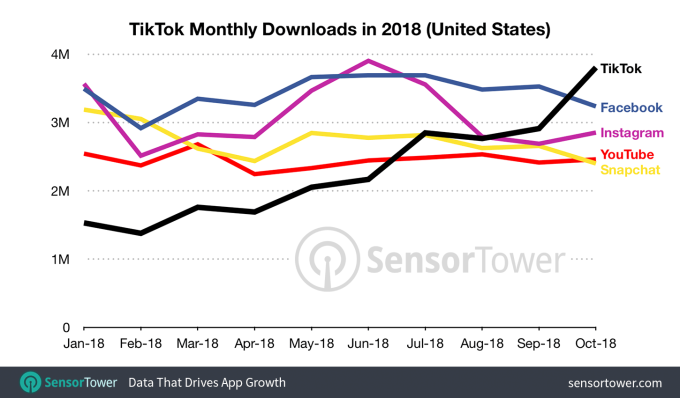
So what is the milestone exactly? A viral video app you’ve probably never heard of had more downloads in September than Facebook, YouTube, or Snapchat. It’s basically the most viral app. Tik Tok is called “Douyin” in China and has made ByteDance into the next-gen company to beat in social, video and interactive apps.

Tik Tok is the app that musical.ly merged into, remember them?
According to data from app intelligence firm Sensor Tower, TikTok’s installs were higher than those of Facebook, Instagram, Snapchat and YouTube in the U.S. last month.
In an era where Facebook’s stock is falling, its users are leaving. The world isn’t becoming just a family story, it’s becoming a creator’s heaven with micro-video apps like TikTok. It’s the next gen after Instagram.
It’s gone from a GenZ app to a mainstream app and has penetrated the western consumer now. Keep in mind ByteDance is based in Beijing, not Silicon Valley. These people are creating the smartest apps you’ve likely never heard of.
The future of apps is not advertising or creating a “family of apps” because you cannot innovate, it’s actually video. Facebook has largely failed in video, and with just YouTube that’s meant even stealing snapchat Stories is not good enough for 2019.
TikTok was the most downloaded app in the US in September, 2018. Douyin is not popular only in Asia, therefore Chinese tech companies are scaling globally. You can keep Facebook out of the party, but you can’t keep Chinese innovation out of the world. This is a major lesson for Silicon Valley.
JD.com, Didi, Meituan, Ant Financial, Tencent Music, IQiyi, Pinduoduo — they are coming and they represent something Americans don’t understand. There’s a new wave of Chinese tech companies that are more customer-centric than even Amazon is.
Will Facebook Die?
Facebook’s apps are in decline in Europe and realistically in North America as well. October, 2018 was a milestone for how quickly it might happen.
For ByteDance this is nothing new. Anyone familiar with Toutiao knew this was a step up in personalization and how user experiences are optimized in apps. Whether this is News curation or micro video, China has led live-streaming and micro video (and mobile payments too) for quite some time.
Amazon can buy Snapchat, but TikTok is now a direct competitor to Instagram and it should terrify Facebook.
### Current Year Considerations, Changes, and Best Practices for TikTok’s Continued Rise
Since its explosive growth and landmark downloads surpassing major social apps, TikTok has cemented its position as a dominant player in the social media landscape, fundamentally reshaping how content is created and consumed worldwide. As the app continues evolving beyond its initial Gen Z audience, several key changes and best practices have emerged that are essential to understanding TikTok’s current and future impact, as well as its implications for competitors like Facebook.
#### Changes and Trends
– **Mainstream User Adoption:** TikTok has solidified its penetration into mainstream audiences beyond younger demographics, attracting a broader age range and diverse user base globally. This has driven diversification in content types, from short-form entertainment to educational, political, and niche community content.
– **Monetization and Creator Economy:** TikTok has accelerated development of monetization tools, creator funds, and commerce integrations, enabling content creators to earn revenue directly on the platform. This elevates TikTok from just a viral video app to a vibrant ecosystem supporting creator livelihoods.
– **Algorithmic Sophistication:** TikTok’s recommendation algorithm remains the benchmark for effective personalization, continuously refined with advances in AI and machine learning to maximize user engagement and content relevance. This algorithmic mastery significantly outperforms many Western apps struggling with user retention.
– **Regulatory Environment:** Heightened global scrutiny around data privacy, content moderation, and geopolitical considerations means TikTok must navigate complex regulatory frameworks while maintaining user trust and growth momentum.
– **Continued Innovation in Video:** TikTok has expanded interactive features such as augmented reality (AR) effects, live streaming, and multi-user collaboration, setting new standards in how video content is created and consumed on mobile devices.
#### Best Practices for Brands, Creators, and Developers
– **Authenticity Over Production:** TikTok rewards raw authenticity and creativity more than high-budget or overly polished content. For brands and creators, focusing on relatable, entertaining, or educational content that fits naturally into TikTok’s style yields better engagement.
– **Leveraging Trends and Challenges:** TikTok’s culture thrives on viral trends, challenges, and audio clips. Staying agile and tapping into these culturally relevant moments is crucial for visibility and growth.
– **Community Engagement:** Building and nurturing a community around niche interests or personal brands amplifies reach and loyalty, proving more effective than broad, impersonal marketing tactics.
– **Cross-Platform Strategy:** While TikTok is a powerhouse on its own, synergizing TikTok content with other platforms ensures a wider audience and mitigates risks of relying on a single platform.
– **Data-Driven Content:** Monitoring analytics and audience behavior helps optimize posting times, content format, and themes that resonate best with specific audiences.
#### Broader Considerations
– **Global Competitiveness of Chinese Tech:** TikTok exemplifies the rise of Chinese tech innovation scaling globally, challenging Silicon Valley’s longtime dominance. Success is driven by deep investments in AI and a keen focus on user engagement that other companies must acknowledge.
– **Facebook’s Strategic Challenges:** With TikTok redefining video-centric social media, Facebook’s attempts to imitate TikTok features have had mixed success, underscoring challenges that legacy platforms face adapting to fast-moving cultural and technological shifts.
– **Creator-Centric Future:** The future growth of social platforms is increasingly centered around creators’ success. Platforms that empower creator monetization, interactive content, and authentic engagement will dominate.
In summary, TikTok’s ongoing evolution highlights a shift from mere viral entertainment app to a major digital ecosystem encompassing commerce, community, and content creation. For Facebook and others, the lesson remains clear: innovation in video-driven, creator-first social experiences combined with cutting-edge AI personalization is the key to future social media relevance and growth.
Via Medium